Galle for a Medical Elective: A City Guide for Students
Celina KöhslMedical student, member of the travel4med team
22. November 2026
16 minutes
Galle for a Medical Elective: A City Guide for Students
Galle is a coastal city on Sri Lanka's south-west coast, built around a fort that has been on UNESCO's World Heritage List since December 1988, and it's where our Sri Lanka placements happen. For a medical, nursing or physician assistant student, Galle means a busy teaching hospital on weekdays and the old fort, the sea and the south coast at the weekend. This guide covers the city, the weather month by month, the hospitals, your health and safety, and how to plan your first week.
Researched and editorially reviewed by Samet Ata, medical student and destination coordinator at travel4med. Samet is our contact person for Sri Lanka and prepares students for their placement in Galle. The health section was reviewed by MUDr. Amandeep Grewal, a doctor on the travel4med team.
Key Takeaways
Galle Fort is a World Heritage Site. The "Old Town of Galle and its Fortifications" was inscribed in December 1988 as the 451st World Heritage Site, according to the Galle Heritage Foundation.
It's warm all year. At the Galle weather station, monthly mean temperatures averaged 27.0 to 28.4 °C between 2018 and 2023.
January to March are the driest months. January averaged 73.8 mm of rain from 2018 to 2023, October 498.2 mm.
The main hospital is big. The former Karapitiya Teaching Hospital became Galle National Hospital in 2024, with 2,066 beds at the time, The Sunday Times (Sri Lanka) reported.
Dengue is the health risk to plan for. WHO counted more than 90,000 dengue cases in Sri Lanka by early August 2026.
What is Galle, and why do students go there?
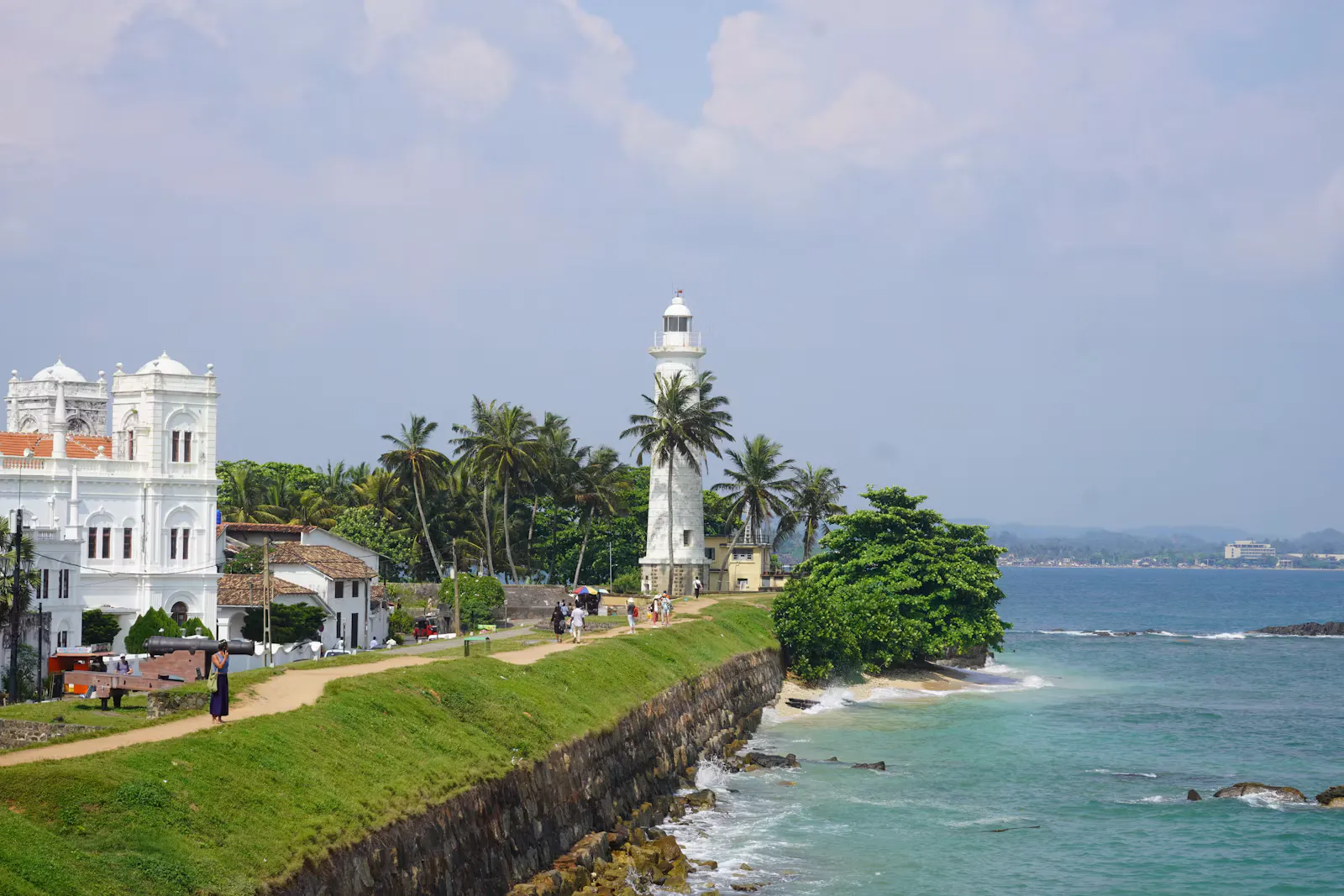
Galle is the city that gives its name to Galle District in Sri Lanka's Southern Province, a mostly rural area of about 1.1 million people. Its old town sits inside a sea fort that the Galle Heritage Foundation, a state body set up by Act No. 7 of 1994, protects as a World Heritage Site. For students, it pairs large public hospitals with a compact, walkable base.
The 2024 census counted 1,097,372 people in Galle District, 5.0% of Sri Lanka's population. Only 12.3% of them, 135,514 people, live in areas the census classes as urban, and the district has 695 people per square kilometre. So the city feels busy, but you're never far from villages, beaches and paddy fields.
The fort is the part you'll see on postcards. The Galle Heritage Foundation has conserved 55 residential buildings inside the walls with Dutch government funding (2008 to 2009) and carried out a rescue conservation of the old Dutch Hospital in 2010. People still live inside the fort, and looking after their welfare is part of the foundation's legal mandate, which is why the old town feels like a neighbourhood rather than a museum. If you want to understand the customs you'll meet on the ward, start with our Sri Lanka culture guide.
Why do students pick Galle over Colombo? The hospitals are large enough for real case variety, the city is small enough to cross by tuk-tuk, and the coast is on your doorstep after work.
Ready for your adventure abroad?
Secure your spot for your internship abroad now.
What is the weather like in Galle, and when should you go?
Galle is hot and humid all year, with monthly mean temperatures between 27 and 28.4 °C at the Galle weather station from 2018 to 2023. The best time to visit Galle for dry weather is January to March. May and the months from September to November are the wettest, with October the peak at about 498 mm of rain.
Sri Lanka's Department of Census and Statistics describes four rainfall seasons: the south-west monsoon from May to September, an inter-monsoon period in October and November, the north-east monsoon from December to February, and a second inter-monsoon period in March and April. Rain in the south-west monsoon falls mostly over the south-western part of the island, which is exactly where Galle sits.
Here's what the station figures look like. We averaged the six yearly values the department publishes for Galle (2018 to 2023), so these are real measurements, not a long-term climate normal.
Average monthly rainfall at the Galle observation station, our average of the six yearly values for 2018 to 2023. Source: Department of Census and Statistics Sri Lanka, Statistical Abstract 2024, Table 1.6 (accessed 22 November 2026).
Season in Galle
Months
Average rain per month, 2018 to 2023
What it means for you
Driest stretch
January to March
73.8 to 130.5 mm
Best weather for weekends on the coast
Inter-monsoon
April
206.5 mm
Afternoon showers, still very warm
South-west monsoon
May to September
160.2 to 372.5 mm
May and September are very wet
Inter-monsoon
October and November
498.2 and 302.7 mm
The wettest time of year
North-east monsoon
December
192.0 mm
Drying out again
Year to year, it varies a lot. The station's annual total ranged from 2,198.0 mm in 2020 to 3,942.2 mm in 2023, with a six-year average of about 2,800 mm. A placement in the wet months still works, because the hospitals run all year, but bring a rain jacket and expect slower travel. Our guide to the best time for a medical elective abroad compares the seasons across all four of our destinations.
Where will you work in Galle?
You'll work at National Hospital Galle, at Mahamodara Maternity Hospital or at the District Ayurvedic Hospital, depending on your specialty and preference, according to our Sri Lanka destination page. National Hospital Galle, the former Karapitiya Teaching Hospital, is the largest of the three and is linked to the University of Ruhuna's Faculty of Medicine.
When the hospital was raised to national hospital status in May 2024, The Sunday Times (Sri Lanka) reported that it was the country's third national hospital, after Colombo and Kandy. The paper gave 2,066 beds at the time, with more than 2,800 planned by the end of that year, and about 120 medical specialists, 490 junior doctors and 1,900 nurses. Obstetrics and gynaecology run at the separate women's hospital, which is why maternity placements go to Mahamodara.
What you get
Details from our Sri Lanka page (read 22 November 2026)
Hospitals
National Hospital Galle, Mahamodara Maternity Hospital, District Ayurvedic Hospital
Departments
Neurosurgery, orthopaedics, general and visceral surgery, vascular and transplant surgery, plastic surgery, gynaecology and obstetrics, Ayurvedic medicine, paediatric cardiology, psychiatry, forensic medicine and more
Extras only in Galle
Thursday evenings in the casualty theatre and a snake course
Start dates
Every Monday
Housing
The travel4med villa with pool, three meals a day, laundry service, air conditioning and Wi-Fi
Transport
Airport pickup and daily transport to and from the hospital
Price
From EUR 1,499 (local costs and your own currency will differ)
What happens on day one? You get a medical introduction, we register you at the hospital and show you around, and regular teaching sessions at the accommodation let you talk cases through. Ward communication runs mainly in English, with Sinhala or Tamil in direct patient conversations, as our nursing internship in Sri Lanka report describes. For the official university routes into Sri Lankan hospitals, see our guide to a medical elective in Sri Lanka.
Which formats can you do in Galle? All of them: a medical elective abroad, a clinical placement abroad or final-year placement, a nursing placement abroad, a physician assistant placement or an observership. Whether it counts towards your degree is a question for your own faculty and your national medical or nursing council, so ask them early. Recognition rules differ from country to country, so get the answer in writing before you book flights.
How do you stay healthy in Galle?
Galle is a manageable place to stay healthy if you plan for mosquitoes, food and water, dogs and the sea. Sri Lanka has been certified malaria-free by WHO since 2016, with no local transmission since 2012, so dengue is the mosquito-borne risk that matters. WHO counted more than 90,000 dengue cases nationwide by early August 2026.
Our destination page lists the vaccinations required to take part: hepatitis A, hepatitis B, measles, mumps and rubella, plus tetanus, diphtheria, polio and pertussis. Rabies prophylaxis, typhoid, Japanese encephalitis, dengue and chikungunya are recommended but optional, and a dengue vaccination is only advisable if you've already had dengue. Which ones are right for you is a decision for your own doctor or travel clinic. Our overview of vaccinations for a medical elective abroad explains each one, and our dengue guide for Sri Lanka covers bite prevention.
The US CDC adds two points worth knowing. Dogs infected with rabies are commonly found in Sri Lanka, and rabies vaccine after a bite is often not readily available there, so talk to your clinic about the pre-exposure course and read our guide to rabies on a medical elective. The CDC also recommends typhoid vaccination for most travellers.
If you get ill yourself, UK government advice says emergency treatment outside the main cities is not readily available, that treatment in private hospitals can be expensive and that the ambulance number is 1990. That's why you need medical elective insurance that covers treatment and repatriation. Galle's snake course has a reason, too: the FCDO notes venomous snakes in many parts of the country, and our guide to snakebite on a medical elective explains first aid.
Is Galle safe for students?
For most students, Galle is a calm base, and the real risks are everyday ones: traffic, the sea, petty theft and harassment. UK government advice warns that driving in Sri Lanka is erratic, with frequent accidents at night, that public buses are often driven fast, and that many beaches have dangerous surf or rip tides at certain times of the year.
Here's what that means in practice:
On the road: agree the fare before you get into a tuk-tuk or pick one with a working meter, as the FCDO advises, and avoid travelling at night where you can.
In the sea: ask at your accommodation before swimming, because currents change with the season.
With your bag: the FCDO reports bag snatching from passing motorbikes, so carry your bag on the side away from the road.
On trains: stay inside the carriage while the train is moving and watch for pickpockets.
As a woman travelling alone: the FCDO says women continue to report verbal and physical harassment and suggests carrying a personal alarm.
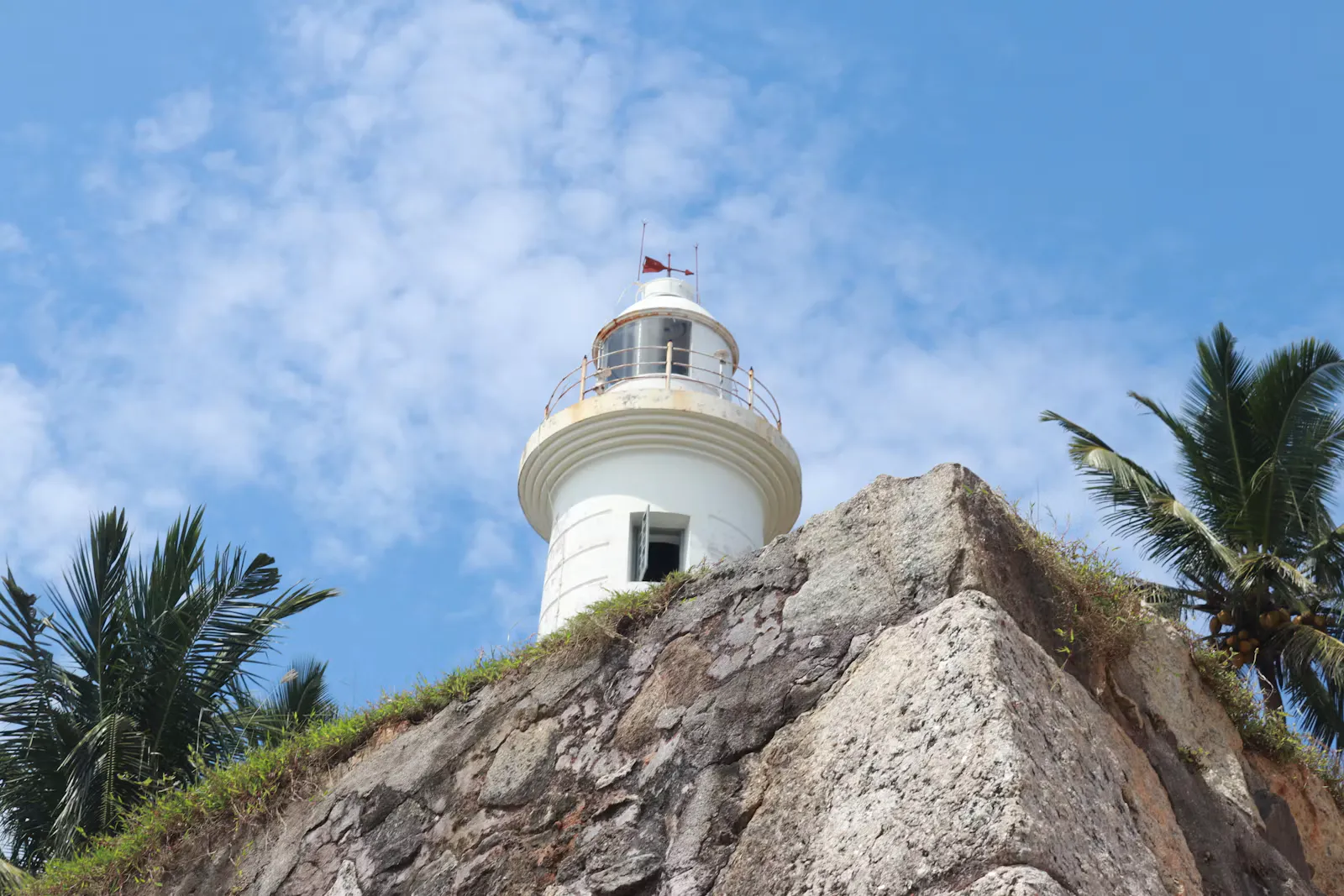
Your weekends are free, and the fort is the obvious place to start. Walk the ramparts at sunset, explore the old streets around Rampart Street and Church Street, visit the restored Dutch Hospital and look out for the Sun and Moon bastions. Beyond the walls, the south coast, tea country and national parks are all within weekend reach.
The fort also has its own festival. Since 2023, the year that marked 35 years of World Heritage status, the Galle Heritage Foundation has organised an annual Heritage Week with lectures, exhibitions, heritage walks and cultural shows. If your placement overlaps with it, it's a good way to see the lesser-known side of the town.
Want to know what to eat on your evenings out? The Austrian sister site has a German guide to food in Sri Lanka, and our Sri Lanka currency guide explains rupees, cash and cards. Students on our placements have combined weekends on the coast with tea country and a jeep safari, as the nursing internship report describes.
How do you plan your first week in Galle?
Most of the planning happens before you fly. Follow this order and you'll arrive with your paperwork, money and health checks done.
Confirm your placement and dates with your faculty and with us, including which department you want.
Check the entry rules for your passport. You need an entry permit for Sri Lanka, and our guide to visa requirements for Sri Lanka and Nepal explains why a placement is not tourist travel. We send you a step-by-step guide after booking.
Book your vaccinations early, because some of them need more than one dose.
Get travel insurance that covers treatment and repatriation.
Sort out money and pack light clothes, a rain jacket and mosquito repellent.
Send us your arrival time so we can pick you up at the airport.
Use your first weekend for the fort ramparts and the old town, and save longer trips for later in your stay.
Your placement in Galle with travel4med
We place medical, nursing and physician assistant students at National Hospital Galle and its partner hospitals, with Monday starts, the villa, meals, daily hospital transport and on-site support. Our German sister site describes the same hospital in its guide to the hospital in Sri Lanka, and the futuredoctor group ecosystem shows how travel4med fits into the wider network of medical education services.
Planning a placement in Galle, Pokhara, Bali or Zanzibar? We place medical, nursing and physician assistant students in all four destinations for clinical electives, final-year placements, nursing placements and observerships. Book a free consultation, compare our destinations or join our free webinar to see what a week in Galle looks like.
Galle Heritage Foundation. Galle Heritage Week (inscription in December 1988 as the 451st World Heritage Site, annual Heritage Week since 2023): galleheritage.gov.lk (accessed 22 November 2026).
Galle Heritage Foundation. Our History (55 residential buildings conserved 2008 to 2009, Dutch Hospital rescue conservation 2010, Rampart Street, Sun Bastion): galleheritage.gov.lk (accessed 22 November 2026).
Galle Heritage Foundation. Who we are (established under Act No. 7 of 1994): galleheritage.gov.lk (accessed 22 November 2026).
Department of Census and Statistics Sri Lanka. Census of Population and Housing 2024, Final Report (Galle District 1,097,372 people, 5.0% of the population, 12.3% urban, 695 people per square kilometre): statistics.gov.lk (accessed 22 November 2026).
Department of Census and Statistics Sri Lanka. Statistical Abstract 2024, Chapter 1, Area and Climate (four rainfall seasons, south-west monsoon rain over the south-west): statistics.gov.lk (accessed 22 November 2026).
Department of Census and Statistics Sri Lanka. Statistical Abstract 2024, Table 1.6, Annual and monthly rainfall at observation stations 2018 to 2023 (Galle): statistics.gov.lk (accessed 22 November 2026).
Department of Census and Statistics Sri Lanka. Statistical Abstract 2024, Table 1.3, Annual and monthly average air temperature at observation stations 2018 to 2023 (Galle): statistics.gov.lk (accessed 22 November 2026).
The Sunday Times (Sri Lanka). Karapitiya crowned Galle National Hospital, 26 May 2024 (third national hospital, 2,066 beds, 120 specialists, 490 junior doctors, 1,900 nurses, link to the University of Ruhuna): sundaytimes.lk (accessed 22 November 2026).
World Health Organization Sri Lanka. Driven to end malaria: ten years of success for Sri Lanka, 24 April 2026 (malaria-free certification 2016, last local transmission 2012): who.int (accessed 22 November 2026).
World Health Organization Sri Lanka. National Dengue Review 2026, 14 August 2026 (more than 90,000 dengue cases by early August 2026): who.int (accessed 22 November 2026).
US Centers for Disease Control and Prevention. Sri Lanka, Traveler View (rabies in dogs, post-exposure vaccine availability, typhoid, hepatitis A), page last reviewed 25 August 2026: cdc.gov (accessed 22 November 2026).
UK Foreign, Commonwealth and Development Office. Sri Lanka travel advice, Safety and security (roads, buses, tuk-tuks, trains, beaches, bag snatching, harassment, snakes): gov.uk (accessed 22 November 2026).
UK Foreign, Commonwealth and Development Office. Sri Lanka travel advice, Health (emergency treatment outside main cities, private hospital costs, ambulance 1990): gov.uk (accessed 22 November 2026).
travel4med. Sri Lanka destination page (hospitals, departments, casualty theatre and snake course, Monday starts, villa, airport pickup and hospital transport, vaccinations, price from EUR 1,499): travel4med.com/destinations/sri-lanka (accessed 22 November 2026).