Snakebite on a Medical Elective: What Students Should Know
Snakebite is the emergency your medical school probably never taught you, and the one your host hospital treats as routine. The World Health Organization estimates 5.4 million people are bitten by snakes every year, of whom 1.8 to 2.7 million are envenomed, and 81,410 to 137,880 die. Most of those bites happen in Africa, Asia and Latin America, which is exactly where a travel4med placement sends you.
Key Takeaways
The global numbers are big and badly known. WHO estimates 5.4 million bites a year, 1.8 to 2.7 million envenomings and 81,410 to 137,880 deaths, plus around three times as many amputations and other permanent disabilities.
Asia carries the heaviest load. Up to 2 million people are envenomed in Asia each year. In Africa there are an estimated 435,000 to 580,000 bites a year that need treatment.
Sri Lanka has the sharpest national figures of our four destinations. An island wide community survey put the country at 80,514 bites and 30,543 envenomings a year, or 398 bites per 100,000 people.
Nearly half of victims do not go to a hospital first. In that same Sri Lankan survey, 54.8% of bite victims sought allopathic treatment and 43.3% went to a traditional healer.
The first aid WHO recommends is short. Reassure the patient, put a pressure pad over the bite, immobilise the limb, and move them to medical care without delay. Almost everything else does more harm than good.
What is snakebite envenoming?
Snakebite envenoming is, in WHO's own words, "a potentially life-threatening disease that typically results from the injection of a mixture of different toxins ('venom') following the bite of a venomous snake". The word that matters there is injection. A bite is a wound. An envenoming is a poisoning, and the two are not the same event.
That distinction shows up in the numbers. Of roughly 5.4 million bites a year, WHO counts 1.8 to 2.7 million envenomings, so somewhere between a third and half of bites deliver enough venom to make a person ill. The rest are dry bites, bites from non venomous species, or bites that barely break skin. You will meet plenty of all four on a busy ward, and telling them apart is most of the clinical work.
Annual global snakebite burden. Source: World Health Organization, snakebite envenoming fact sheet, updated 17 September 2026.
Ready for your adventure abroad?
Secure your spot for your internship abroad now.
How big is the snakebite burden at our four destinations?
Honest answer first: the published evidence is uneven, and for two of our four destinations there is no good national number at all. That gap is itself part of the story, because snakebite is classed as a neglected tropical disease partly because nobody counts it properly.
Destination
What the published data actually covers
The figure
Sri Lanka
National community survey of 165,665 people in 1,118 clusters, August 2012 to June 2013
80,514 bites, 30,543 envenomings and 464 deaths a year; 398 bites per 100,000
Nepal
Range cited in a 2023 analysis of news reported envenomings, drawn from earlier surveys
20,000 to 37,661 bites and 1,000 to 3,225 deaths a year, concentrated in the Terai lowlands
Bali (Indonesia)
No national survey figure located; WHO reports at regional level
Up to 2 million envenomings a year across Asia as a whole
Zanzibar (Tanzania)
No national survey figure located; WHO reports at regional level
An estimated 435,000 to 580,000 bites a year needing treatment across Africa
Read that table carefully before you quote it in a presentation at home. The Asian and African figures are continent wide, not country figures, and they certainly are not your host hospital's caseload. The Sri Lankan numbers are a national estimate from a survey that ran more than a decade ago. None of these tell you how many bites will come through the door during your eight weeks.
Where the risk sits inside one country. Source: Ediriweera and colleagues, "Mapping the Risk of Snakebite in Sri Lanka", PLOS Neglected Tropical Diseases, 8 July 2016.
Two provinces in one small island differ by more than a factor of two. That is the single most useful thing to understand about snakebite: it is a rural, agricultural, local problem, and national averages hide it. If you want the destination context before you read on, we have separate guides to a clinical placement in Sri Lanka, a placement in Nepal, Bali and Zanzibar.
Who gets bitten, and when?
WHO is blunt about it: "Agricultural workers and children are the most affected", and children "often suffer more severe effects than adults, due to their smaller body mass". Nobody in the resuscitation bay got bitten on a hike. They were barefoot in a paddy field at dusk, or reaching into a woodpile, or walking home along a bund.
Timing follows the farming and the rain. A national mapping study of Sri Lanka found an average monthly incidence of 39 bites per 100,000 people, with hotspots that move around the island through the year: scattered nationally in January, in the North Western and South Western inlands in February, spreading through the South West until May, ringing the central mountains in August, then appearing in the North Central inlands in November before migrating to the South Western inlands in December. The country as a whole was at relatively low risk in June and July.
The authors tie that to the two monsoons. Central, southern and western Sri Lanka get their rain from the South West monsoon between May and September. The north and east get theirs from the North East monsoon between November and February. Nepal runs on a different clock again: a 2023 review of news reported envenomings found that the cases it captured peaked in June, July and August, and at night.
So the practical question is not "is snakebite a risk in Sri Lanka" but "where exactly am I, and in which month". A November placement in Anuradhapura and a June placement in Kandy are not the same experience.
What will you see on the ward?
Less drama than you expect, and more waiting. Snakebite management in a district hospital is built around observation, a simple bedside test and a decision about antivenom, not around heroics.
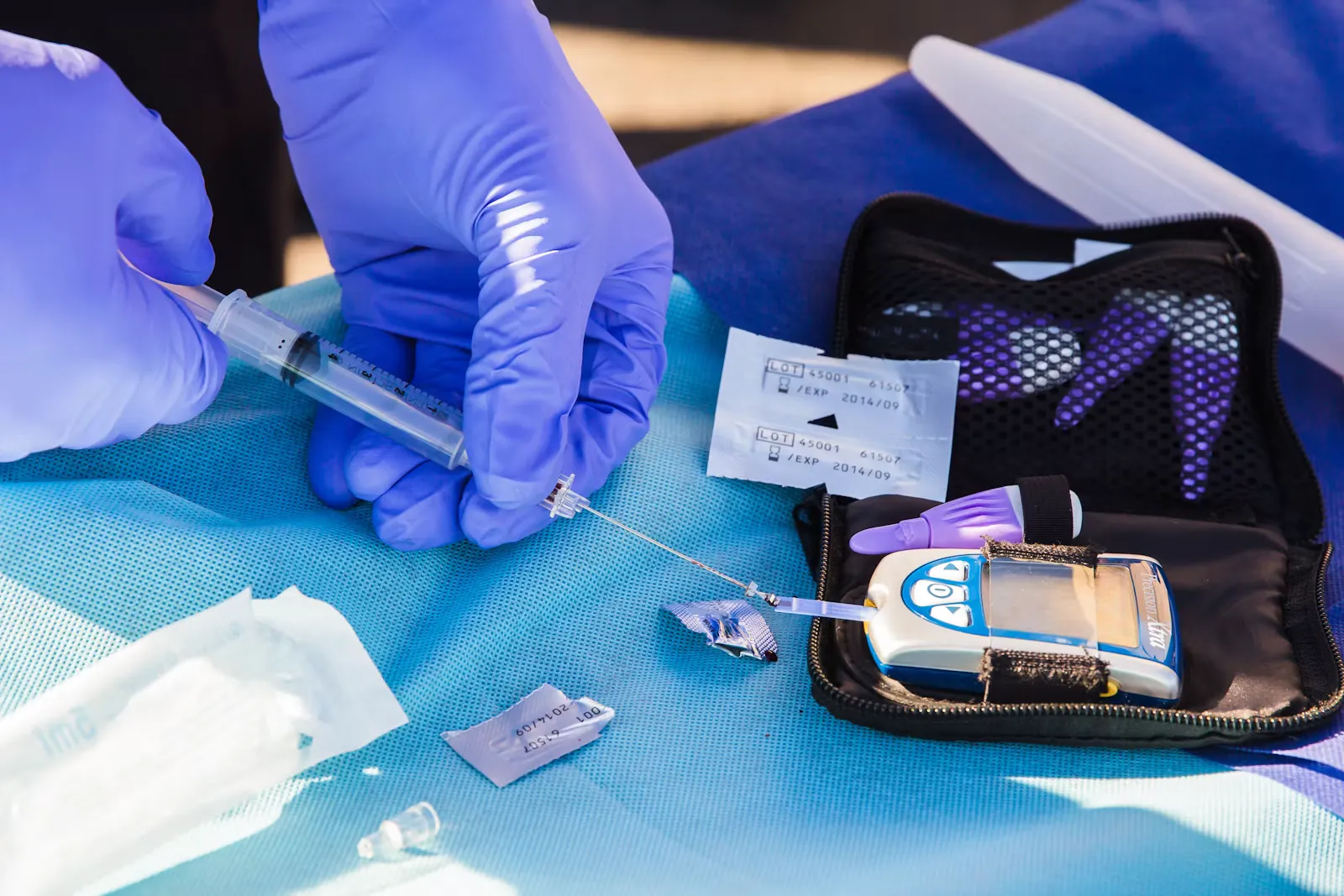
The test you will see most often is the 20 minute whole blood clotting test. The WHO regional guidelines describe it plainly: place fresh, unclotted blood in a clean, dry glass tube or bottle and watch for clot formation at 20 minutes. Blood that is still liquid at 20 minutes is incoagulable, and that result changes the plan. It costs nothing, needs no machine and no power, and it is one of the few investigations a visiting student can genuinely learn to interpret in a week.
The other thing you will see is delay, and the reason for it is not what most visitors assume. In the Sri Lankan island wide survey, 92.7% of bite victims sought treatment within the first 24 hours, so people do act quickly. What differs is where they go: 54.8% went for allopathic treatment and 43.3% went to a traditional healer. Ask your supervisor how that plays out locally before you form an opinion in front of a family. If you want the wider skill set that makes you useful in this kind of ward, our guide to clinical skills on a medical elective covers the rest.
Why is antivenom still so hard to get?
Because the economics collapsed. WHO puts it this way: "Given low demand, several manufacturers have ceased production, and the price of some antivenom products have dramatically increased in the last 20 years, making treatment unaffordable for the majority of those who need it." Antivenoms sit on the WHO essential medicines list, and WHO says these deaths are preventable through wider access to antivenoms and better community awareness. The supply chain simply does not deliver them to the districts where the bites happen.
That is why WHO set a target of halving snakebite deaths and disability by 2030, and why a student who understands the supply problem is more useful than one who has memorised venom classes. Watch what your host team does when the right antivenom is not on the shelf. Then watch what it costs the family.
Secure Information Material
Request all the important info for free, no obligation.
What should you do if someone is bitten in front of you?
Follow the WHO regional guidance, which is deliberately short:
Reassure the patient. Fear alone produces symptoms that get mistaken for envenoming.
Apply a pressure pad over the bite wound.
Immobilise the bitten limb.
Get the person to a place where they can receive medical care, without delay.
Hand over everything you know: the time of the bite, what the limb looked like when you saw it, and any description of the snake the patient gives you.
WHO's position on everything else is unusually direct. Most familiar first aid methods for snakebite, both western and traditional or herbal, "have been found to result in more harm (risk) than good (benefit) and should be firmly discouraged". You are a visiting student, so your job is transport and an accurate handover, not improvisation.
Do this
Avoid this
Reassure and keep the patient calm
Any intervention that delays transport to care
Pressure pad over the wound
Cutting, sucking or burning the bite site
Immobilise the bitten limb
Tight tourniquets and improvised constriction bands
Move to medical care immediately
Chasing, catching or killing the snake for identification
How do you lower your own risk on placement?
Your personal risk is genuinely low, because you are not the person harvesting rice at dawn. It is not zero either, and the sensible precautions are boring: closed shoes rather than sandals once you step off tarmac, a head torch for any walk after dark, eyes on where you put your hands and feet around woodpiles, drains and long grass, and no handling of snakes for a photograph, ever.
Insurance, evacuation and the limits of what cover buys
A severe envenoming can mean intensive care, blood products and sometimes a transfer. That is an insurance question, not a clinical one, and it is the same question a needlestick injury raises. Check that your policy covers you while you are working in a clinical environment, not only as a tourist, and check what it says about medical evacuation from a rural district. Our guide to insurance for a medical elective walks through the layers, and the German language guide to insurance for a clerkship or practical year abroad on travel4med.de goes deeper on evacuation cover.
One thing insurance cannot buy is recognition. Whether a placement counts towards your degree, and whether anything you do on it is within your permitted scope, is decided by your own medical school's elective office and your national medical council, not by us and not by the host hospital. Ask both before you travel, in writing, and keep a dated logbook of what you saw. Every country has its own rules here, and we cannot answer that question for you.
Thinking about where to do it? travel4med places medical, nursing and physician assistant students in Sri Lanka, Nepal, Bali and Zanzibar, and all four are open for the full range of placements, including the final year clinical placement. Compare the four on our destinations page or book a free consultation and we will talk it through. travel4med is operated by travelformed GmbH in Frankfurt, part of the futuredoctor group.
Medically reviewed by MUDr. Amandeep Grewal, a doctor on the travel4med team whose review scope covers vaccinations, tropical medicine, insurance and clinical content.
World Health Organization, "Snakebite envenoming" fact sheet, updated 17 September 2026. The 5.4 million bites, 1.8 to 2.7 million envenomings, 81,410 to 137,880 deaths, the roughly threefold figure for amputations and permanent disabilities, the up to 2 million envenomings in Asia, the 435,000 to 580,000 bites needing treatment in Africa, the statement that agricultural workers and children are most affected, the antivenom supply and price quote, and the 50% reduction target for 2030. who.int
World Health Organization Regional Office for South-East Asia, "Snakebite" health topic. The definition of snakebite envenoming quoted in this post, and the statements that antivenoms are on the WHO essential medicines list and that these deaths are preventable through wider access and community awareness. who.int/southeastasia
World Health Organization Regional Office for South-East Asia, "Guidelines for the management of snakebites", 2nd edition, 16 August 2016, ISBN 978 9 29 022530 0. The recommended first aid, the warning that most familiar first aid methods cause more harm than good, and the 20 minute whole blood clotting test in section 6.6.1. who.int/publications
Ediriweera and colleagues, "Mapping the Risk of Snakebite in Sri Lanka: A National Survey with Geospatial Analysis", PLOS Neglected Tropical Diseases, 8 July 2016. The 80,514 bites, 30,543 envenomings and 464 deaths a year, the 398 per 100,000 national incidence, the 623 per 100,000 in North Central province and 277 in Central province, and the survey of 165,665 people in 1,118 clusters between August 2012 and June 2013. journals.plos.org
Ediriweera and colleagues, "Health seeking behavior following snakebites in Sri Lanka: Results of an island wide community based survey", PLOS Neglected Tropical Diseases, 6 November 2017. The 54.8% who sought allopathic treatment, the 43.3% who went to traditional treatment and the 92.7% who sought treatment within 24 hours, from 695 victims identified in the same 165,665 person survey. journals.plos.org
Ediriweera and colleagues, "Evaluating spatiotemporal dynamics of snakebite in Sri Lanka: Monthly incidence mapping from a national representative survey sample", PLOS Neglected Tropical Diseases, 1 June 2021. The average monthly incidence of 39 bites per 100,000, the month by month hotspot pattern, the low national risk in June and July, and the two monsoon seasons. journals.plos.org
Pandey and colleagues, "Analysis of News Media-Reported Snakebite Envenoming in Nepal during 2010 to 2022", PLOS Neglected Tropical Diseases, 28 August 2023. The range of 20,000 to 37,661 bites and 1,000 to 3,225 deaths a year in Nepal, the concentration in the Terai, and the peak of recorded envenomings in June, July and August and at night. journals.plos.org