Getting Around Sri Lanka and Nepal for Your Internship
Celina KöhslMedical student, member of the travel4med team
10. August 2026
10 minutes
Getting Around Sri Lanka and Nepal for Your Internship
Getting around Sri Lanka and Nepal during a clinical internship abroad usually means some combination of tuk-tuk, bus, train, taxi, rickshaw and jeep to reach your placement hospital. Public transport and rides with a local driver are typically the cheapest and safest choice, since national travel advisories from several countries generally caution against self-driving in unfamiliar road conditions in South Asia. This guide walks you through which mode of transport works best for which situation, and what the actual road-safety data says.
Key Takeaways
Tuk-tuk, bus and train are the most affordable ways of getting around Sri Lanka and Nepal for your internship in Sri Lanka.
In Nepal, taxis, local buses and rickshaws cover city trips, while a jeep is the go-to option for remote routes.
Always negotiate the fare in advance for a tuk-tuk, taxi or rickshaw — meters are rare.
Check your own country's foreign-travel advisory (for example gov.uk, travel.state.gov or smartraveller.gov.au) for current guidance on self-driving and road safety before you travel.
Getting around Sri Lanka and Nepal looks different in each country: more train and bus use in Sri Lanka, more jeep and rickshaw use in Nepal.
Your nursing internship, clinical clerkship or practical year in Sri Lanka or Nepal almost always starts with the same practical question: how do you get from your accommodation to the hospital? On-the-ground coordinators hear this from nearly every intern in their first week. Tuk-tuk, bus, train, taxi, rickshaw or jeep — the choice of transport in Sri Lanka and Nepal is wide, prices are usually negotiable, and road safety looks noticeably different than what many international students are used to at home. This guide shows you which mode of transport makes sense when, and what to watch for on safety. Getting around Sri Lanka and Nepal mainly comes down to the difference between city routes and intercity or rural routes, as the sections below explain.
Here's a practical way to plan your commute once you know your placement destination:
Ask your host hospital or coordinator how other interns typically get to the ward.
Download a ride-hailing app such as PickMe (Sri Lanka) before you arrive, if one is available at your destination.
Agree on a fare or route with your accommodation host for the first week, until you know the local going rate.
Keep a backup option (a second driver's contact, or a bus timetable) for early shifts or emergencies.
Check your own country's foreign-travel advisory for any current road-safety alerts before you settle into a routine.
What are your options for getting around Sri Lanka: tuk-tuk, bus or train?
Tuk-tuks, buses and trains form the backbone of transport in Sri Lanka, even though pedestrians and cyclists account for 70% of all road deaths there, according to the WHO (WHO Road Safety — Sri Lanka 2023 Country Profile, 2023). The tuk-tuk works best for short city trips, the bus for journeys between towns, and the train for a slower, more scenic ride.
Tuk-tuk in Sri Lanka: cost and negotiating
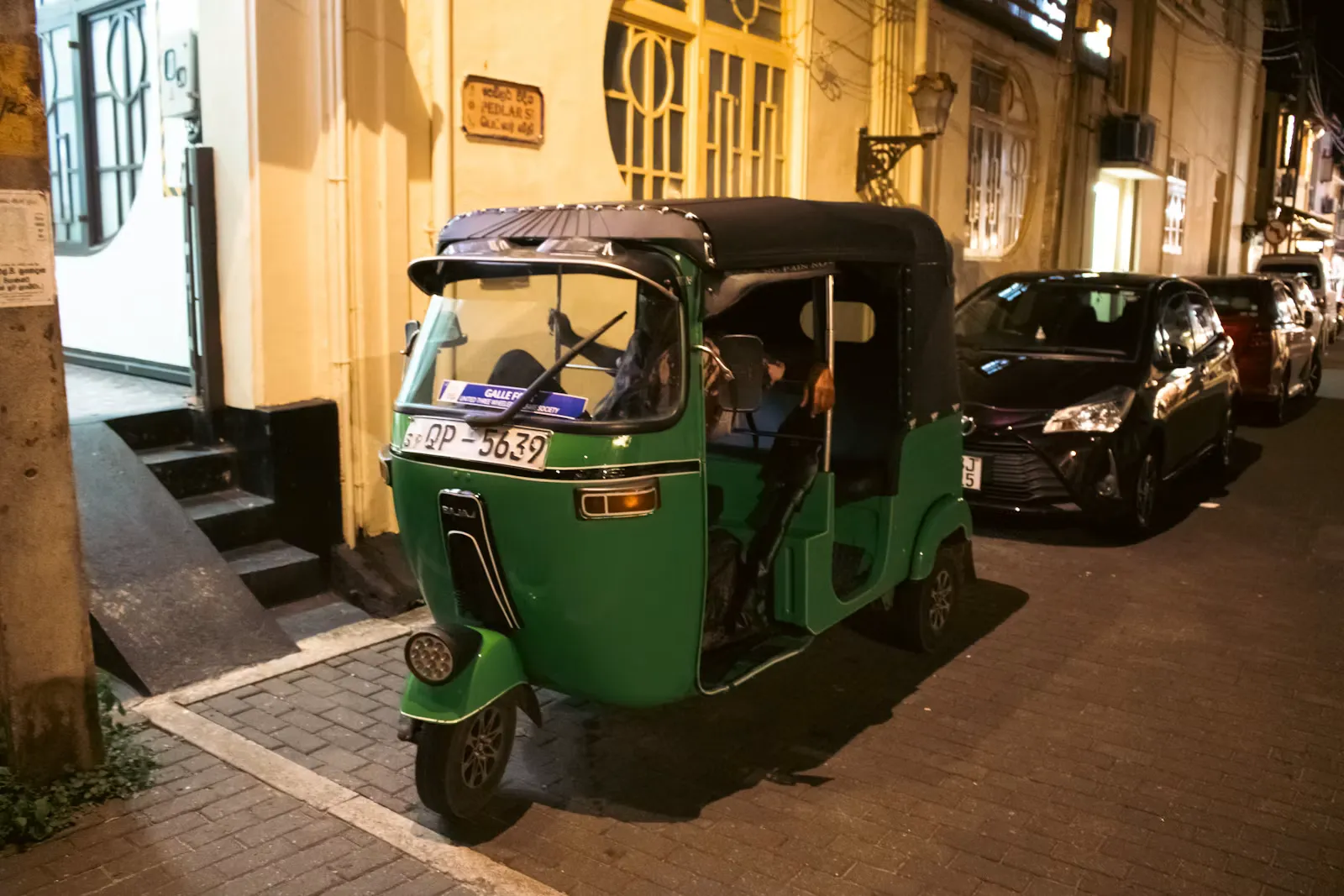
The three-wheeled tuk-tuk is the most popular option for short distances and seats around three people. A meter is almost never fitted, so always negotiate the fare before you get in. Many of our interns use the PickMe app, since it shows a fixed price upfront and avoids the back-and-forth of haggling.
Bus: cheap, but often crowded
Sri Lanka has a well-developed bus network covering the country's main destinations. Buses are among the cheapest ways of getting around, but they're often crowded and rarely air-conditioned. Buy tickets at the bus station or directly from the conductor during the ride.
Train: scenic but slow
The railway offers a scenic, if considerably slower, way to see the Sri Lankan countryside — the well-known route up to the hill country being a classic example. Several classes are available, with first class offering the most legroom. Book tickets only through the official railway website or app, and be wary of third-party resellers.
The tuk-tuk is part of everyday life on Sri Lanka's roads and gets you to the hospital quickly and cheaply.
What public transport options does Nepal offer for your internship?
Getting around Sri Lanka and Nepal looks quite different once you reach Nepal: taxi, bus, rickshaw and jeep cover every kind of route here, from a short hop across Kathmandu to a multi-hour trip overland. Road conditions outside the main cities can be demanding, and emergency medical care is patchier away from urban centres, so build in extra buffer time for any longer trip.
Taxi: convenient for short city trips
Taxis are the most convenient option in Nepalese cities, even though meters are rarely used. Always negotiate the fare before you get in. In our experience, prices vary a lot between tourist-facing and local routes, so a blanket rule of thumb isn't very useful — ask colleagues at your hospital for the going local rate instead.
Bus: local or tourist-oriented
Nepal distinguishes between local and tourist buses. Local buses are the cheapest option, but they're often delayed and cramped. Tourist buses cost more, but offer shorter journey times and more comfort. Buy tickets at bus stations or through local travel agencies.
Rickshaw: traditional and manoeuvrable
The human-powered, two-wheeled rickshaw suits short trips within a city and fits through narrow old-town lanes. Here too, negotiate the fare in advance — there's no meter.
Jeep: the most reliable choice for remote areas
Rickshaw and jeep complement each other well in Nepal — one for the city, the other for overland routes. For routes without public-transport access, the jeep is faster than a bus or rickshaw, though noticeably more expensive too. Build in extra buffer time given the patchier emergency medical coverage away from the cities.
Ready for your adventure abroad?
Secure your spot for your internship abroad now.
How safe is road travel in Sri Lanka and Nepal?
Road safety is one area where getting around Sri Lanka and Nepal genuinely differs from what many international students are used to at home. Sri Lanka recorded an estimated 3,000 road traffic deaths in 2021, a rate of 11.5 per 100,000 people — slightly below the Asia-Pacific regional average of 15.2 (WHO Road Safety — Sri Lanka 2023 Country Profile, 2023). Both countries drive on the left, which takes some getting used to for many international students.
Renting a vehicle or tuk-tuk without a local driver is generally discouraged for visitors in Sri Lanka; after an accident, lengthy investigations and even exit bans can follow, sometimes regardless of fault. It's generally safer and simpler to stay a passenger and let an experienced local driver handle the road.
Nepal also drives on the left, and combines patchy road infrastructure with vehicles that are inspected less rigorously than many international students are used to. An International Driving Permit (IDP), recognised internationally under either the 1949 Geneva Convention on Road Traffic (102 states party as of March 2025) or the 1968 Vienna Convention on Road Traffic (86 states party as of October 2022), is required in many countries if you want to drive yourself — but validity periods and local recognition rules vary by country and by your home licence, so confirm the specific requirement for Nepal with an official source or your embassy rather than relying on a fixed number of days. For a two- to three-month placement, self-driving rarely makes sense anyway — public transport with a local driver remains the more practical choice.
Source: WHO Road Safety — Sri Lanka 2023 Country Profile (2023).
Before you travel, check your own country's foreign-travel advisory for current road-safety guidance relevant to getting around Sri Lanka and Nepal — the UK's gov.uk, the US State Department's travel.state.gov, and Australia's smartraveller.gov.au are examples of official sources that publish destination-specific advisories your own country's ministry likely mirrors.
Getting around Sri Lanka and Nepal during your internship: the bottom line
Getting around Sri Lanka and Nepal comes down to a mix of tuk-tuk or taxi for short hops, bus or rickshaw for everyday trips, and train or jeep for longer distances — this combination gets you through your placement most reliably. Following your own country's travel-safety guidance noticeably reduces your personal accident risk.
At our Sri Lanka destination, we support you from arrival through your daily commute to the hospital, so you feel confident getting around from day one (travel4med — Sri Lanka location, 2026). That applies equally whether you're doing a clinical clerkship, a nursing internship, your practical year, a physician assistant practical phase, or a physician observership.
Plan how you'll get around during your clinical internship abroad before you leave. In a free consultation, we'll help you work out which destination and which transport setup fits your placement.
Frequently Asked Questions
Sources
World Health Organization, "Road Safety — Sri Lanka 2023 Country Profile": who.int.
UK Government, foreign travel advice (illustrative example of a national travel advisory): gov.uk/foreign-travel-advice.
US Department of State, international travel information: travel.state.gov.
Australian Government, Smartraveller (illustrative example of a national travel advisory): smartraveller.gov.au.