Pokhara for a Medical Elective: A City Guide for Students
Pokhara is a lakeside city in central Nepal, about 800 metres above sea level, and it's the place where our Nepal placements happen. For a medical, nursing or physician assistant student, Pokhara means a teaching hospital on weekdays and Phewa Lake, the Annapurna range and easy day trips at the weekend. This guide covers how to get there, the weather in each season, the hospital, your health and the rules for trekking.
Researched and editorially reviewed by Nils-Andre Stritt, travel4med. Nils-Andre organises our destinations and placements and talks students through their plans before they book. The health section was reviewed by MUDr. Amandeep Grewal, a doctor on the travel4med team.
Key Takeaways
Pokhara is low, not alpine. The Nepal Tourism Board puts the city at about 800 m, with peaks above 6,000 m visible within 28 km.
The flight from Kathmandu takes about 25 minutes, according to Buddha Air's published schedule.
It's one of Nepal's wettest places. Pokhara gets 3,345 mm of rain a year against a national average of 1,600 mm, most of it in the June to September monsoon.
No malaria in the city. The US CDC lists no malaria transmission in Kathmandu, Pokhara or on typical Himalayan treks.
Trekking needs paperwork. Since 31 March 2023 the main Annapurna routes require a licensed guide and a TIMS card.
What is Pokhara, and why do students go there?
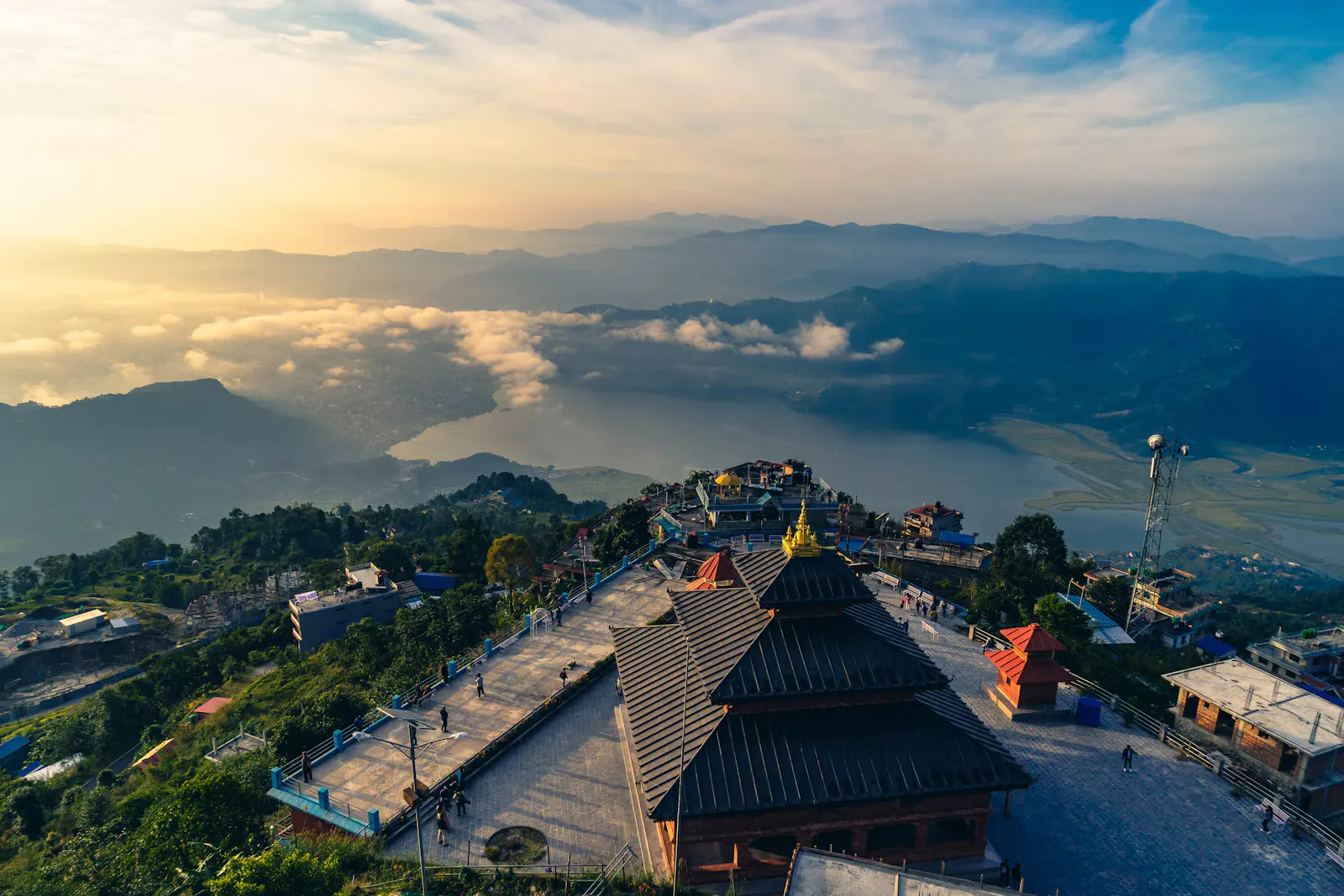
Pokhara is the gateway city to Nepal's Annapurna region, set on Phewa Lake at about 800 metres. The Nepal Tourism Board calls it "the jewel in the Himalaya" and notes that peaks above 6,000 m rise within 28 km of the city. For students, it combines a teaching hospital with a calm, walkable base.
The valley holds a cluster of nine lakes. Phewa, Begnas and Rupa are the three you'll hear about most, and the whole Pokhara Valley lake cluster was listed as a Ramsar wetland site on 2 February 2021. On the eastern shore of Phewa sits Lakeside, also called Baidam, which the tourism board describes as a thriving resort town of hotels, restaurants, bars and souvenir shops.
Pokhara also sits on an old trade route between India and Tibet. The tourism board notes that Gurung and Magar communities, known worldwide for their Gurkha soldiers, are predominant in the area. If you want to understand the customs you'll meet on the ward, start with our guide to Nepal culture.
Why do students pick Pokhara over Kathmandu? It's warmer, it's built around a lake, and it's the base for the trekking routes many students want to see after their placement. You get a real hospital rotation and a city you can actually relax in.
Ready for your adventure abroad?
Secure your spot for your internship abroad now.
How do you get from Kathmandu to Pokhara?
You fly or you take the road. The flight from Kathmandu to Pokhara takes about 25 minutes on Buddha Air's published schedule. By road, plan a full travel day. UK government travel advice warns that bus accidents are common in Nepal, so a tourist bus by daylight is the safer road option.
Most international students land in Kathmandu and connect to Pokhara the same or the next day. If you book your placement with us, we pick you up at the airport, so you don't have to organise the last leg on your own.
Option
Time
What to know
Domestic flight
About 25 minutes (Buddha Air schedule)
Fastest; weather can delay flights in the monsoon
Tourist bus
Plan a full travel day
Higher comfort and safety standard than local buses, according to UK travel advice
Local bus
Plan a full travel day
Often overcrowded; UK advice says avoid overloaded buses and night travel
The UK Foreign, Commonwealth and Development Office (FCDO) lists overloading, speeding, poor road conditions and mechanical failure as causes of road accidents in Nepal, and says road conditions are worst in the monsoon and in the mountains. Our post on getting around Sri Lanka and Nepal compares buses, taxis and jeeps once you've arrived.
What is the weather like in Pokhara, and when should you go?
Pokhara is warmer than Kathmandu, with warm, humid summers and mild winters. The best time to visit Pokhara for clear mountain views is October and November, after the monsoon. Spring is the other good season. From June to September, expect heavy rain: Nepal gets about 80% of its rainfall in those months.
Here are the figures the Nepal Tourism Board publishes for its three most visited areas. Pokhara stands out for rain, with 3,345 mm a year against a Nepal average of 1,600 mm.
Place
Summer max / min (May to July)
Summer rain
Winter max / min (Dec to Feb)
Winter rain
Pokhara
29.7 °C / 21.3 °C
829.7 mm
20.3 °C / 7.7 °C
26.3 mm
Kathmandu
28.1 °C / 19.5 °C
312 mm
19.3 °C / 3.0 °C
15.4 mm
Rainfall in Pokhara and Kathmandu in the peak summer and winter months. Source: Nepal Tourism Board, Climate of Nepal (accessed 21 November 2026).
What does that mean for your dates? A winter placement from December to February gives you dry days and cool nights, with lows around 8 °C, so pack a warm layer. A monsoon placement still works, because the hospital runs all year, but plan for rain gear, slower travel and cloudier views. Our guide to the best time for a medical elective abroad compares the seasons across all four of our destinations.
Where will you work in Pokhara?
You'll work at Manipal Pokhara Teaching Hospital, an academic teaching hospital in Pokhara at the foot of the Himalayas. Our Nepal destination page lists internal medicine, surgery, gynaecology, cardiology and radiology as specialties, with emergency medicine, orthopaedics, neurosurgery, nephrology and urology also mentioned. Placements start every Monday.
The hospital's university affiliation is what counts towards recognition of your stay, so check early what your own faculty and your national medical or nursing council need from you. Our destination page also notes that you can attend lectures at the medical college alongside local students.
What you get
Details from our Nepal page (read 21 November 2026)
Hospital
Manipal Pokhara Teaching Hospital, an academic teaching hospital
Start dates
Every Monday
Weekly rhythm
Hospital work on a set weekly schedule, weekends free
Housing
Shared travel4med accommodation with a view, three meals a day, laundry service and Wi-Fi
Price
From EUR 1,490 (local costs and your own currency will differ)
Pokhara is a lower-risk base than many students expect. The US CDC lists no malaria transmission in Kathmandu, Pokhara or on typical Himalayan treks, and at about 800 m the city is far below the 2,500 m where altitude sickness usually begins. Food and water hygiene, road safety and trekking are the main things to plan for.
Our destination page lists the vaccinations required to take part: hepatitis A, hepatitis B, measles, mumps and rubella, plus tetanus, diphtheria, polio and pertussis. Rabies, typhoid, Japanese encephalitis and dengue are recommended but optional. Which ones are right for you is a decision for your own doctor or travel clinic. Our overview of vaccinations for a medical elective abroad explains each one.
Healthcare quality matters if you get ill yourself. UK government advice says healthcare is poor in most places outside the Kathmandu Valley and Pokhara, and the FCDO keeps a list of medical providers in both cities where some staff speak English. So Pokhara is one of the better places in Nepal to need a doctor, but you still need medical elective insurance that covers evacuation from the mountains.
Altitude only becomes your problem when you leave the city to trek. The Nepal Tourism Board warns that above 2,500 m you should sleep no more than 300 to 500 m higher each night and take a rest day for every 1,000 m you climb. Our guide to altitude sickness on a medical elective goes through the symptoms, and our Nepal safety guide covers roads, protests and earthquakes. If you read German, the Austrian guide to altitude sickness in Nepal is a useful companion.
Secure Information Material
Request all the important info for free, no obligation.
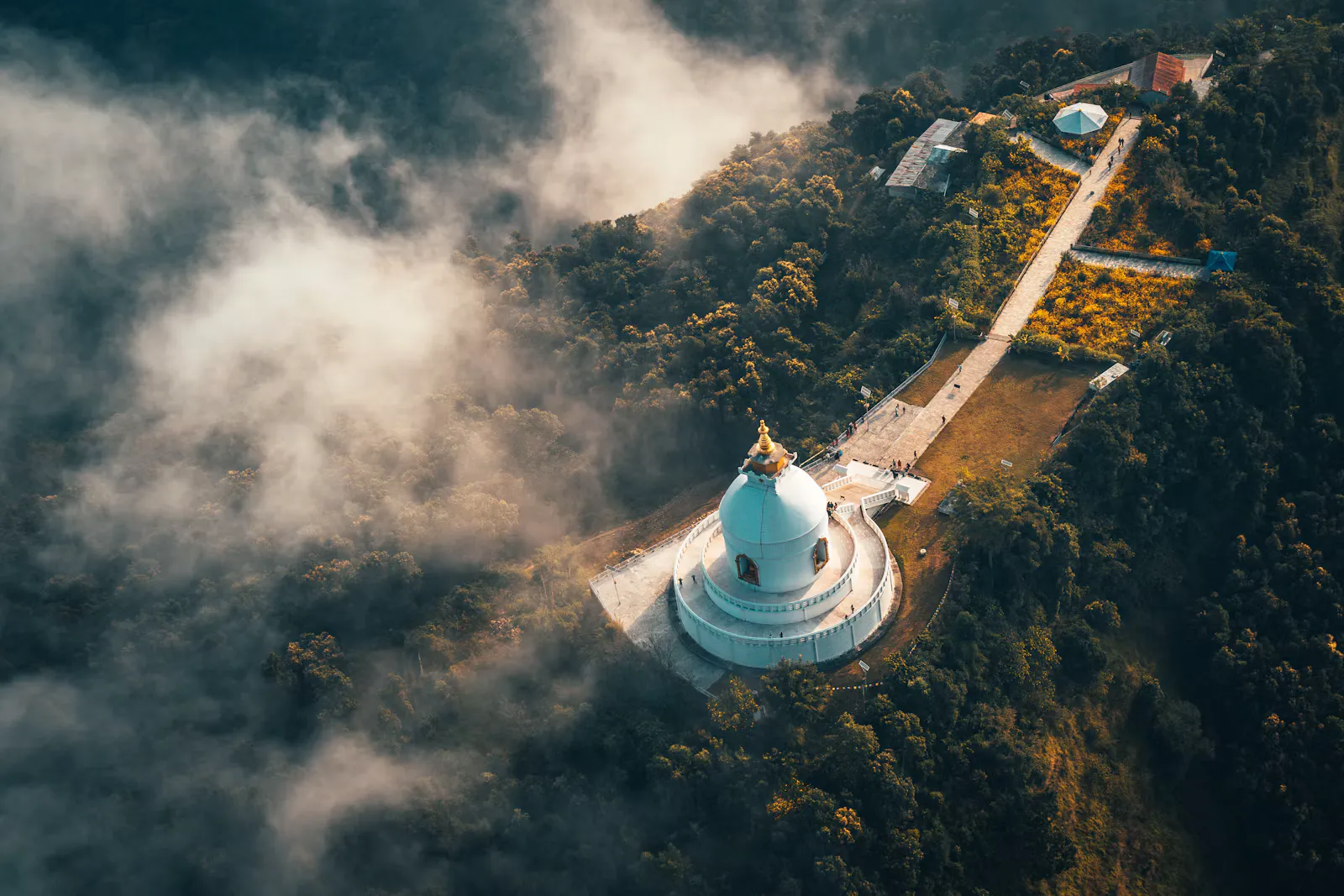
Your weekends are free, and Pokhara is built for them. You can row on Phewa Lake to the island temple of Taal Barahi, walk up to the World Peace Pagoda, watch the sunrise over the Annapurna range or go paragliding. Longer treks into the Annapurna region need a licensed guide, a TIMS card and a conservation area permit.
The World Peace Pagoda sits on a hill at the southern edge of Phewa Lake, with four images of the Buddha facing the four directions and wide views of the Annapurna range. Nearby, the villages of Pumdi and Bumdi still have the old oval, red clay houses. The tourism board also lists the Seti River, Davis Fall with the Gupteshwar cave, Mahendra Gupha and the Old Bazaar with the Bindyabasini temple among the city's sights.
Trekking is where the rules change. Under the revised TIMS provision in force since 31 March 2023, the Nepal Tourism Board says trekkers on listed routes must be accompanied by a licensed guide and carry a TIMS card issued through a trekking agency. The Annapurna list includes the Annapurna Circuit, Poon Hill to Annapurna Base Camp, Mardi Himal and Khopra treks.
What you need
Fee for most international visitors
Source
TIMS card (via a registered agency)
NPR 2,000 (NPR 1,000 for SAARC citizens)
Nepal Tourism Board
Annapurna Conservation Area entry
NPR 3,000 per person per entry (NPR 1,000 for SAARC citizens)
Nepal Tourism Board
Licensed trekking guide
Arranged through the agency
Nepal Tourism Board, UK travel advice
The FCDO says the same in plain words: do not trek alone, and all foreign independent trekkers must use a local guide or porter in Nepal's national parks and protected areas. The Swiss sister site has a German guide to trekking in Nepal after your placement if you want route ideas.
How do you plan your first week in Pokhara?
Most of the planning happens before you fly. Use this order and you'll arrive with the paperwork, money and health checks done.
Confirm your placement and dates with your faculty and with us, including which department you want.
Check entry rules for your passport. Our guide to visa requirements for Sri Lanka and Nepal explains the options, and we send you a step-by-step guide after booking.
Book your vaccinations early, because some of them need more than one dose.
Get travel insurance that covers medical evacuation and any trekking you plan.
Book the Kathmandu to Pokhara leg or let us know your arrival time for the pickup.
Use your first weekend for Lakeside, Phewa Lake and the Peace Pagoda, and save the trek for later in your stay.
Your placement in Pokhara with travel4med
We place medical, nursing and physician assistant students at Manipal Pokhara Teaching Hospital, with Monday starts, shared accommodation, meals and on-site support. Our German sister site describes the same hospital in its guide to clinical clerkships and nursing internships in Nepal, and the futuredoctor group ecosystem shows how travel4med fits into the wider network of medical education services.
Planning a placement in Pokhara, Galle, Bali or Zanzibar? We place medical, nursing and physician assistant students in all four destinations for clinical electives, final-year placements, nursing placements and observerships. Book a free consultation, compare our destinations or join our free webinar to see what a week in Pokhara looks like.
Nepal Tourism Board. Pokhara, the jewel in the Himalaya (about 800 m, peaks above 6,000 m within 28 km, cluster of 9 lakes, warmer than Kathmandu, Gurung and Magar communities, sights): ntb.gov.np (accessed 21 November 2026).
Nepal Tourism Board. Phewa and Cluster of 9 Lakes (Ramsar listing on 2 February 2021, Lakeside or Baidam, Taal Barahi temple): ntb.gov.np (accessed 21 November 2026).
Nepal Tourism Board. World Peace Pagoda (southern fringe of Phewa Lake, Pumdi and Bumdi villages): ntb.gov.np (accessed 21 November 2026).
Nepal Tourism Board. Climate of Nepal (80% of rain June to September, 1,600 mm national average, 3,345 mm in Pokhara, seasonal table for Kathmandu, Pokhara and Chitwan, clearest skies in October and November): ntb.gov.np (accessed 21 November 2026).
Nepal Tourism Board. TIMS Card (revised provision from 31 March 2023, licensed guide and TIMS card on listed routes, NPR 2,000 or NPR 1,000 for SAARC citizens): ntb.gov.np (accessed 21 November 2026).
Nepal Tourism Board. Park Entry Fees (Annapurna Conservation Area NPR 3,000 for foreigners, NPR 1,000 for SAARC citizens): ntb.gov.np (accessed 21 November 2026).
Nepal Tourism Board. Safety in the Mountains (altitude sickness above 2,500 m, 300 to 500 m per night, rest day per 1,000 m): ntb.gov.np (accessed 21 November 2026).
Buddha Air. Flight Information (Kathmandu to Pokhara 25 minutes): buddhaair.com (accessed 21 November 2026).
UK Foreign, Commonwealth and Development Office. Nepal travel advice, Safety and security (bus travel, road accidents, trekking with a guide or porter, TIMS), updated 1 October 2026: gov.uk (accessed 21 November 2026).
UK Foreign, Commonwealth and Development Office. Nepal travel advice, Health (healthcare outside the Kathmandu Valley and Pokhara, list of medical providers): gov.uk (accessed 21 November 2026).
US Centers for Disease Control and Prevention. Nepal, Traveler View (no malaria transmission in Kathmandu, Pokhara or on typical Himalayan treks; malaria information updated 23 April 2025): cdc.gov (accessed 21 November 2026).