Rabies on a Medical Elective: Bites, PEP and Vaccines
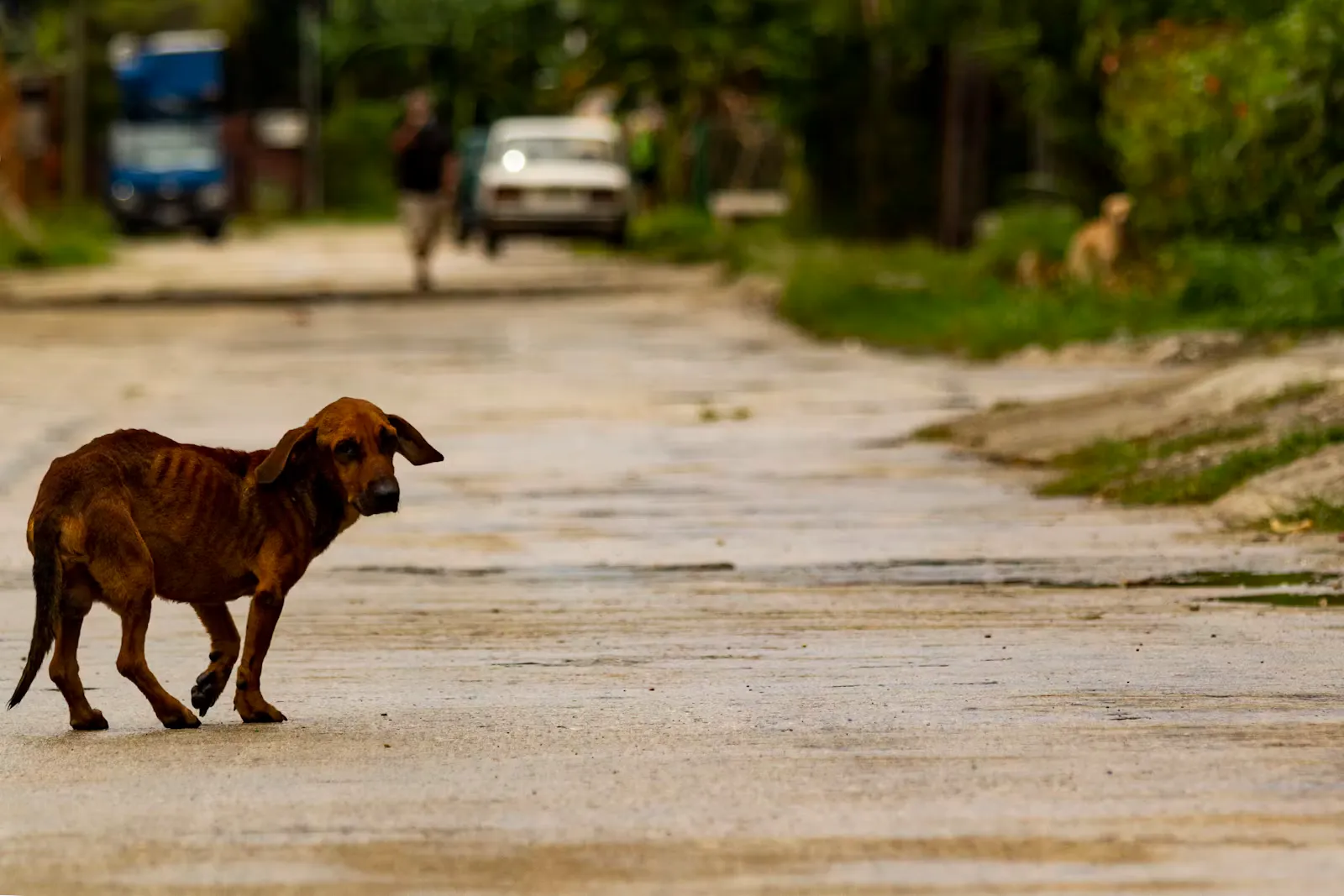
Rabies is a viral infection of the brain and nerves that is fatal in 100% of cases once symptoms appear, and it is preventable almost every time if you act fast after a bite. On a medical elective in Asia or Africa, the risk is not the patients on your ward. It is the street dog outside the hospital gate. This guide explains what to do in the first 15 minutes after a bite or scratch, how post-exposure treatment works, and whether you need the rabies vaccine before you fly.
Written by Celina Köhsl, medical student and member of the travel4med team. Medically reviewed by MUDr. Amandeep Grewal, a doctor on the travel4med team whose review scope covers vaccinations, tropical medicine and clinical content.
Key Takeaways
Rabies is fatal once symptoms start. The World Health Organization (WHO) estimates 44,203 deaths a year (2021 estimates), mainly in Asia and Africa, and 40% of them in children under 15.
Dogs cause 99% of human cases. CDC says dogs infected with rabies are commonly found in Sri Lanka, Nepal, Indonesia and Tanzania, the four countries where travel4med placements run.
Bali is a live problem in 2026. Bali's provincial health office counted 45,365 animal bites and seven rabies deaths between January and August 2026, as reported by Indonesia's news agency Antara.
Wash first, then go. WHO's first aid is to wash a bite or scratch with soap and water for at least 15 minutes and seek medical attention straight away. Do not wait until you get home.
Pre-exposure vaccination simplifies everything after a bite. Travellers who had it usually need a shorter vaccine course and no immunoglobulin, which matters because many countries have limited access to rabies immunoglobulin.
Your ward is low risk. WHO says human-to-human transmission through bites or saliva has never been confirmed. Standard precautions apply when you care for a patient with rabies.
What is rabies, and why does it matter on an elective?
Rabies is a vaccine-preventable viral disease that spreads through the saliva of infected animals, usually by a bite or scratch, and travels along the nerves to the brain. WHO's 2026 fact sheet calls it fatal in 100% of cases once clinical symptoms appear. Before that point, prompt treatment works.
That gap between "always fatal" and "almost always preventable" is the whole story. The incubation period is typically 2 to 3 months, according to WHO, but it can range from one week to one year. So you can be bitten in week two of your elective, feel completely fine, fly home and only then run out of time. The virus doesn't give you a second chance to make the decision.
Why should an elective student care more than a beach tourist? Three reasons. You stay longer, often 4 to 8 weeks or more. You walk to the hospital every morning, past the same dogs. And you may work in a rural clinic or district hospital where the nearest supply of rabies immunoglobulin is a long drive away. The UK travel health service TravelHealthPro lists healthcare staff working in endemic regions and travellers staying longer than a month among the groups who should consider pre-exposure vaccination.
Ready for your adventure abroad?
Secure your spot for your internship abroad now.
How common is rabies where travel4med placements run?
The virus is present in dogs in all four of our destination countries. The US Centers for Disease Control and Prevention (CDC) uses the same sentence on each of its traveller pages for Sri Lanka, Nepal, Indonesia and Tanzania: dogs infected with rabies are commonly found there. That does not make every dog dangerous. It means any bite counts until a doctor says otherwise.
Destination
What the official source says
What it means for you
Sri Lanka (Galle)
CDC: "Dogs infected with rabies are commonly found in Sri Lanka."
Treat every dog, cat or monkey bite as a possible exposure
Nepal (Pokhara)
CDC: rabid dogs are commonly found; take extra care around dogs, bats and monkeys
Temple and lakeside monkeys are a classic bite risk
Bali (Indonesia)
CDC: rabid dogs commonly found in Indonesia; Bali health office: 45,365 bites and 7 deaths, January to August 2026
The busiest rabies setting of the four in 2026
Zanzibar (Tanzania)
CDC: "Dogs infected with rabies are commonly found in Tanzania."
Same rules apply on the islands as on the mainland
The Bali numbers deserve a second look. Antara, Indonesia's national news agency, reported on 13 August 2026 that Bali's provincial health office had recorded 45,365 bites from animals that can carry rabies between January and August 2026, with seven deaths. By July 2026, only 49.51% of the targeted animals in the province had been vaccinated. If you are heading to a clinical clerkship in Bali, this is the most important health topic on your list.
Do you need the rabies vaccine before your elective?
Many elective students should seriously consider it, and the decision belongs to you and a travel health clinic. WHO says pre-exposure prophylaxis (PrEP) "might be indicated before recreation or travel in some areas", and CDC's guidance for all four destination countries asks two questions: will your activities raise your risk of contact with animals, and might you struggle to get prompt, safe treatment after a bite?
For a typical elective, the honest answer to both is often yes. TravelHealthPro names healthcare personnel in endemic regions, people staying longer than a month and travellers to areas with limited access to medical care. The NHS adds that you should speak to a travel health clinic about 8 weeks before you travel.
What does the course look like? TravelHealthPro gives the standard UK schedule as three intramuscular doses on days 0, 7 and 28, with the third dose possible from day 21 if time is short. An accelerated schedule of days 0, 3 and 7, with a further dose at one year, exists for people who are short on time. Your clinic may use a different schedule approved in your country, so follow what they give you. If you are still sorting out the rest of your jabs, our guide to vaccinations for a medical elective abroad covers the full list.
One thing PrEP is not: a reason to skip treatment after a bite. WHO says plainly that PrEP does not replace the need for post-exposure prophylaxis. It changes what you need, not whether you need care.
What should you do in the first hours after a bite or scratch?
Wash the wound with soap and running water for at least 15 minutes, then get to a doctor the same day. That is WHO's first aid advice, and it is the single most useful thing you can do. Treatment works best when it starts quickly, so don't wait for the weekend, the end of your shift or the flight home.
Soap, running water and at least 15 minutes: WHO's first aid for any bite or scratch from an animal that could carry rabies.
Here is the order that works on a placement abroad:
Wash the wound for at least 15 minutes with soap and lots of running water. Set a timer. Fifteen minutes feels very long when you are bleeding and shaken.
Do not decide the risk yourself. A small scratch or a nip through a gap in your clothes still counts. "The dog looked healthy" is not a medical assessment.
Tell your supervisor or your local travel4med coordinator straight away. They know which hospital or clinic nearby stocks the vaccine and immunoglobulin.
Go to that clinic the same day. Bring your passport and your vaccination record, especially proof of any pre-exposure rabies doses.
Note what happened. Write down the animal, the place, the time and the body part. If the animal is owned, take the owner's contact details.
Call your insurer using the emergency number on your policy, and keep every receipt.
Finish the whole course. Post-exposure treatment runs over several visits. If you fly home in the middle of it, take your treatment record and book the remaining doses before you leave.
Bites from a dog, cat or monkey are all handled this way. So is waking up in a room with a bat: CDC's Nepal page tells travellers to seek medical care immediately in that case, even with no visible bite.
What happens at the clinic: post-exposure prophylaxis explained
Post-exposure prophylaxis (PEP) is the emergency treatment that stops rabies after an exposure. WHO describes three parts: thorough wound washing, a course of rabies vaccine, and, when indicated, rabies immunoglobulin or monoclonal antibodies.
Which parts you get depends on the kind of contact. WHO sorts exposures into three categories:
Rabies exposure categories and recommended measures. Source: World Health Organization, Rabies fact sheet (2026); note on previously vaccinated travellers from TravelHealthPro (UKHSA/NaTHNaC), Rabies factsheet.
Most dog bites that break the skin are Category III. That means you need immunoglobulin as well as vaccine, unless you completed pre-exposure vaccination before you travelled. And here is the catch: immunoglobulin is scarce. TravelHealthPro cites research finding that 204 of 240 countries had limited or no access to rabies immunoglobulin. That is the strongest practical argument for pre-exposure doses. With them, TravelHealthPro says a good antibody response is expected from vaccine alone, without immunoglobulin in most cases.
The exact schedule after a bite varies by country and by clinic. Accept the schedule the treating doctor gives you, keep the card that records each dose, and show it at every visit, abroad and at home.
Secure Information Material
Request all the important info for free, no obligation.
Practically, no. WHO says human-to-human transmission through bites or saliva is theoretically possible but has never been confirmed. If your ward admits a patient with suspected rabies, standard precautions (gloves, eye protection where splashes are possible, careful handling of saliva) protect you, as they would with any patient. If you get saliva in an eye or into broken skin, report it the same day and let the infection control team decide.
You may well see a case, and it is one you won't forget. WHO describes the first signs as fever, pain and unusual or unexplained tingling, pricking or burning at the wound site. The NHS lists later symptoms such as hallucinations, feeling very anxious or energetic, difficulty swallowing or breathing, and paralysis. By then, care is palliative. Watching that happen is a hard lesson in why the 15 minutes at the tap matter. If something does go wrong on the ward itself, such as a sharps injury, our guide to a needlestick injury on a medical elective walks you through that very different pathway.
Avoiding bites: dogs, monkeys and bats
The best treatment is the bite you never get. Most bites on a placement are avoidable, and a few habits cover almost all of them:
Leave dogs alone, even friendly ones. Don't pet, feed or photograph them up close. Puppies count too.
Don't run or cycle past packs of dogs. TravelHealthPro flags running and cycling as activities that attract dogs. Walk calmly and give them space.
Keep food out of sight at temples. Monkeys gather at many temples and viewpoints in Nepal and Bali, and a monkey bite counts exactly like a dog bite. CDC's Nepal page lists monkeys among the animals to be extra careful around.
Never handle bats or sick animals. TravelHealthPro tells travellers not to approach any animals or bats, and to avoid touching unusual or sickly ones.
Tell someone if a dog keeps following you on your route to the hospital, so staff can suggest a safer way in.
The dog on your morning walk to the hospital is the most likely exposure risk on an elective, far more than any patient.
What does rabies treatment cost, and does insurance pay?
WHO puts the average cost of rabies post-exposure prophylaxis at US$108 as of 2018, and that is an average across countries where it is used, not a price you can expect at a private clinic abroad. Prices in your destination and your own currency will differ, so plan in EUR or your home currency with a buffer.
Check your travel health insurance before you go: does it cover emergency treatment for animal bites, follow-up doses after you return home, and an early flight home if needed? Our guide to medical elective insurance explains what to look for in the policy. Pre-exposure vaccination is often a private travel clinic cost, so ask your clinic for the full price of the course early.
German-speaking readers can find a German-language version of this topic, written for students in Germany, in travel4med.de's guide to rabies on an internship abroad (in German).
Rabies and your travel4med placement
travel4med organises clinical placements in Sri Lanka, Nepal, Bali and Zanzibar for medical, nursing and physician assistant students, including final-year and practical-year placements. Rabies is a real risk in all four, so tell your local coordinator straight away if anything happens. They can help you find the nearest hospital or clinic that can start post-exposure treatment.
We are not your travel clinic and we don't give personal medical advice. Whether you need pre-exposure vaccination is a decision for you and a qualified travel health provider, ideally 8 weeks before departure. What we can do is tell you how far your placement hospital is from the nearest rabies treatment centre, so your clinic can make a better recommendation. Our guide to snakebite on a medical elective covers the other bite emergency students ask us about.
Planning a placement and want to talk through rabies and other health risks first? Browse our destinations or book a free consultation. travel4med is part of the futuredoctor group ecosystem, which supports medical students from application to qualification.
World Health Organization. Rabies fact sheet (17 September 2026): who.int (accessed 5 October 2026).
TravelHealthPro (UKHSA, National Travel Health Network and Centre). Rabies factsheet (last updated 20 June 2025): travelhealthpro.org.uk (accessed 5 October 2026).
NHS. Rabies (page last reviewed 3 August 2026): nhs.uk (accessed 5 October 2026).
Centers for Disease Control and Prevention. Travelers' Health, Sri Lanka: wwwnc.cdc.gov (accessed 5 October 2026).
Centers for Disease Control and Prevention. Travelers' Health, Nepal: wwwnc.cdc.gov (accessed 5 October 2026).
Centers for Disease Control and Prevention. Travelers' Health, Indonesia: wwwnc.cdc.gov (accessed 5 October 2026).
Centers for Disease Control and Prevention. Travelers' Health, Tanzania: wwwnc.cdc.gov (accessed 5 October 2026).
Antara News Bali. Selama Januari-Agustus 2026 ada 45.365 kasus gigitan hewan penular rabies di Bali (13 August 2026, in Indonesian): bali.antaranews.com (accessed 5 October 2026).