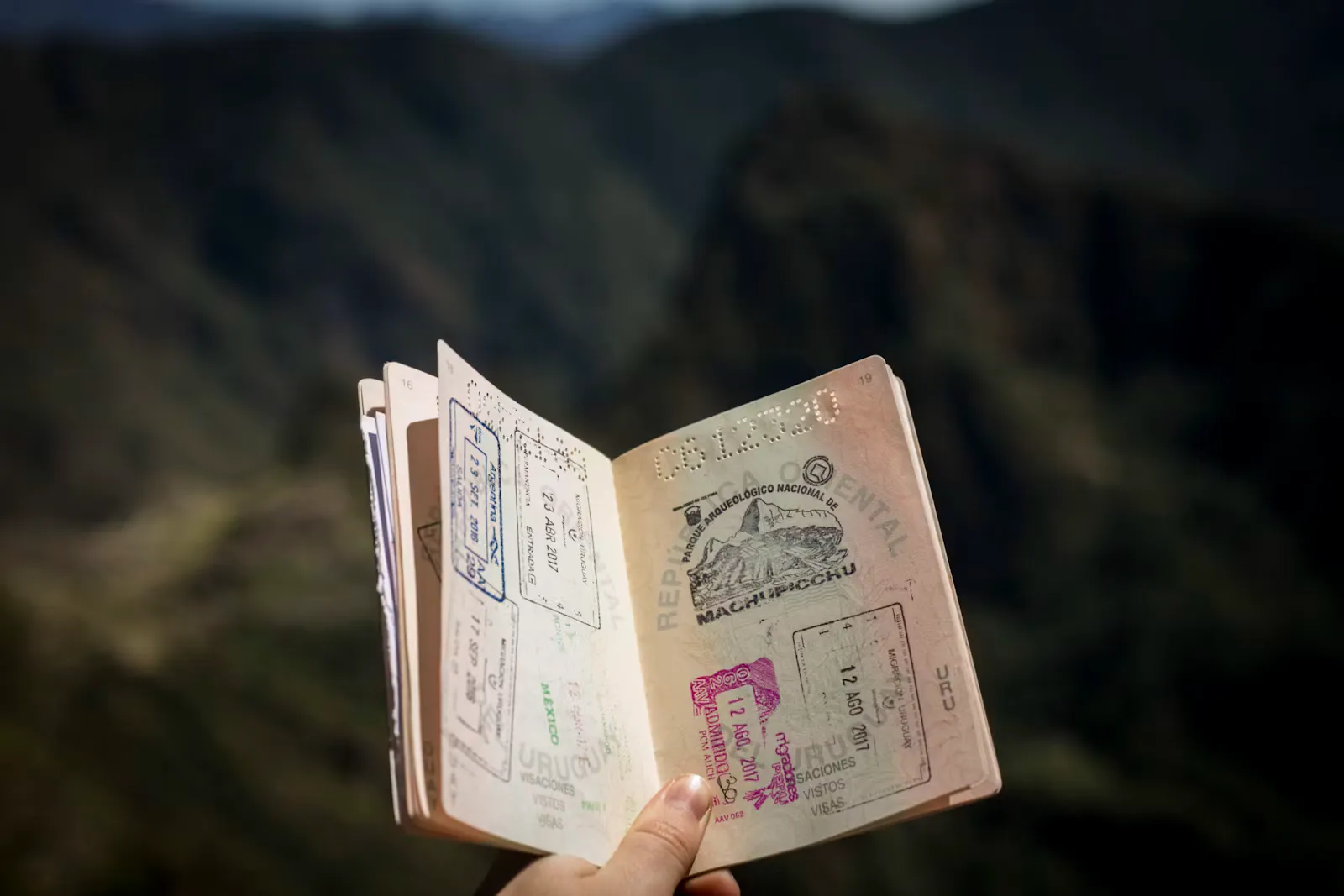
Visa Requirements for Sri Lanka and Nepal by Nationality
Visa requirements for Sri Lanka and Nepal differ substantially depending on your passport, so there is no single answer that applies to every international student. Sri Lanka uses an Electronic Travel Authorization (ETA), with a 30-day free tourist ETA for 40 specific nationalities since 25 May 2026 and paid tiers for everyone else (Sri Lanka Electronic Travel Authorization, 2026). Nepal charges a tourist visa fee tiered by length of stay — except for Indian nationals, who don't need a visa to enter Nepal at all (Nepal Tourism Board — Tourist Visa, 2026). If you're planning a nursing internship, clinical clerkship or practical year in Sri Lanka or Nepal, this guide explains how the rules generally work and exactly where to check the current requirements for your own nationality.
Key Takeaways
Visa requirements for Sri Lanka and Nepal genuinely vary by passport — always check the official portal for your own nationality rather than following a generic list.
Sri Lanka's tourist ETA has been free for 30 days for 40 listed nationalities (including India, the UK, the US and most EU member states) since 25 May 2026; everyone else pays a standard ETA fee (eta.gov.lk, 2026).
Nepal charges a tiered tourist-visa fee — 30 USD for 15 days, 50 USD for 30 days, 125 USD for 90 days — but Indian nationals don't need a visa for Nepal at all, and SAARC nationals get a free 30-day visa on their first visit in a visa year (Nepal Tourism Board, 2026).
Children get concessions in both countries: under 12 for Sri Lanka's free ETA, under 10 for Nepal's visa fee.
Apply only through the official portals — eta.gov.lk for Sri Lanka, the Department of Immigration's official portal for Nepal — since copycat third-party sites are known to charge inflated fees.
A visa is required for every entry to Sri Lanka regardless of nationality (either free or paid ETA); Nepal is the one destination in this guide where an entire nationality (India) is exempt outright.
Get the paperwork sorted early — visa rules and fees differ by nationality for both Sri Lanka and Nepal.
Why do visa requirements for Sri Lanka and Nepal depend so much on your passport?
Both countries set entry rules based on bilateral agreements, regional blocs (such as SAARC) and unilateral visa-facilitation decisions, so your specific nationality can mean a free entry, a discounted fee, a standard fee, or in Nepal's case, no visa requirement whatsoever. That's exactly why visa requirements for Sri Lanka and Nepal resist a single one-size-fits-all answer. Treat any number you read in a general guide — including this one — as a starting point, and always confirm against the official portal for your own passport before booking flights.
How does Sri Lanka's ETA work, and what does it cost by nationality?
Understanding visa requirements for Sri Lanka and Nepal starts with Sri Lanka's system: it requires an Electronic Travel Authorization (ETA) for essentially all visitors, applied for exclusively through the official portal. Since 25 May 2026, a 30-day, double-entry tourist ETA has been free of charge for nationals of 40 specific countries, while all other nationalities pay a standard fee (Sri Lanka Electronic Travel Authorization, 2026).
The 40 nationalities eligible for the free tourist ETA
As of this 2026 scheme, free 30-day tourist ETAs apply to nationals of: Australia, Austria, Bahrain, Belarus, Belgium, Canada, China, Czech Republic, Denmark, Finland, France, Germany, India, Indonesia, Iran, Israel, Italy, Japan, Kazakhstan, Kuwait, Malaysia, Nepal, Netherlands, New Zealand, Norway, Oman, Pakistan, Poland, Qatar, Russia, Saudi Arabia, South Korea, Spain, Sweden, Switzerland, Thailand, Turkey, the UAE, the UK and the USA (Sri Lanka Department of Immigration & Emigration, 2026). This list matters in practice: it means Indian, British, American and most EU nationals currently pay nothing for a standard 30-day tourist ETA, while nationals of countries not on the list still pay the standard fee below. Always check the current list yourself, since eligible countries can change.
Standard ETA fees for everyone else
Outside the free list, standard fees apply: SAARC nationals pay 20 USD if applying online or at a mission (25 USD if arranged on arrival), while nationals of all other countries pay 50 USD online or at a mission (60 USD on arrival) (Sri Lanka Electronic Travel Authorization — fees, 2026). Business ETAs cost more and aren't available on arrival. Children under 12, regardless of nationality, qualify for the free 30-day tourist ETA.
Applying for the Sri Lanka ETA: step by step
Go directly to the official site, eta.gov.lk — never a third-party site.
Complete the online form with your passport details and travel information.
Pay the applicable fee by card, unless your nationality falls under the free 30-day scheme.
Save your confirmation number and present it on arrival at Bandaranaike International Airport in Colombo.
What does the tourist visa for Nepal cost, and who is exempt?
Nepal's tourist visa system is straightforward once you know your category: a tiered fee for most nationalities, a full exemption for Indian nationals, and a partial exemption for SAARC nationals.
Standard tiered fees
Nepal's Department of Immigration charges a tourist-visa fee tiered by length of stay: 30 USD for 15 days, 50 USD for 30 days, and 125 USD for 90 days, payable online or on arrival (Nepal Tourism Board — Tourist Visa, 2026). That means the 90-day visa, at 125 USD, costs roughly 317% more than the 15-day visa at 30 USD — worth factoring in if you're planning a longer practical year rather than a short clinical clerkship.
Indian nationals: no visa required
Indian nationals do not need a visa to enter Nepal at all. Under the long-standing open border arrangement between the two countries, Indian citizens can enter using a passport or another accepted form of national ID, without going through the visa process described above (Nepal Tourism Board — Tourist Visa, 2026). This is the clearest example of how much visa requirements for Sri Lanka and Nepal can diverge by nationality — the same trip that costs a European or American student 30 to 125 USD costs an Indian national nothing in visa fees.
SAARC nationals and children
SAARC nationals (except Afghanistan) receive a free 30-day visa on their first visit within a Nepali visa year, while children under 10 are generally exempt from the visa fee, with one published exception for children of US citizens (Nepal Tourism Board — Tourist Visa, 2026). These exemptions are a good example of how much visa requirements for Sri Lanka and Nepal can shift depending on which passport, or which regional bloc, you belong to.
Applying online or on arrival
You can apply in advance through the official Department of Immigration portal, uploading a recent passport photo and printing the confirmation for arrival, or apply on arrival at Tribhuvan International Airport in Kathmandu with a passport photo and cash in USD or another convertible currency (Nepal Tourism Board — Tourist Visa, 2026). Read more about longer placements on our clinical clerkship abroad and practical year abroad pages.
Once your visa is confirmed, you're clear to focus on your clinical internship abroad in Sri Lanka or Nepal.
What documents do you need at entry?
Sri Lanka's Department of Immigration and Emigration asks for your ETA confirmation, a passport valid with at least one blank page, and a completed arrival card (Sri Lanka Department of Immigration & Emigration, 2026). Nepal additionally requires a passport valid at least six months beyond your entry date.
Documents for Sri Lanka:
ETA confirmation (or completed visa application, for the small number of cases still requiring manual processing)
Valid passport with at least one blank page
Return or onward flight confirmation
A detailed itinerary
Proof of ETA fee payment (where applicable)
Completed arrival card (Arrival e-Card), online or on paper
Documents for Nepal (where a visa applies to your nationality):
Passport valid at least six months beyond your entry date
A recent passport photo
Printed online confirmation, or a completed paper form
Visa fee in cash (USD or another convertible currency), or proof of online payment
For a longer placement, our clinical clerkship abroad and practical year abroad pages have further notes on insurance and preparation. Pair your visa checklist with our packing list for a clinical internship abroad — Dr. Phyllis Kozarsky, MD, the CDC Yellow Book's longtime editor, has consistently emphasised planning travel-health and entry paperwork together rather than as separate last-minute tasks.
What mistakes should you avoid when applying?
The same avoidable mistakes come up again and again around visa requirements for Sri Lanka and Nepal. Several travellers report third-party websites charging double or even triple the real fee for a Sri Lanka ETA, even though applications should only ever go through eta.gov.lk (Sri Lanka Electronic Travel Authorization, 2026). This mix-up between the official portal and near-identical copycat sites is one of the most common issues travellers run into.
Applicants also frequently confuse the two countries' passport-validity rules: Sri Lanka only requires one blank page, while Nepal requires six months of remaining validity. If you're visiting both countries — say, a placement in Nepal followed by travel in Sri Lanka — apply the stricter standard and renew your passport in good time if needed. Getting the passport-validity rule wrong is one of the most common, and most avoidable, mistakes students make when researching visa requirements for Sri Lanka and Nepal.
Double-check that your return ticket and itinerary match your requested length of stay; inconsistent details are a common reason for questions at the immigration counter. If you're unsure, our free consultation can help before you book your flight.
Frequently Asked Questions
Secure Information Material
Request all the important info for free, no obligation.
Conclusion: Check the official portal for your own nationality
Visa requirements for Sri Lanka and Nepal can be handled entirely online in 2026 if you use the official portals and check deadlines and passport validity early — but the exact rules and fees depend heavily on your own passport. Sri Lanka runs almost entirely on the ETA, with a free 30-day option for 40 nationalities and a standard fee for everyone else; Nepal uses tiered fees between 30 and 125 USD, with a full exemption for Indian nationals and a partial one for other SAARC nationals. If you're combining both countries in one trip, apply for each separately and confirm the current rules for your specific nationality before booking.
As your placement organiser, travel4med supports you from the visa question through to arrival at the hospital. Take a look at our locations, read real experience reports, and book a free consultation for your next clinical internship abroad.
Sources
Sri Lanka Electronic Travel Authorization (eta.gov.lk), fee schedule: eta.gov.lk.
Sri Lanka Department of Immigration & Emigration, notice on the free tourist visa for 40 selected nationalities: immigration.gov.lk.
Sri Lanka Department of Immigration & Emigration, "General Information on Visa": immigration.gov.lk.
Nepal Tourism Board, "Tourist Visa Information": ntb.gov.np.