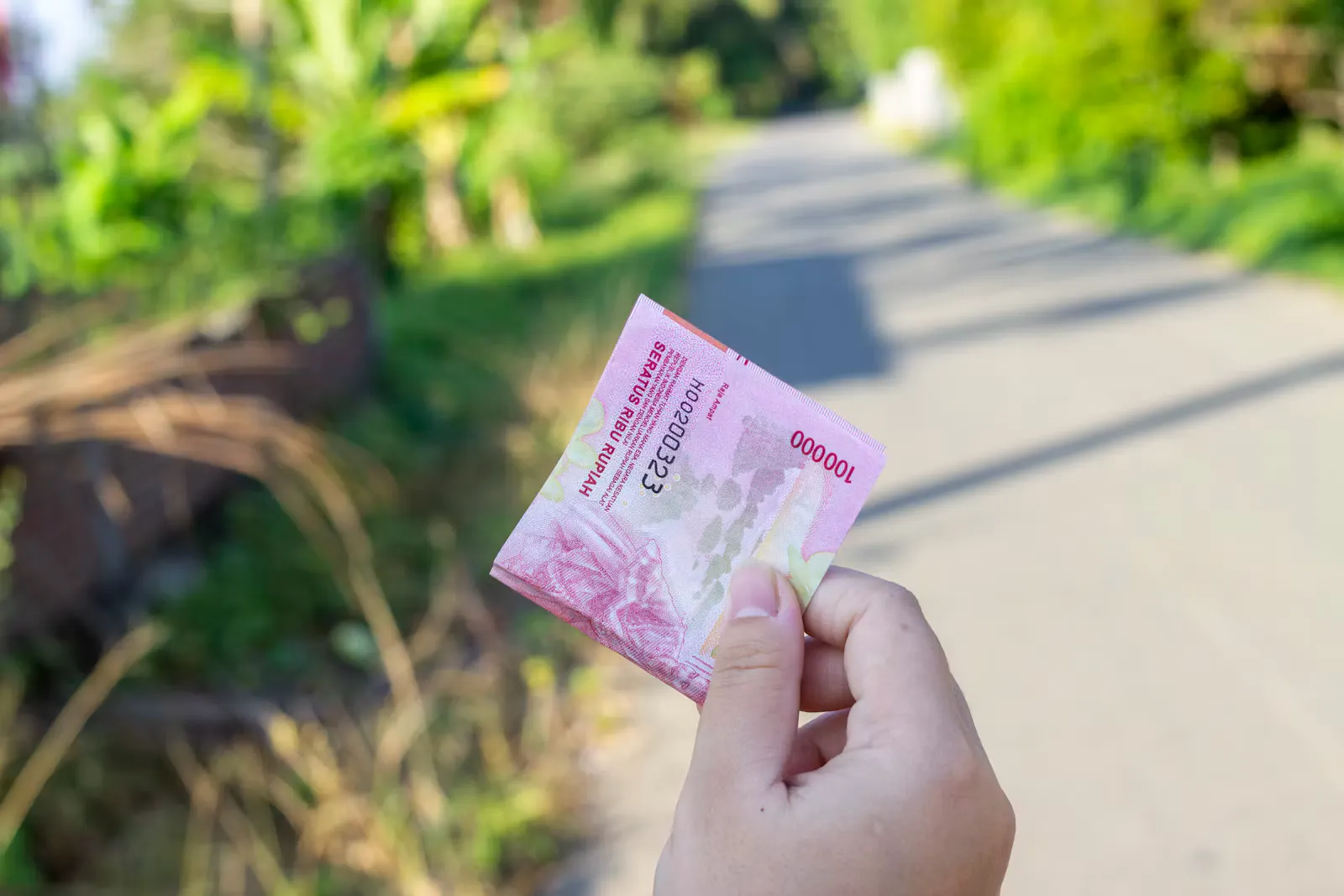
Nepal Currency 2026: Rupee Guide for Your Placement
The Nepal currency is the Nepalese rupee (NPR, written Rs), issued by Nepal Rastra Bank, the country's central bank. On 2 November 2026 Nepal Rastra Bank's buying rate was NPR 169.22 for 1 euro and NPR 151.63 for 1 US dollar, so a 1,000 rupee note is worth about 5.91 euros. Plan to pay your daily life on placement in rupees.
Editorially reviewed by Nils-Andre Stritt, travel4med (author page). Rates, banknotes and cash rules checked against Nepal Rastra Bank and UK government pages on 2 November 2026.
Key Takeaways
One currency: The Nepal currency is the Nepalese rupee (NPR), issued by Nepal Rastra Bank. Prices are shown as Rs, and the largest note is 1,000 rupees.
About 169 rupees per euro: Nepal Rastra Bank's buying rate on 2 November 2026 was NPR 169.22 per euro, NPR 151.63 per US dollar and NPR 203.07 per British pound.
Cash limit: Nepal Rastra Bank lets Nepali and foreign citizens bring in foreign cash up to the value of USD 5,000 without a customs declaration. Above that, you declare it at customs.
Indian notes: The rupee is fixed at NPR 160 per 100 Indian rupees. Since July 2026, Nepali and Indian citizens may carry post-2016 INR 200 and 500 notes up to INR 25,000 per person.
Spend it before you fly home: The UK government says you need to convert all your Nepali currency before you leave Nepal.
What is the Nepal currency?
The Nepal currency is the Nepalese rupee, code NPR, which you'll see on price tags as Rs. It's issued by Nepal Rastra Bank, the central bank of Nepal, which also publishes the official exchange rates every day. Its forex page listed 22 foreign currencies against the rupee on 2 November 2026, from the euro to the Indian rupee.
Don't mix it up with the Indian rupee. The two share a name, but they are different currencies with different notes and a different value.
Why should this matter for a hospital placement? For four to twelve weeks you pay your own daily life: tea at the hospital canteen, a taxi across Pokhara, a SIM card, a weekend trip to the lakeside or the hills. Know the Nepal currency before you land and the first market stall won't feel like a maths test. You're not the only one asking: SISTRIX counted 2,400 UK searches for "nepal currency" in August 2026, up from 1,900 in August 2025.
Ready for your adventure abroad?
Secure your spot for your internship abroad now.
How much is 1 euro in Nepalese rupees?
On 2 November 2026 Nepal Rastra Bank's buying rate was NPR 169.22 for 1 euro, NPR 151.63 for 1 US dollar and NPR 203.07 for 1 British pound. In practice 1,000 rupees is about 5.90 euros, 6.60 US dollars or 4.90 pounds. Banks and money changers set their own rates, so expect a slightly worse deal than the central bank figure.
Nepal Rastra Bank says so itself on its rates page: "the open market exchange rates quoted by different banks may differ." Its figures are still the best yardstick when you compare offers. They also move: over the three months to 2 November 2026, the bank's euro buying rate ranged from NPR 178.91 on 21 August to NPR 169.17 on 29 October, a swing of about 5%.
Amount in rupees
In euros
In US dollars
In British pounds
What it is
NPR 100
0.59 EUR
0.66 USD
0.49 GBP
one 100 note
NPR 500
2.95 EUR
3.30 USD
2.46 GBP
one 500 note
NPR 1,000
5.91 EUR
6.60 USD
4.92 GBP
one 1,000 note
NPR 5,000
29.55 EUR
32.98 USD
24.62 GBP
five large notes
NPR 10,000
59.09 EUR
65.95 USD
49.24 GBP
ten large notes
All values are our own Nepal currency calculations from Nepal Rastra Bank's buying rates of 2 November 2026. The euro is our reference currency. If you pay in another currency, check today's NPR rate in your banking app before you go, because local prices and your own currency's rate will differ.
Which rupee banknotes will you use?
The Nepal currency notes you'll handle most are the 50, 100, 500 and 1,000 rupee notes, the ones Nepal Rastra Bank describes on its banknote security features page. The 1,000 rupee note is the largest, and the bank shows two versions of it, a 2019 series and a 2025 series. Even that top note is worth only 5.91 euros at the buying rate of 2 November 2026.
Two versions of one note can confuse you at a till. So spend five minutes on the bank's security features page before you travel. On the 2025 series 1,000 note and the 500 note, the security thread shifts from red to green when you tilt it, and a patch of colour shifting ink turns from gold to green. Knowing that makes it easier to check your change.
Our own calculation from Nepal Rastra Bank's EUR buying rate of 2 November 2026 (NPR 169.22 per euro); banknotes from Nepal Rastra Bank's banknote security features page, read on 2 November 2026.
One habit for handling the Nepal currency every day: keep small notes. Paying for a cup of tea with a 1,000 note can leave a small shop without change, and taxi drivers often can't break big notes either.
What is the best currency to take to Nepal?
Take the major currency you already hold, such as euros, British pounds or US dollars, and change it into the Nepal currency once you're there. Nepal Rastra Bank publishes daily rates for all three, so banks and money changers exchange them routinely. Changing your money into dollars first only adds a second fee.
There's one exception worth knowing. If you get your visa on arrival, the UK government says you can pay by card, but you should have cash as a back up, "with US dollars being the preferred currency." So a small reserve of dollars for the visa makes sense. Our guide to visa requirements for Sri Lanka and Nepal covers the entry side.
How much cash can you bring? Nepal Rastra Bank's notice on bringing cash foreign currency into and out of Nepal, republished on its website in July 2026, says Nepali and foreign citizens can bring in foreign currency cash up to the value of USD 5,000 without a customs declaration. Above that, you declare it at customs and get it certified. The UK government adds the limit for notes and travellers cheques combined: 10,000 dollars. Keep the certified declaration, because the bank or exchange counter at the airport may ask for it when you leave.
Paying by card or at an ATM? You'll often be offered a charge in your home currency instead of rupees. That's dynamic currency conversion (DCC). Visa says "merchants and ATMs should give you a choice to accept or decline currency conversion and must not choose on your behalf", and that declining "will not affect your ability to make purchases or withdraw cash internationally". Choose NPR every time. German speaking classmates will find a detailed ATM guide on our Swiss sister site: withdrawing money during a placement abroad, written for students in Switzerland.
Can I use Indian currency in Nepal?
Only within strict limits. Nepal Rastra Bank fixes the rate at NPR 160 per 100 Indian rupees. Its July 2026 notice lets Nepali and Indian citizens bring in, take out and exchange Indian 200 and 500 rupee notes issued since 9 November 2016, up to INR 25,000 per person. Indian 500 and 1,000 notes from before that date may not be used.
So the rule is written for Nepali and Indian citizens. If you're an Indian student coming for an elective, that INR 25,000 allowance is worth NPR 40,000 at the fixed rate, about 236 euros. If you hold another passport, plan with your own currency and the Nepal currency, not with Indian notes.
The same notice also reminds Nepali citizens that they may not take Indian rupees to countries other than India, or bring them in from there. And remember the fixed rate when you compare prices: 100 Indian rupees and 100 Nepalese rupees are not the same money.
Secure Information Material
Request all the important info for free, no obligation.
Plan for both. Cash in the Nepal currency covers the small costs of a placement day, such as tea, fruit, taxis and tips, while a card helps with bigger bills and with topping up cash. The UK government warns that "ATMs are not reliable outside main tourist sites," so don't count on finding a working machine everywhere.
That warning matters most for weekends away. For trekking, the UK advice says to carry enough funds in case of delays, because in remote areas ATMs may not be available and credit cards not accepted. In town, it says not to carry large sums of cash and to keep valuables in a hotel safe if possible. Our German sister site sums up the safety side in its guide to safety during a placement in Nepal, written for students in Germany.
How much daily cash do you need? That depends on what your booking covers. Our Nepal destination page describes the shared travel4med accommodation in Pokhara with a mountain view, three meals a day, WiFi and laundry service. So in your hospital weeks you mostly pay for snacks, a SIM card, local transport and your weekends. Check what your own booking includes.
Sorting out the Nepal currency takes one evening if you go through it in this order. It works for a four week elective as well as a twelve week nursing placement.
Note the rate: Look up today's NPR rate for your own currency on the Nepal Rastra Bank forex page and write down the quick rule: 1,000 rupees is about 6 euros.
Check your cards: Ask your bank what card payments and withdrawals in rupees cost, and pack two cards from two different banks.
Bring your own major currency: Pack a small reserve of euros, pounds or dollars, plus some US dollars if you'll pay a visa on arrival. Stay under the USD 5,000 cash limit or declare it.
Exchange on arrival: Change money at a bank or a money changer, count the notes and keep the receipt and any customs declaration.
Pay in rupees: Use NPR for everything local and always choose to be charged in NPR when a card terminal or ATM asks.
Spend or change it before you leave: Convert your remaining Nepal currency before departure, as the UK government advises.
Your placement in Nepal with travel4med
Our Nepal placements are in Pokhara. According to our Nepal destination page, placements always start on Mondays, the price starts from 1,490 EUR, and you can work in fields such as emergency medicine, cardiology, general and visceral surgery, orthopaedics and trauma surgery, neurosurgery, gynaecology, nephrology and urology. Local costs and your own currency come on top.
Planning your placement in Nepal? Book a free consultation and we'll go through dates, specialty, entry and budget with you, so the Nepal currency is one less thing to worry about. Compare all our destinations too. travel4med is part of the futuredoctor group ecosystem, which supports students from application to graduation.
Nepal Rastra Bank. Foreign Exchange Rates (buying and selling rates for 22 currencies, rates for 2 November 2026; INR rate fixed by Nepal Rastra Bank; note that open market rates quoted by banks may differ): nrb.org.np/forex (accessed 2 November 2026). Three-month range from the bank's published daily rates, 2 August to 2 November 2026.
Nepal Rastra Bank. Banknotes security features (1,000 rupees 2025 and 2019 series, 500, 100 and 50 rupees): nrb.org.np (accessed 2 November 2026).
Nepal Rastra Bank, Foreign Exchange Management Department. Notice on bringing cash foreign currency into Nepal and taking it out of Nepal (USD 5,000 limit without customs declaration; Indian 200 and 500 notes up to INR 25,000 per person; published on the bank's website on 7 Shrawan 2083, July 2026; in Nepali): nrb.org.np (PDF) (accessed 2 November 2026).
UK Foreign, Commonwealth and Development Office. Nepal travel advice, Entry requirements (currency declaration, converting Nepali currency before leaving, visa payment, ATMs): gov.uk (accessed 2 November 2026).
UK Foreign, Commonwealth and Development Office. Nepal travel advice, Safety and security (cash, trekking funds, ATMs and cards in remote areas): gov.uk (accessed 2 November 2026).
Visa. Dynamic currency conversion: visa.com (accessed 2 November 2026).
SISTRIX. UK search volume for "nepal currency", August 2026 and August 2025 (keyword data, accessed 2 November 2026).