Ready for your adventure abroad?
Secure your spot for your internship abroad now.

A medical elective in Nepal is a short, supervised clinical placement at a Nepali teaching hospital — usually in the Kathmandu Valley — where medical, nursing or dental students observe and, within their training level, assist local clinicians across busy wards, outpatient clinics and emergency departments. Nursing students complete an equivalent placement, generally called a nursing internship in Nepal, and some students fold a Nepal rotation into a longer international elective. Our broader medical electives abroad guide introduces the destination in a single paragraph; this guide goes country-deep on Nepal specifically — the actual hospitals, the registration and visa steps, the real health risks at altitude, and what is realistically achievable in 2026/27.
Prices in this guide use euros (EUR) as the reference currency, with official fees quoted in the US dollars they are actually charged in (about US$1 ≈ €0.92 in mid-2026); treat conversions as ballpark planning figures only. For the current Nepal placement listing, see the locations overview or book a free consultation.
A medical elective in Nepal is the classic clinical-elective rotation applied to one specific destination: you join a department at a Nepali teaching hospital, follow ward rounds and outpatient clinics, and build diagnostic reasoning inside Nepal's health system rather than your own. It is not a substitute for your core curriculum — it is supervised, real-world exposure that complements it, exactly as our clinical clerkship service page explains for every destination we organise.
Two adjacent placement types are also common. A nursing internship in Nepal is the equivalent supervised placement for nursing students, described in more depth on the nursing internship page and in our nursing internship abroad planning guide. Students nearing graduation sometimes combine Nepal into a longer practical year, covered on the practical year page. Whichever format applies to you, the terminology your home programme uses may differ — treat "elective," "clerkship" and "internship" as describing the same underlying idea: supervised clinical time abroad. If you are new to the whole process, start with our beginner's planning guide.
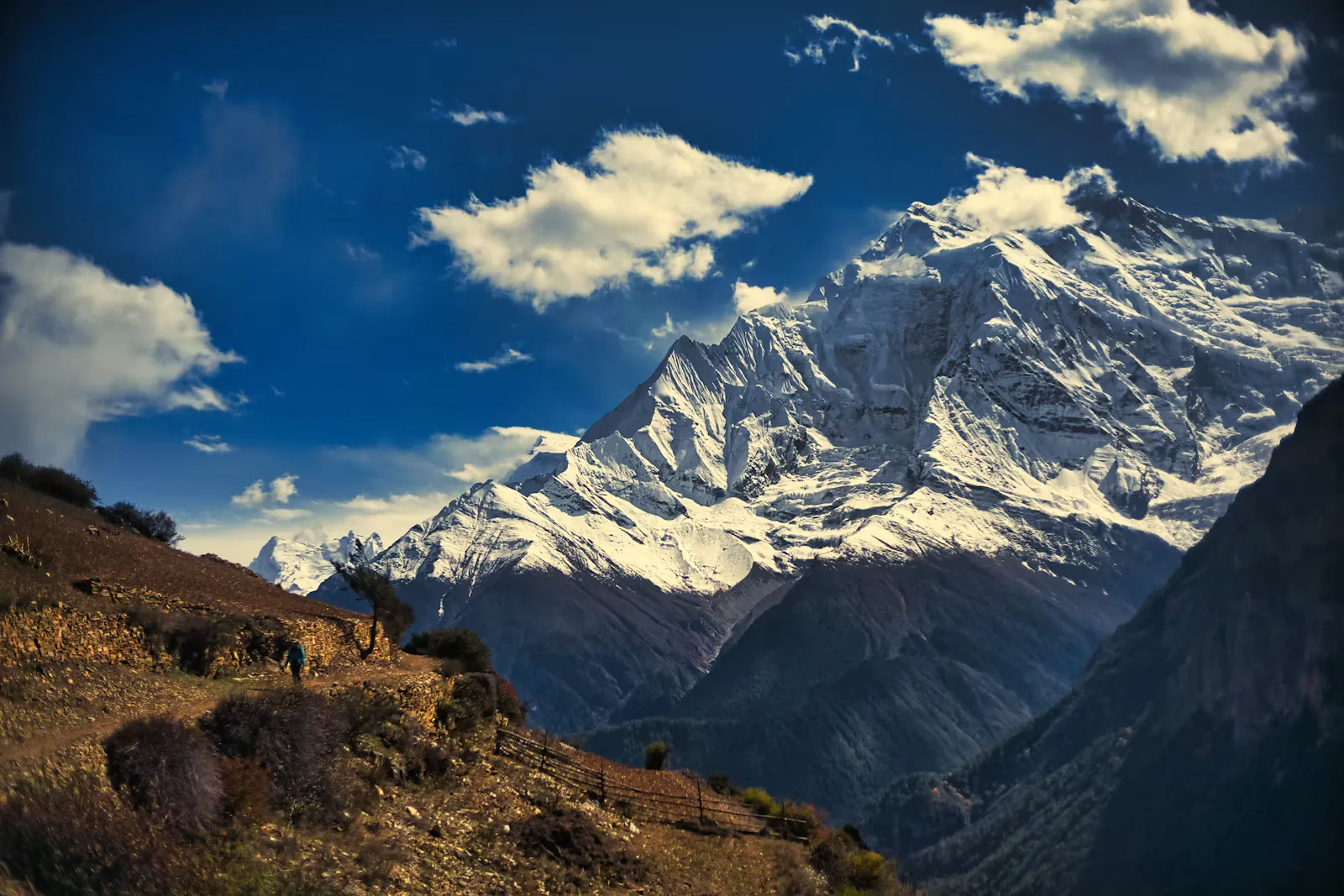
Almost every medical elective in Nepal is based in the Kathmandu Valley, which concentrates the country's largest public and private teaching hospitals. The best known is Tribhuvan University Teaching Hospital (TUTH), part of the Institute of Medicine and Nepal's principal public referral centre; other established teaching hospitals in and around the capital run comparable programmes. Because these are the main referral hospitals for a population of more than 29 million people (CDC Yellow Book, 2024), their wards carry a high, varied caseload across internal medicine, paediatrics, general surgery, obstetrics and emergency medicine.
Placement departments commonly open to elective and internship students include internal medicine, paediatrics, general surgery, obstetrics and gynaecology, emergency medicine and community health, whether in a large tertiary hospital or partly in a community clinic.
We deliberately do not publish specific bed counts or staffing figures for individual hospitals: the numbers on commercial travel sites are not consistently confirmed on an official source, and we would rather link you to the placement coordinator for accurate department capacity. Which department you are placed in depends on your placement type, subject interest and current cooperation capacity — travel4med confirms the exact arrangement with you before departure. Talk through the options in a free consultation, and compare Nepal with our other destinations in the clinical clerkship in Bali guide and the Zanzibar clinical clerkship guide.
Secure your spot for your internship abroad now.
Nepal supports several placement formats, and the right one depends on where you are in your studies rather than on any single fixed rule:
Because recognition rules differ by country and even by university, never assume a Nepal placement will automatically count toward your degree — check your home country's recognition process and confirm the specific arrangement with your own institution in writing before you travel. Read first-hand accounts of past placements on the experience reports page.
Getting onto a medical elective in Nepal is mostly an administrative exercise, and it is the part students most often underestimate. Nepali teaching hospitals generally ask visiting elective students for the same core package: a letter from your dean or faculty confirming you are enrolled and in good standing, evidence of your clinical stage, proof of medical and indemnity insurance, immunisation records, and a completed hospital application — after which the host institution registers you internally.
Follow these steps as a starting checklist rather than a final answer for your situation:
Because the underlying regulatory framework can change, do not treat any single blog's checklist (including this one) as the final word — confirm the current registration requirement with your host hospital and, where relevant, the Nepal Medical Council. travel4med helps coordinate the placement-confirmation paperwork on the Nepal side; the academic approval always rests with your home institution.
Most elective students enter Nepal on a tourist visa, which is available on arrival at Kathmandu's Tribhuvan International Airport or in advance, with fees set by duration. Because a supervised, unpaid elective sits in a grey area, confirm with your coordinator whether a tourist visa is appropriate for your length of stay or whether your circumstances need a different category.
| Tourist visa (multiple entry) | Fee (US$) | Approx. € |
|---|---|---|
| 15 days | US$30 | ≈ €28 |
| 30 days | US$50 | ≈ €46 |
| 90 days | US$125 | ≈ €115 |
Source: Nepal Department of Immigration / Nepal Tourism Board (2026). Fees are date-sensitive — verify on the official portal before you travel.
A key point our visa requirements guide for Sri Lanka and Nepal explains in full: Indian nationals need no visa at all for Nepal under the two countries' open-border arrangement, and some SAARC-region and child travellers are exempt or reduced. Everyone else should budget the fee above and carry a passport valid for at least six months, a photo, and proof of onward travel and placement confirmation. Always check your government's foreign-travel advisory before booking, and see our getting around Sri Lanka and Nepal guide for in-country transport.
Nepal's health profile for a visiting student is dominated by enteric (food- and water-borne) disease and altitude, not by the tropical fevers people often expect. Hepatitis A and typhoid vaccines are the two most important pre-travel immunisations, and the risk of typhoid and paratyphoid fever among visitors to Nepal is among the highest in the world (CDC Yellow Book, 2024). Tap water is not safe to drink — use only boiled or bottled water. A pre-travel consultation four to six weeks before departure should be your first move; our packing list for a clinical internship abroad covers the travel-health kit in detail.
Dengue is a growing, seasonal risk in the warmer, wetter months. Nepal's Ministry of Health reported roughly 18,000 dengue cases in 2019 and more than 46,000 in 2022, so insect-bite precautions matter:
Malaria is far less of a concern than the tropics: no malaria transmission occurs in Kathmandu or Pokhara, and the CDC recommends chemoprophylaxis only for travellers visiting areas below 2,000 m (≈6,500 ft) elevation (CDC Yellow Book, 2024). Altitude is the bigger issue if your trip includes trekking on days off — Kathmandu itself sits at a comfortable 1,324 m, but popular routes climb quickly. The chart below shows where the malaria threshold and common trekking elevations sit:
See a travel-medicine clinic or your national health authority at least four to six weeks before departure about routine and travel vaccines, altitude-illness prevention and self-treatment for travellers' diarrhoea. This is guidance to seek from a qualified provider, not something to self-diagnose from an article.
Request all the important info for free, no obligation.
Costs vary by placement length, accommodation standard and how much on-the-ground support is included, so we avoid quoting one headline programme number. Budget for four categories: the placement or programme fee (coordination, local support, often accommodation), flights, living costs in Kathmandu, and one-off items such as the visa, insurance and pre-travel vaccinations. For a full budgeting method, see our budgeting guide.
One cost is worth flagging: if your trip includes trekking, helicopter evacuation in Nepal is billed at around US$4,000 per hour, averaging US$8,000–US$10,000 in total, and some insurers now surcharge or exclude Nepal cover (CDC Yellow Book, 2024) — so read your policy's mountain-rescue terms carefully. Because placement pricing depends on your exact dates and type, the reliable way to get an accurate figure is to share your details and let us quote it directly.
Ready to plan your placement? Tell us your dates, placement type and training level, and we'll handle hospital coordination, on-the-ground support and paperwork. Book a free consultation with travel4med to get started.