Is Nepal Safe for a Medical Elective? 2026 Student Guide
Is Nepal safe for a medical elective? Yes, for most students who prepare well. Nepal is a country with a low rate of serious crime, and the UK government's travel advice, still current on 8 November 2026, does not tell visitors to avoid it. The real risks on a placement in Pokhara are everyday ones: roads, trekking at altitude, monsoon floods, earthquakes and stomach bugs.
Researched and editorially reviewed by Nils-Andre Stritt, travel4med. Nils-Andre organises our destinations and placements and talks students through their plans before they book.
Key Takeaways
Serious crime is rare. The UK government says Nepal has a low rate of serious crime. Pickpockets and bag snatchers are the main problem in busy areas.
Protests happen, and fast. Demonstrations and strikes are fairly common, can start at short notice and can lead to curfews. Stay away from crowds.
Roads are the biggest physical risk. The WHO estimates 8,479 road traffic deaths in Nepal in 2021, a rate of 28.2 per 100,000 people.
Never trek alone. Foreign trekkers must use a local guide or porter in Nepal's national parks, and your insurance should cover helicopter rescue.
Nature sets the calendar. The monsoon normally runs from June to October, and earth tremors are common across the country.
Numbers to save. Police 100, ambulance 102, fire 101, and the Tourist Police on 1144.
Is Nepal safe for international students right now?
Yes. Nepal is safe for international students in November 2026 if you take normal precautions. The UK government's Nepal travel advice was last updated on 1 October 2026 and was still current on 8 November 2026. It flags a flash flood that hit Rasuwa district on 26 August 2026 and warns of further flooding, but it doesn't advise against travel to Pokhara.
For a placement student, the picture is calmer than the headlines. You'll be on the wards of Manipal Teaching Hospital in Pokhara, living with other interns in our accommodation and starting on a Monday with local support. The things worth preparing for are a lifted phone, a strike day, a crowded bus, a trek that climbs too fast or a bad stomach.
So is Nepal safe in every situation? No place is. The UK advice itself says "no travel can be guaranteed safe". The better question isn't only "is Nepal safe?" but "which risks apply to me on a ward in Pokhara, and what do I do about each one?" This guide answers that, with an official source for every point.
A note on sources: we quote the UK Foreign, Commonwealth and Development Office (FCDO) because its advice is detailed and public. If you hold another passport, read your own government's advisory for Nepal too, register with your embassy if it offers that, and follow its alerts during your stay.
Ready for your adventure abroad?
Secure your spot for your internship abroad now.
What does official travel advice say about Nepal?
Official advice treats Nepal as open to visitors, with caution about nature and politics. The FCDO's Nepal advice lists terrorism, protests, crime, trekking, earthquakes, monsoon, roads and air safety. Its current headline is the Rasuwa flash flood of 26 August 2026, which also affected Gorkha, Nuwakot and Dhading districts. Pokhara isn't among the areas it names.
Here is what the advice covers, in plain words:
Terrorism. There's "no recent history of terrorism in Nepal", but attacks cannot be ruled out.
Protests and strikes. Political protests, demonstrations and strikes are "fairly common". They can start at short notice, turn violent and disrupt transport, and the authorities may impose a curfew.
Floods. After the August 2026 flood, the authorities warned of more flooding and landslides. Nepal set up a Nepali-language emergency line, 1234, and the hotline 1144.
Air travel. The FCDO says no Nepali airline currently meets international safety standards, so all of them are on the UK Air Safety List.
So is Nepal safe according to official advice? Yes, with caution. None of this is a reason to cancel a placement. It's a reason to read the advice once before you book, sign up for email alerts, and check again in the week before you fly.
How common is crime against visitors in Nepal?
Crime against visitors in Nepal is mostly theft. The FCDO says Nepal has a low rate of serious crime, but warns about pickpockets and bag snatchers, particularly at airports, on buses and in areas popular with foreigners, such as Thamel, Sanepa and Kupondol in Kathmandu. Assaults and robberies are more likely in the evening in poorly lit areas.
What the official advice tells you to do:
Avoid walking on your own at night, and stick to well-lit streets.
Don't carry large sums of cash. Keep valuables in a hotel safe where you can.
Be wary of drinks from strangers and never leave yours unattended.
Be careful with spirits. The FCDO warns that even small amounts of methanol in alcoholic drinks can kill, and you can't taste or smell it.
Cash is part of this. Our Nepal currency guide explains how much money to carry, where ATMs work and how to pay without flashing a wallet.
Is Nepal safe for solo female travellers?
Nepal is safe for most women travelling alone, but take care after dark. The FCDO says women have been sexually assaulted in tourist areas such as Thamel and Sanepa in Kathmandu, and advises being cautious, especially when alone after dark. Drink spiking is the other risk it names, so keep your drink with you.
So is Nepal safe for a female nursing or medical student on placement? Yes, with planning. Go out in pairs or groups at night, use transport your accommodation recommends, and dress modestly at temples and holy places, where the FCDO advises against shorts and sleeveless tops. Living in a shared intern house helps here, because there's nearly always someone to walk back with.
Feeling unsettled in a new culture is normal in the first week. Our guide to coping with homesickness abroad has practical tips our students actually use.
Which local laws and customs affect your safety?
Most rules in Nepal are relaxed, but drug laws are strict. The FCDO says that if you're caught with even small amounts of marijuana, you can go to prison for over 5 years. Some CBD skincare and e-cigarette refills are illegal too. You should carry your passport with you.
The rules that matter most on a placement:
Temples. Cover shoulders and knees, and remember that non-Hindus are not allowed inside certain parts of Hindu temples.
Public affection. Same-sex relations are not illegal, and the FCDO calls Nepal generally open and tolerant on LGBT+ issues. Showing affection in public is seen as inappropriate by many Nepalis, whoever you are.
Wildlife. Buying, selling or trading wild animals or their parts without a licence is illegal.
Volunteering. The FCDO warns that some orphanage volunteering is run for profit. Stick to supervised clinical placements.
Is Nepal safe for LGBT+ students? Generally yes, by the FCDO's account, but be discreet in public like everyone else. For entry papers, see our guide to visa requirements for Sri Lanka and Nepal.
Secure Information Material
Request all the important info for free, no obligation.
If you ask "is Nepal safe on the roads?", the honest answer is: this is where most of the physical risk lies. The WHO estimates 8,479 road traffic deaths in Nepal in 2021, a rate of 28.2 per 100,000 people, while 2,883 deaths were officially reported. The FCDO calls road accidents "a major cause of death and disability in Nepal".
Officially reported and WHO estimated road traffic deaths in Nepal in 2021. The figures are national, not city-level. Source: World Health Organization, Global status report on road safety 2023, Nepal country profile.
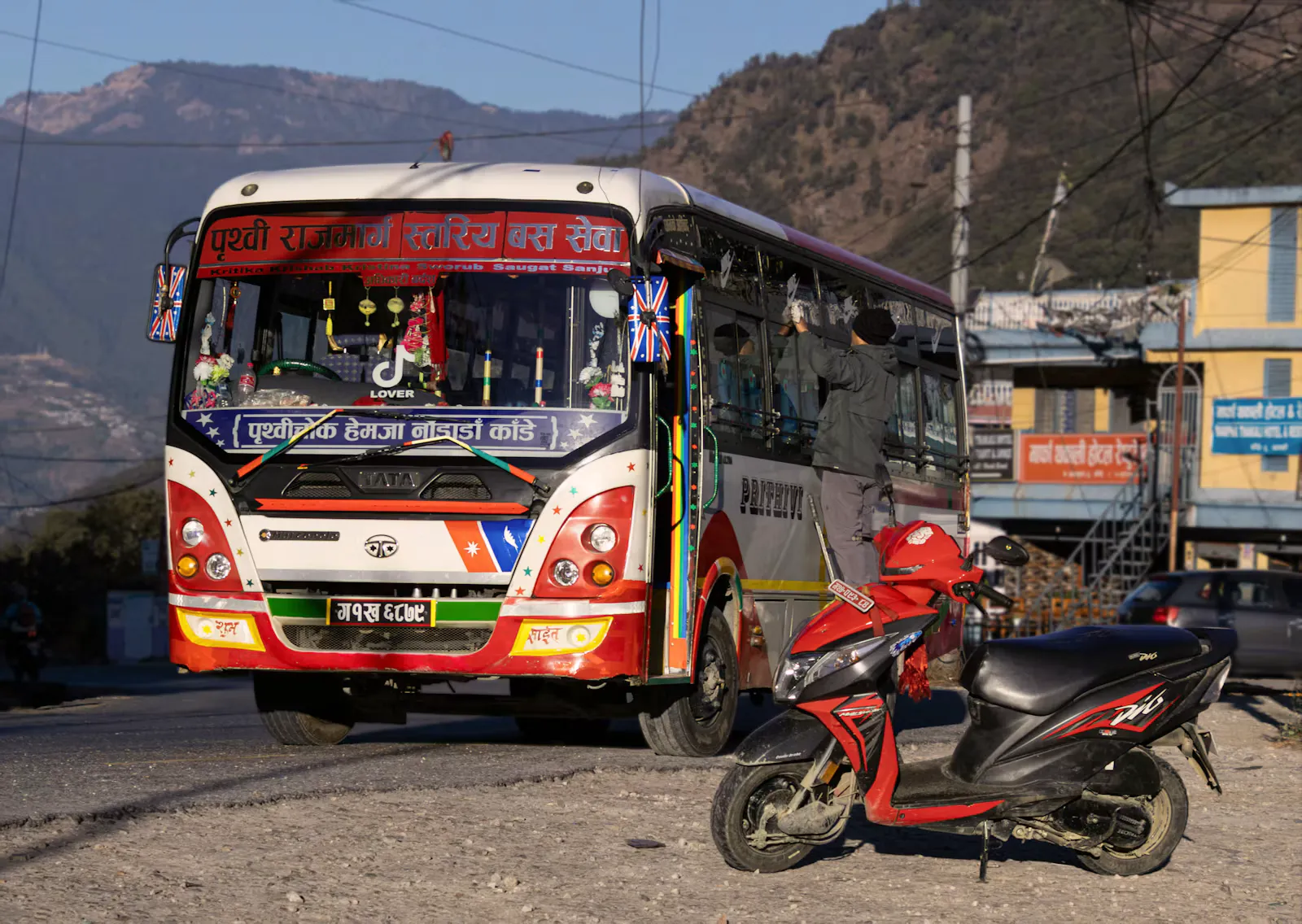
Motorbikes and scooters make up most of the traffic: the same WHO profile counts 3,160,623 powered two and three wheelers among 3,987,267 registered vehicles. Some practical rules our students follow:
Don't travel on overloaded or overcrowded buses, or at night. The FCDO says bus accidents with fatalities happen every year.
Pick tourist buses for longer trips. The FCDO says they usually offer a higher standard of comfort and safety.
Skip riding pillion on motorbikes. By law, only the driver must wear a helmet.
If you plan to drive yourself, you need a 1968 international driving permit. Check your travel insurance first.
Yes, if you never trek alone. The FCDO says all foreign independent trekkers must use a local guide or porter in Nepal's national parks, and you need a valid permit and a Trekking Information Management System (TIMS) card for the main regions. Above 3,000 metres, altitude sickness, avalanches, landslides and sudden weather changes are real hazards.
Pokhara is the gateway to the Annapurna region, so many of our students add a trek at the end. Before you go:
Trek with a reputable guide, and be wary of trekking deals that look very cheap.
Climb slowly. The FCDO reports cases of guides taking inexperienced trekkers too high too quickly.
Check that your insurance covers mountain rescue and helicopter costs. The FCDO says helicopter evacuation usually costs between 1,000 and 2,000 British pounds or more per flying hour.
Expect no mobile signal on long stretches, including parts of the Annapurna Circuit.
Mostly yes, but nature is the risk you can't control. The FCDO says travel during the monsoon, normally June to October, can be hazardous, because floods and landslides close roads. It also says earth tremors are common across Nepal, and that poor emergency equipment would worsen the impact of a big earthquake.
What to do about it:
Plan overland trips with spare days in the monsoon, check that the road is open, and carry water and snacks for delays.
In your first week, find the safe spots in your room and at the hospital, and know where your group meets after a quake.
Expect transport and basic services to be disrupted after a significant earthquake, and keep some cash and a charged power bank.
Follow the Nepalese authorities and local media whenever heavy rain is forecast.
Which health risks matter most on a placement in Nepal?
Food, water, dogs and altitude matter more than tropical fevers. The CDC (page reviewed 25 August 2026) reports no malaria transmission in Kathmandu, Pokhara or on typical Himalayan treks, recommends hepatitis A and typhoid for most travellers, and says rabid dogs are commonly found in Nepal. The FCDO adds that healthcare is poor outside the Kathmandu Valley and Pokhara.
When students ask us "is Nepal safe for my health?", we start with the basics:
Animals. Stray dogs can carry rabies. Our guide to rabies on a medical elective covers pre-exposure vaccination.
On the ward. You'll handle needles and blood, so learn the protocol in our needlestick injury guide before day one.
Air and mosquitoes. The FCDO lists dengue and air pollution among the risks, so pack repellent and check air quality on hazy days.
Insurance is part of health safety here. Western travellers' clinics in Nepal are expensive, and rapid helicopter evacuation can be hard to get, so you need a policy that covers clinical work, mountain rescue and evacuation. See our medical elective insurance guide.
Is Nepal safe for you personally? That depends a lot on your own preparation. Work through this list from booking to your last day. Each step names who does what, so you can tick it off instead of worrying about it.
Read your government's advisory. Open your own country's Nepal travel advice when you book and sign up for its email or app alerts.
Sort entry and insurance. Check the right visa for your placement, then make sure your policy covers clinical work, mountain rescue and evacuation.
See a travel clinic. At least 8 weeks before departure, discuss hepatitis A, typhoid, rabies and your trekking plans.
Pack for temples and trails. Bring clothes that cover shoulders and knees, a power bank and a small first aid kit, and leave CBD products at home. Our packing list for a clinical internship abroad helps.
Save the numbers offline. Store 100, 102, 101 and 1144, your hospital contact, our team, your insurer and your embassy.
Share your plans. Tell a housemate or our team where you're going at weekends and when you'll be back.
Choose transport carefully. Use tourist buses by day, skip overcrowded buses and night journeys, and don't ride pillion on motorbikes.
Stay away from crowds and strikes. If a demonstration starts nearby, leave the area and follow any curfew the authorities announce.
Emergency numbers in Nepal
Nepal uses separate numbers for each service, and the Tourist Police speak good English. Save these before you land.
Service
Number
Source
Police
100
FCDO, Getting help
Ambulance
102
FCDO, Getting help
Fire
101
FCDO, Getting help
Tourist Police (good English)
1144
FCDO, Getting help
Tourist Police in Kathmandu
01 5347041
FCDO, Getting help
FCDO in London (for family at home, 24 hours)
+44 20 7008 5000
FCDO, Getting help
Your hospital contact and the travel4med team
saved on arrival
travel4med
At Manipal Teaching Hospital, the team will know the fastest route to emergency care, so ask them in your first week.
Your placement in Nepal with travel4med
We place medical, nursing and physician assistant students at Manipal Teaching Hospital in Pokhara, with programmes starting every Monday and prices from 1,490 EUR. You live with other interns in our accommodation, with three meals a day, laundry and WiFi. Read more on our Pokhara, Nepal destination page, in our guide to a medical elective in Nepal and in our nursing placement in Nepal guide. Comparing countries? Our guides is Sri Lanka safe and is Zanzibar safe answer the same question for our other destinations.
UK Foreign, Commonwealth and Development Office. Nepal travel advice (still current at 8 November 2026, updated 1 October 2026; Rasuwa flash flood of 26 August 2026, emergency lines 1234 and 1144; "No travel can be guaranteed safe"): gov.uk (accessed 9 November 2026).
UK Foreign, Commonwealth and Development Office. Nepal travel advice, Safety and security (terrorism, protests and curfews, crime in Kathmandu, sexual assault, drink spiking, methanol, trekking rules and TIMS, helicopter cover, earthquakes, monsoon June to October, road and bus safety, driving permit, air safety, drugs, temples, LGBT+, volunteering): gov.uk (accessed 9 November 2026).
UK Foreign, Commonwealth and Development Office. Nepal travel advice, Health (vaccines 8 weeks ahead, dengue, air pollution, altitude, healthcare outside the Kathmandu Valley and Pokhara, helicopter evacuation 1,000 to 2,000 pounds per flying hour): gov.uk (accessed 9 November 2026).
UK Foreign, Commonwealth and Development Office. Nepal travel advice, Getting help (police 100, ambulance 102, fire 101, Tourist Police 1144 and 01 5347041; FCDO London 020 7008 5000): gov.uk (accessed 9 November 2026).
World Health Organization. Road safety, Nepal 2023 country profile (8,479 estimated and 2,883 reported road traffic deaths in 2021; 28.2 per 100,000; 3,987,267 registered vehicles, 3,160,623 powered two and three wheelers): who.int (PDF) (accessed 9 November 2026).
US Centers for Disease Control and Prevention. Travelers' health: Nepal (page reviewed 25 August 2026; no malaria in Kathmandu, Pokhara or on typical treks; hepatitis A, typhoid, rabies): cdc.gov (accessed 9 November 2026).
travel4med. Nepal destination page (Pokhara, weekly Monday starts, accommodation, three meals, prices from 1,490 EUR): Pokhara, Nepal (accessed 9 November 2026).