Needlestick Injury on a Medical Elective: What to Do
A needlestick injury is a percutaneous wound from a needle or other sharp object that may carry someone else's blood, and on a medical elective abroad the first sixty seconds matter more than anything you do later. Wash the wound under running water, let it bleed, then report it to the supervising clinician on shift immediately. HIV post-exposure prophylaxis works best when it starts within 24 hours and cannot start later than 72 hours after the exposure, so the clock is the whole story. This guide gives you the plan to memorise before you get on the plane.
Written by the travel4med Editorial Team, who arrange supervised clinical placements for medical and nursing students in Sri Lanka, Nepal, Bali and Zanzibar.
Key Takeaways
A needlestick injury is a percutaneous exposure, and the response is always the same order: wash, report, assess the source patient, then decide about prophylaxis.
WHO's 2024 guidance says HIV post-exposure prophylaxis (PEP) should start as soon as possible, ideally within 24 hours and never later than 72 hours, as a 28-day course.
Hepatitis B is the one you can protect yourself against before departure. Get your vaccination course and, ideally, your anti-HBs titre documented.
A systematic review of health workers in developing countries found 35.7% had a needlestick injury in the previous 12 months and 64.1% at some point in their career.
Ask your host hospital about its exposure protocol before you start, not after. Ask where PEP is physically stored and who holds the key at night.
Check that your travel and malpractice cover pays for emergency testing, PEP and, if it comes to it, repatriation.
What counts as a needlestick injury?
A needlestick injury is any break in your skin caused by a needle, scalpel, suture wire, lancet, broken ampoule or bone fragment that has been in contact with blood or body fluid. UK Health Security Agency guidance also describes a second route, mucocutaneous exposure, which covers blood splashed into your eyes, nose, mouth or broken skin. Both are treated as significant exposures when the source patient is HIV positive, hepatitis B surface antigen positive or hepatitis C positive.
The same guidance is blunt about what drives risk: the viral load in the source patient, the depth of the injury, and whether the needle had been sitting in a patient's vein or artery. A deep jab from a hollow-bore needle fresh out of a vein is a different event from a scratch off the outside of a suture needle. You will not be able to grade that yourself in the moment, and you should not try. That is what the report is for. Every needlestick injury gets graded by someone with more experience than you, and that is a feature, not a formality.
One thing worth naming plainly for international students: there is no single global rulebook here. Your home faculty has an exposure policy, your host hospital has its own, and the two may not know about each other. Sorting out which one you follow is a pre-departure job, not a bedside one. Decide now who owns your needlestick injury report before one exists.
Ready for your adventure abroad?
Secure your spot for your internship abroad now.
What should you do in the first ten minutes?
This is the needlestick injury protocol in its simplest form. Do these in order, and do not stop halfway through to look something up.
Stop what you are doing and step away from the patient safely. Put the sharp down in a container, do not put it back in a tray.
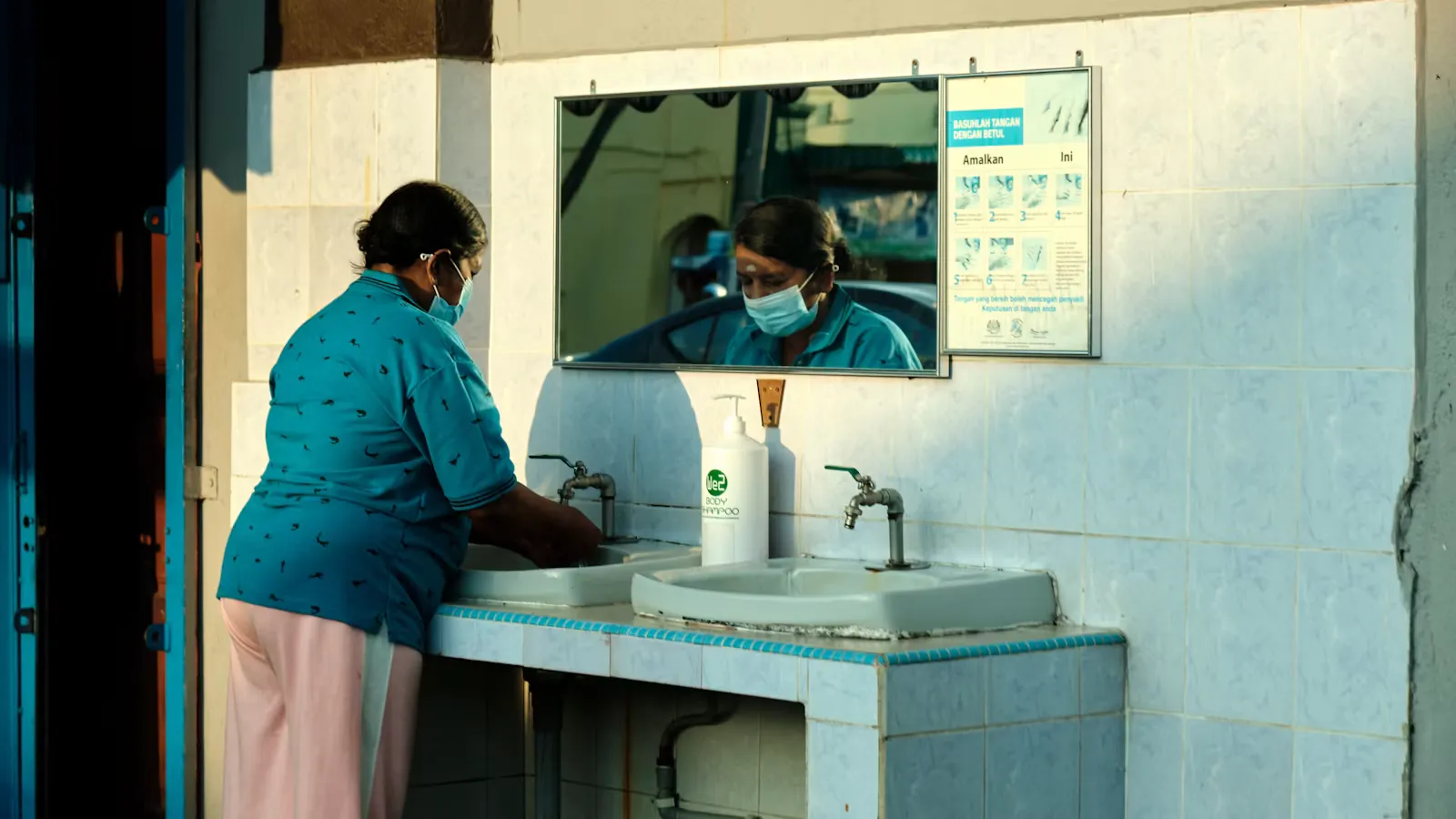
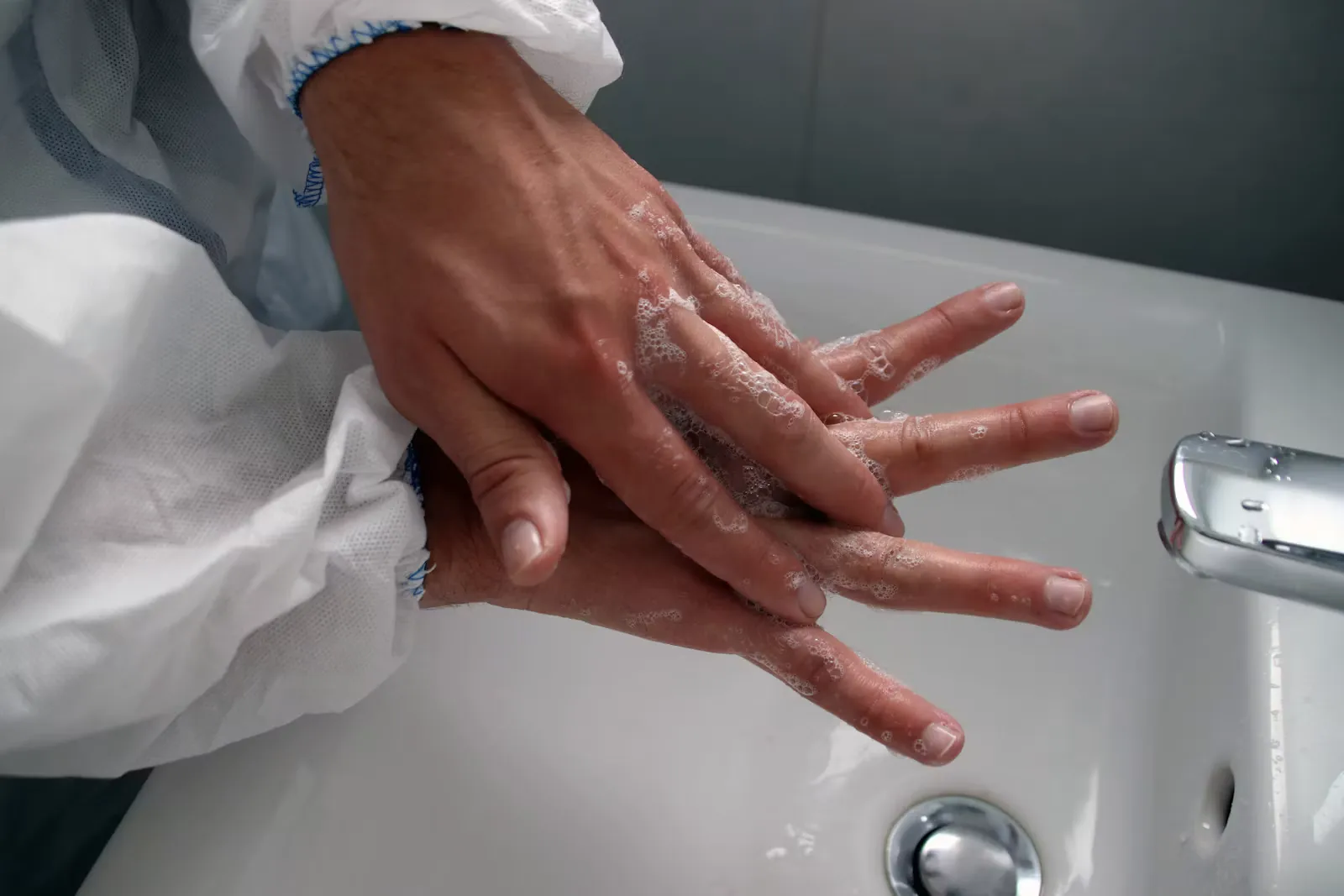
Wash the wound under running water. Encourage it to bleed gently. Do not scrub it raw and do not suck it.
If blood or fluid went into your eyes, nose or mouth, irrigate with plenty of clean water or saline. Take contact lenses out first, then irrigate again.
Cover the wound with a dry dressing.
Tell the senior clinician on the shift right now, in person. Not at the end of the ward round.
Ask for the hospital's occupational exposure protocol and follow it, including source patient testing where consent and local law allow it.
Have your own baseline bloods taken and get the date, time and mechanism of the injury written down.
Call your travel insurer or assistance line and your home faculty's elective office the same day, even if it is the middle of the night at home.
That eighth step gets skipped constantly, and it is the one that decides whether your treatment gets paid for and whether the incident is on record if you ever need to prove occupational acquisition. Write the timeline down while it is fresh. Nobody remembers the exact minute of a needlestick injury the next day, and the exact minute is what the 72 hour window is measured from.
How common is a needlestick injury on placement?
Common enough that "it won't happen to me" is not a plan. A systematic review by Mengistu and Tolera, published in Health Science Reports in 2020, pooled 13 studies covering 6,513 healthcare workers in developing countries with literature drawn from 2012 to 2019. It found a 12-month needlestick injury prevalence of 35.7%, with individual studies ranging from 19.9% to 54.0%, and a career prevalence of 64.1%, with studies ranging from 38.5% all the way to 100%.
Read that carefully before you quote it. It describes working health professionals in the study countries, not visiting elective students, and the spread between studies is enormous. What it does establish is the order of magnitude: in the kind of setting where you will do your placement, a needlestick injury is a routine occupational event rather than a rare catastrophe.
Source: Mengistu DA and Tolera ST, "Prevalence of occupational exposure to needle-stick injury and associated factors among healthcare workers of developing countries: Systematic review", Health Science Reports, 2020. Pooled from 13 studies, 6,513 participants. Vertical bars show the range across individual studies.
Which bloodborne viruses are you actually worried about?
Three, and after a needlestick injury they behave very differently. The honest summary is that one is preventable before you fly, one has an emergency drug window, and one has neither and relies on monitoring.
Virus
Vaccine available?
Emergency prophylaxis after exposure?
What that means for you
Hepatitis B
Yes
Yes, hepatitis B immunoglobulin and/or vaccine, depending on your immune status
Complete the course before departure and carry proof of your anti-HBs response
Hepatitis C
No
No established post-exposure drug prophylaxis
Baseline and follow-up testing, with early antiviral treatment if infection is confirmed
HIV
No
Yes, a 28-day antiretroviral course started inside 72 hours
Know before you fly where PEP is stocked near your placement
Hepatitis B is the one where your own preparation genuinely changes the outcome, and it is also the one most present in the regions our students travel to. WHO estimates that 240 million people were living with chronic hepatitis B infection in 2024, and the burden is far from evenly spread. The Western Pacific Region carries 102 million cases and the African Region 64 million, with 43 million in the South-East Asia Region. Sri Lanka, Nepal and Indonesia sit in that South-East Asia Region, and Tanzania, which Zanzibar is part of, sits in the African Region.
Source: World Health Organization, "Hepatitis B" fact sheet, figures for 2024. Global total 240 million people living with chronic hepatitis B infection.
There is a small piece of reassurance buried in the WHO fact sheet too. Hepatitis B infection acquired in adulthood becomes chronic in fewer than 5% of cases, whereas infection in infancy or early childhood becomes chronic in roughly 95% of cases. That is why infant vaccination is the global priority, and it is also why an adult exposure, while serious, is not the same clinical picture.
How fast does post-exposure prophylaxis have to start?
Fast. WHO's Guidelines for HIV post-exposure prophylaxis, published in July 2024, state that PEP is most effective when initiated as soon as possible, ideally within 24 hours and no later than 72 hours after exposure. The guidelines recommend a 28-day prescription, and note that while a two-drug regimen can be effective, three drugs are preferred.
Three practical consequences follow from that 72 hour ceiling, and every one of them is a logistics problem rather than a medical one:
You cannot wait until Monday, until your supervisor is back from leave, or until you have spoken to your family at home.
If your placement is rural or on an island, the nearest facility holding antiretrovirals may be hours away. Find out where it is in week one.
Finishing the full 28 days matters as much as starting. If your placement ends mid-course, you need a plan for continuing it at home.
Ask the question during your orientation, not during an emergency: does this hospital hold PEP on site, who authorises it out of hours, and what happens if I need it on a weekend? A five-minute conversation in week one is worth more than any packing list, and it is the difference between a needlestick injury that is annoying and one that is dangerous.
Secure Information Material
Request all the important info for free, no obligation.
After a needlestick injury, start with the person who can act, then work outwards. The supervising clinician on the shift comes first because they can order source patient testing and start the local protocol. The hospital's infection prevention or occupational health contact comes second. Your travel insurer or assistance line comes third, because they authorise payment and can often find a treating facility faster than you can.
Your home faculty's elective office comes fourth, and it matters more than students expect. Many faculties require an incident report for any occupational exposure during an elective, and some will only recognise follow-up testing done under their own protocol. If you booked through us, tell your travel4med contact as well, so the local team can help you navigate the hospital system in a language you may not speak.
Then tell one person who is not a professional. A needlestick injury is frightening, and the waiting period for follow-up serology is worse than the injury itself. Do not sit with that alone in a shared room 8,000 kilometres from home.
What should you sort out before you fly?
Most of the work happens before departure. Here is the checklist we give students, in the order that makes sense:
Complete your hepatitis B vaccination course and ask for written confirmation of your anti-HBs response, not just the vaccination dates. Our guide to vaccinations for a medical elective abroad covers what else belongs on the list.
Check that your insurance explicitly covers emergency testing, post-exposure prophylaxis and medical repatriation. Read the exclusions in our medical elective insurance guide.
Ask your home faculty for its occupational exposure policy in writing and put a copy in your phone, offline.
Confirm with the host hospital where PEP is stocked and who authorises it outside working hours.
Save the local emergency number, the hospital switchboard, your insurer's 24-hour line and your faculty's out-of-hours contact in one note.
Pack a small supply of gloves you know fit you, plus eye protection if the placement is surgical or obstetric.
Point six deserves a moment. The single biggest driver of a needlestick injury for a visiting student is doing a procedure slightly beyond your competence because someone handed you the needle and everyone was busy. It is fine to say "I have not done this before, can you watch me?" That sentence is the cheapest piece of protective equipment you will ever carry.
Does a needlestick injury end your elective?
Usually not. In most cases the needlestick injury is assessed, the source patient turns out to be low risk or negative, you get baseline bloods and a follow-up plan, and you go back to the ward. Where a placement does get cut short, it is normally because the student needs treatment or monitoring that the local facility cannot provide, or because they simply do not want to stay. Both are legitimate.
What does change is your relationship to the ward. Students who have had a needlestick injury tend to become noticeably better at sharps handling afterwards, which is a grim way to learn a habit. You can get most of that benefit in advance by watching how the local staff handle sharps in your first week and asking why they do it that way. Practice differs between hospitals and between countries, and the way a busy ward in Galle or Pokhara disposes of a needle may look nothing like your teaching hospital at home.
Planning a placement and want the safety side sorted before you go? We brief every student on the host hospital's exposure protocol as part of preparation, and our local coordinators in Sri Lanka, Nepal, Bali and Zanzibar can walk you through it on site. Have a look at our placement locations or book a free consultation and ask us the awkward questions.
Medically reviewed by MUDr. Amandeep Grewal, a physician on the travel4med review panel who covers vaccination, tropical medicine and insurance topics.
UK Health Security Agency, "Bloodborne viruses in healthcare workers: managing and reducing risks", guidance last updated 31 March 2025. gov.uk guidance
Mengistu DA, Tolera ST, "Prevalence of occupational exposure to needle-stick injury and associated factors among healthcare workers of developing countries: Systematic review", Health Science Reports, 2020. PMC7733390