Stone Town for a Medical Elective: A Zanzibar City Guide
Stone Town is the historic old town of Zanzibar's capital, a Swahili trading town that UNESCO inscribed as a World Heritage Site in 2000, and it's the city you'll get to know on a placement in Zanzibar. For a medical, nursing or physician assistant student, Stone Town means narrow lanes, the seafront and the ferry port, and it's where the island's public hospital system grew up. This guide covers what Stone Town is, the hospitals, how to get there, the seasons, your health, the dress rules and your first week.
Researched and editorially reviewed by Samet Ata, medical student and destination coordinator at travel4med. Samet is our contact person for Zanzibar and prepares students for their placement on the island. The health section was reviewed by MUDr. Amandeep Grewal, a doctor on the travel4med team.
Key Takeaways
Stone Town is a World Heritage Site. UNESCO inscribed the Stone Town of Zanzibar in 2000 and calls it "a fine example of the Swahili coastal trading towns of East Africa".
Zanzibar is growing fast. The 2022 census counted 1,889,773 people in Zanzibar, up from 1,303,569 in 2012.
Your placement is at Lumumba Regional Hospital. Zanzibar's government is rebuilding the old referral hospital, Mnazi Mmoja, and named Lumumba as a modern regional hospital that eases its load.
Plan for two rainy seasons. UK government advice gives the end of March to May and October to mid-December.
Dress modestly. Zanzibari authorities can fine you 700 US dollars or more for clothing they consider inappropriate in public.
What is Stone Town, and why is it famous?
Stone Town is famous as one of the best-preserved Swahili trading towns on the East African coast. UNESCO says it keeps its urban fabric and townscape "virtually intact", with buildings that blend African, Arab, Indian and European cultures over more than a thousand years. That mix is why UNESCO listed it in 2000.
UNESCO gives three reasons for the listing: Stone Town's cultural diversity and harmony, its part in Indian Ocean trade over many centuries, as you can still see in its architecture and street plan, and its symbolic role in the suppression of slavery. So when you walk through the old town after a shift, you're walking through the history of the whole western Indian Ocean.
Stone Town isn't a museum, though. People live and work in it, and the Stone Town Conservation and Development Authority (STCDA) looks after it. Every 2 December the authority organises Stone Town Day to raise awareness of conservation, and in 2023 the celebrations were held in Forodhani Park on the seafront, according to UNESCO.
Is Zanzibar City the same as Stone Town? Not exactly. Our Zanzibar destination page describes Stone Town as the island's historic old town, and a 2015 study of the island's emergency care calls it "the capital Stone Town". In practice, Stone Town is the old heart of the capital, and the newer city has grown around it.
Ready for your adventure abroad?
Secure your spot for your internship abroad now.
How big is Zanzibar, and who lives there?
Zanzibar is a semi-autonomous part of Tanzania, an archipelago whose two main islands are Unguja and Pemba, with its own government and its own Ministry of Health. The 2022 census counted 1,889,773 people in Zanzibar, and 893,169 of them, about 47%, live in Mjini Magharibi region, the most populous of Zanzibar's five regions.
That growth matters for your ward. Zanzibar's population rose by about 45% between the 2012 and 2022 censuses, from 1,303,569 to 1,889,773 people, according to Tanzania's National Bureau of Statistics. More patients means busy outpatient departments and full wards.
Tourism grows even faster. Zanzibar recorded 917,167 international arrivals in 2025, up from 736,755 in 2024, The Citizen reported from official tourism statistics. European visitors made up 68.1% of arrivals in December 2025. Expect Stone Town's lanes and seafront to be busy in the high season.
International tourist arrivals in Zanzibar, 2024 and 2025. Source: Office of the Chief Government Statistician and Zanzibar Commission for Tourism, Tourism Statistical Release December 2025, as reported by The Citizen (accessed 24 November 2026).
Which hospitals are in and around Stone Town?
Mnazi Mmoja Hospital in Stone Town has long been Zanzibar's main referral hospital, and Lumumba Regional Hospital is where travel4med placements in Zanzibar take place. In September 2025 the government said it was in the final stages of demolishing the old Mnazi Mmoja buildings to make way for a modern referral hospital.
A 2015 study in the International Journal of Emergency Medicine described Mnazi Mmoja as the only tertiary hospital in Zanzibar, located in the capital Stone Town, with about 400 beds and departments from paediatrics and surgery to obstetrics and an emergency department that opened in 2012. Those figures describe the old hospital, so treat them as background, not as today's numbers.
In the same September 2025 announcement, Zanzibar's Second Vice President, Hemed Suleiman Abdulla, named Lumumba Regional Hospital in Mjini region as an example of the new, fully equipped facilities that will act as referral centres and ease the patient load on Mnazi Mmoja, The Citizen reported. For you, that means a modern regional hospital during a period of real change in the island's health system.
What you get
Details from our Zanzibar page (read 24 November 2026)
Hospital
Lumumba Regional Hospital, Zanzibar
Specialties
General and visceral surgery, internal medicine, emergency medicine, gynaecology and obstetrics, orthopaedics and trauma surgery, paediatrics, anaesthesia, infectious diseases and tropical medicine
Start dates
Every Monday
Housing
Shared travel4med accommodation a few minutes from the Indian Ocean, with pool, three meals, laundry service, air conditioning and Wi-Fi
Transport
Organised transport to the hospital
Language
Swahili, with English widely used in medical contexts
Price
From EUR 1,640 (local costs and your own currency will differ)
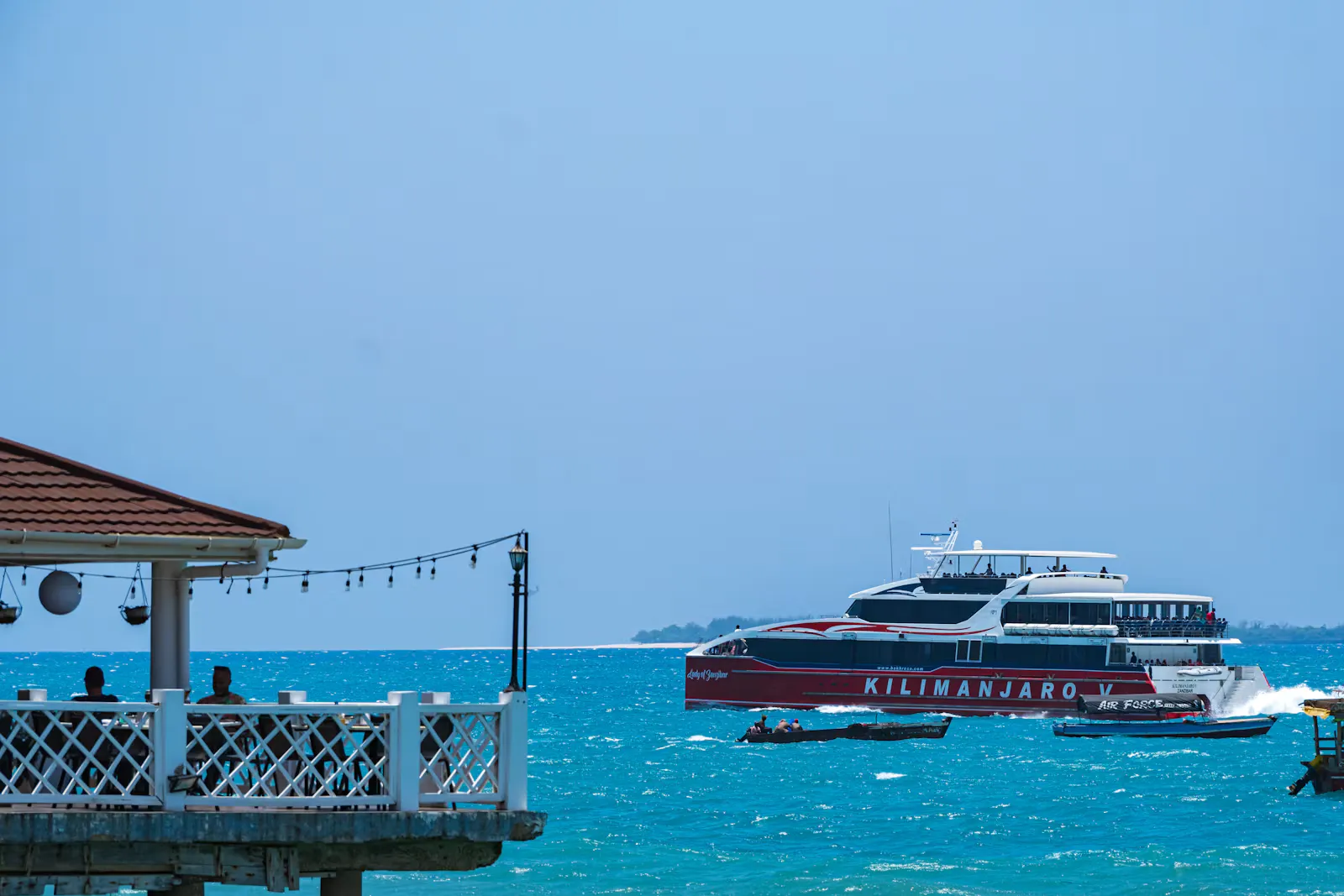
Most visitors reach Stone Town by air: in December 2025, 91.7% of Zanzibar's international arrivals (92,421 people) came through the island's airports. The rest, 8,308 visitors, entered through seaports, mainly on ferries from the mainland, and only 61 came on cruise ships, The Citizen reported from official statistics.
Route
Share of arrivals, December 2025
What to know
Fly into Zanzibar
91.7% (92,421 visitors)
You buy the compulsory Zanzibar Insurance Corporation cover on arrival or online before you fly
Ferry from Dar es Salaam
Part of 8,308 seaport arrivals
UK government advice reports past ferry disasters and aggressive ticket touts at ports
Cruise ship
61 visitors
Not a practical route for a placement
If you take the ferry, don't board a boat that looks overloaded, and check where the life jackets are, as the FCDO advises. Whichever way you arrive, you need the right entry documents. All visitors to mainland Tanzania and Zanzibar, except residents, must hold the government-provided inbound travel insurance, valid for up to 92 days. Our Zanzibar visa guide explains the visa category, the fees and that insurance step by step.
When is the best time to be in Stone Town?
The main thing to plan around in Stone Town is rain. UK government advice says Tanzania's rainy seasons generally run from the end of March to May and from October to mid-December. Heavy rain and strong winds can disrupt travel, so allow extra time for ferries and roads in those months.
The hospitals run all year, so a placement in the rainy season works, you just need a rain jacket and some patience on the roads. The German sister site has a month-by-month guide to Zanzibar weather, and our guide to the best time for a medical elective abroad compares the seasons across all four of our destinations.
Secure Information Material
Request all the important info for free, no obligation.
Stone Town is a manageable place to stay healthy if you plan for mosquitoes, food and water, and stray dogs. The US CDC lists malaria transmission in all areas of Tanzania below 1,800 metres, and its Tanzania page covers Zanzibar, so mosquito protection and a talk with your travel clinic about prophylaxis come first.
The CDC adds three points that matter for a student on placement:
Rabies: dogs infected with rabies are commonly found in Tanzania, and rabies vaccine after an exposure may only be available in larger urban medical facilities. Read our guide to rabies on a medical elective.
Typhoid: vaccination is recommended for most travellers, and it isn't 100% effective, so food and water hygiene still matter. Our typhoid vaccine guide explains the options.
Malaria: CDC lists atovaquone-proguanil, doxycycline, mefloquine and tafenoquine as recommended options. See our guide to malaria prophylaxis on a medical elective.
If you get ill, UK government advice says medical facilities in Tanzania are limited, especially outside Dar es Salaam, and that you call 112 for an ambulance. That's why you need medical elective insurance that covers treatment and evacuation, on top of the compulsory local cover. Which vaccinations you need is a decision for your own doctor or travel clinic; our overview of vaccinations for a medical elective abroad explains each one.
What should you wear in Stone Town, and is it safe?
Wear loose clothes that cover your shoulders and knees. The FCDO says women wearing shorts or sleeveless tops away from tourist resorts, particularly in Stone Town, may cause offence, and that Zanzibari authorities can fine you 700 US dollars or more for clothing they consider inappropriate in public. Stone Town is generally fine for students who take normal precautions.
Zanzibar has a high proportion of Muslims, and during Ramadan you should avoid eating or drinking in public outside hotels and restaurants, the FCDO advises. Here's what else the UK advice means in practice:
With your bag: the FCDO reports incidents in Stone Town, at hotels and on tourist beaches, and describes bag snatching from cars and motorbikes. Walk facing the traffic and carry your bag loosely.
At night: avoid walking alone after dark, and don't accept lifts from strangers.
In taxis: arrange a taxi through your accommodation and ask to see the driver's ID.
Around protests: stay away from demonstrations, and don't photograph or share images of them.
With your phone: keep important numbers written down, because internet access has been limited during past protests.
Yes, Stone Town is worth visiting on your free days, and it's an easy first outing. Walk the seafront at Forodhani Park, get lost in the old lanes and look at the buildings UNESCO describes as a blend of African, Arab, Indian and European cultures. If your placement covers 2 December, look out for Stone Town Day events.
On free days you can mix the old town with the island's beaches and the sea. Our Zanzibar currency guide explains how to pay before you go shopping, and the Swiss sister site has a German-language guide to Stone Town for the Swiss elective year.
How do you plan your first week in Stone Town?
Most of the planning happens before you fly. Follow this order and you'll arrive with your paperwork, money and health checks done.
Confirm your placement and dates with your faculty and with us, including which department you want at Lumumba Regional Hospital.
Check your visa category and buy the insurance. Our Zanzibar visa guide explains why a placement is not ordinary tourist travel.
Book your travel clinic appointment early, because some vaccines need more than one dose and malaria tablets start before you travel.
Get travel insurance that covers treatment and medical evacuation.
Pack modest, light clothes, a rain jacket if you arrive in a rainy season, and mosquito repellent.
Learn ten Swahili greetings so you can greet patients and staff on day one.
Use your first free day for a walk through Stone Town and along the seafront, and save longer island trips for later.
We place medical, nursing and physician assistant students at Lumumba Regional Hospital, with Monday starts, shared accommodation near the sea, meals, organised transport to the hospital and on-site support. Our nursing placement in Zanzibar guide covers the nursing side, our overview of medical electives in Africa puts Zanzibar in context, and the futuredoctor group ecosystem shows how travel4med fits into the wider network of medical education services.
Planning a placement near Stone Town, or in Galle, Pokhara or Bali? We place medical, nursing and physician assistant students in all four destinations for clinical electives, final-year placements, nursing placements and observerships. Book a free consultation, compare our destinations or join our free webinar to see what a week in Zanzibar looks like.
Frequently Asked Questions
Sources
UNESCO. UNESCO Celebrates Stone Town Day, 18 December 2023 (inscription in 2000, Outstanding Universal Value, Swahili coastal trading town, Stone Town Day every 2 December organised by the STCDA, 2023 celebrations at Forodhani Park): unesco.org (accessed 24 November 2026).
National Bureau of Statistics Tanzania and Office of the Chief Government Statistician Zanzibar. The 2022 Population and Housing Census: Initial Results (Zanzibar 1,303,569 in 2012 and 1,889,773 in 2022; Mjini Magharibi 893,169; five regions in Zanzibar): nbs.go.tz (accessed 24 November 2026).
The Citizen (Tanzania). Zanzibar tourism hits nearly one million arrivals in 2025 (917,167 arrivals in 2025, 736,755 in 2024, December 2025 arrivals by air and sea, European share 68.1%): thecitizen.co.tz (accessed 24 November 2026).
The Citizen (Tanzania). Zanzibar now targets medical tourism with Mnazi Mmoja Hospital overhaul, 4 September 2025 (demolition of the old Mnazi Mmoja buildings, Lumumba Regional Hospital in Mjini region): thecitizen.co.tz (accessed 24 November 2026).
Thomassen et al. Emergency medicine in Zanzibar: the effect of system changes in the emergency department. International Journal of Emergency Medicine, 14 July 2015 (Mnazi Mmoja Hospital the only tertiary hospital, in the capital Stone Town, about 400 beds, emergency department since 2012, Unguja and Pemba): pmc.ncbi.nlm.nih.gov (accessed 24 November 2026).
UK Foreign, Commonwealth and Development Office. Tanzania travel advice, Safety and security (Stone Town incidents, bag snatching, dress code and fines, Ramadan, protests, taxis, ferries, rainy seasons), still current on 23 November 2026: gov.uk (accessed 24 November 2026).
UK Foreign, Commonwealth and Development Office. Tanzania travel advice, Entry requirements (mandatory inbound travel insurance, up to 92 days, Zanzibar Insurance Corporation): gov.uk (accessed 24 November 2026).
UK Foreign, Commonwealth and Development Office. Tanzania travel advice, Health (limited medical facilities, ambulance 112): gov.uk (accessed 24 November 2026).
US Centers for Disease Control and Prevention. Tanzania, including Zanzibar, Traveler View (malaria below 1,800 m, recommended prophylaxis, rabies in dogs, typhoid): cdc.gov (accessed 24 November 2026).