Zanzibar Currency 2026: Shilling Guide for Your Placement
The Zanzibar currency is the Tanzanian shilling (TZS), issued only by the Bank of Tanzania and the only legal tender in Tanzania, Zanzibar included. On 1 November 2026 the Bank of Tanzania's mean rate was TZS 2,950.43 for 1 euro and TZS 2,641.39 for 1 US dollar, so a TZS 10,000 note is worth about 3.39 euros. Since 2025, prices must be in shillings, so plan to pay your daily life in TZS.
Editorially reviewed by Nils-Andre Stritt, travel4med (author page). Rates, banknotes and rules checked against Bank of Tanzania and UK government pages on 1 November 2026.
Key Takeaways
One currency: The Zanzibar currency is the Tanzanian shilling (TZS), divided into 100 cents. Under the Bank of Tanzania Act, 2006, only the Bank of Tanzania issues notes and coins.
About 2,950 shillings per euro: The Bank of Tanzania's mean rate was TZS 2,950.43 per euro, TZS 2,641.39 per US dollar and TZS 3,539.99 per British pound on 1 November 2026.
Shillings by law: Regulations published on 28 March 2025 (Government Gazette No. 198) say prices and payments for goods and services in Tanzania must be in shillings.
Quick maths: TZS 10,000, the largest note, is roughly 3.40 euros. Divide by 3,000 and you're close enough at the market.
Exchange the legal way: The Bank of Tanzania tells tourists to change money at commercial banks or a bureau de change, or to pay by card or other digital methods.
What is the Zanzibar currency?
The Zanzibar currency is the Tanzanian shilling, code TZS, divided into one hundred cents. Zanzibar is a semi-autonomous region of Tanzania and has no money of its own. The Bank of Tanzania states that the Bank of Tanzania Act, 2006 gives it the sole right to issue banknotes and coins, "which shall be the only legal tender in Tanzania".
The same shilling works in Stone Town, at the hospital and on the beaches of the north coast. There's no separate tourist currency.
Why does it matter for a placement? For four to twelve weeks you pay your own daily life: a soda at the hospital kiosk, a daladala or taxi, a SIM card, a weekend boat trip. Know the Zanzibar currency before you land and the first market stall won't feel like a maths exam. Plenty of travellers ask the same thing: SISTRIX counted 1,600 UK searches for "zanzibar currency" in August 2026, up from an average of 950 from May to July.
Ready for your adventure abroad?
Secure your spot for your internship abroad now.
Can you use US dollars in Zanzibar?
Not for everyday payments: the Zanzibar currency for shops, taxis and markets is the shilling. Under Tanzania's Foreign Exchange (Use of Foreign Currency) Regulations, 2025, published on 28 March 2025, pricing and payment for goods and services inside the country must be in Tanzanian shillings. The Bank of Tanzania calls it an offence to quote prices in foreign currency, to accept foreign currency or to refuse shillings.
That's a real change. Older travel guides, and plenty of AI answers, still say that dollars work everywhere on the island. The UK government's travel advice for Tanzania also still notes that US dollars are widely accepted in tourist areas. But the law has moved on, and the Bank of Tanzania's public notice of 2 May 2025 is clear: foreigners, including tourists, should exchange foreign currency at commercial banks or a bureau de change in Tanzania, or pay by bank card and other digital methods.
The regulations do list some transactions that may still run in foreign currency. Those are special cases. For your placement days, think in the Zanzibar currency, the shilling, and you can't go wrong.
How much is 1 euro in Tanzanian shillings?
On 1 November 2026 the Bank of Tanzania's mean rate was TZS 2,950.43 for 1 euro, TZS 2,641.39 for 1 US dollar and TZS 3,539.99 for 1 British pound. In practice 1,000 shillings is about 34 euro cents, 38 US cents or 28 pence. Your bank or the bureau de change will give you a slightly worse rate than these reference figures.
The Bank publishes a buying, a selling and a mean rate for 43 currencies and gold every day, which makes its exchange rate page a handy yardstick when you compare offers. On 1 November 2026 its buying rate for the euro was TZS 2,935.75 and its selling rate TZS 2,965.11.
Amount in shillings
In euros
In US dollars
In British pounds
What it is
TZS 1,000
0.34 EUR
0.38 USD
0.28 GBP
one 1,000 note
TZS 5,000
1.69 EUR
1.89 USD
1.41 GBP
one 5,000 note
TZS 10,000
3.39 EUR
3.79 USD
2.82 GBP
one 10,000 note
TZS 50,000
16.95 EUR
18.93 USD
14.12 GBP
five large notes
TZS 100,000
33.89 EUR
37.86 USD
28.25 GBP
ten large notes
All values are our own Zanzibar currency calculations from the Bank of Tanzania's mean rates of 1 November 2026. The euro is our reference currency. If you pay in another currency, check today's TZS rate in your banking app before you go, because local prices and your own currency's rate will differ.
Which shilling banknotes will you use?
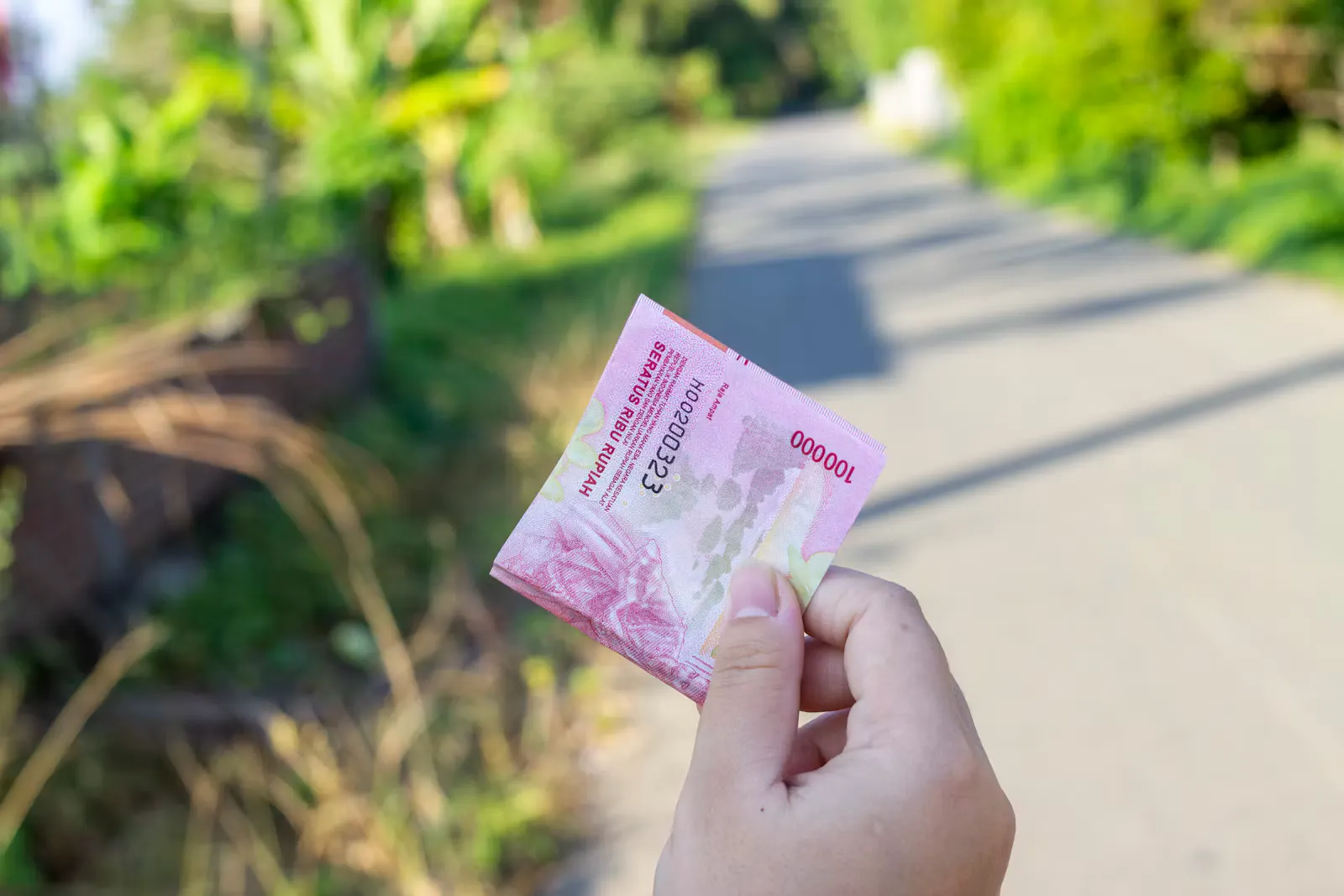
The Zanzibar currency notes you'll handle most are the 1,000, 2,000, 5,000 and 10,000 shilling notes. The Bank of Tanzania lists their security features and shows them in its table of currency in use as the series issued from 2010. Even the TZS 10,000 note is worth only 3.39 euros at the mean rate of 1 November 2026.
Look out for one coin in particular. The 500 shilling coin of 2014, listed by the Bank of Tanzania as currency in use, shows Sheikh Abeid Amani Karume and calls him the first President of Zanzibar ("Rais wa Kwanza wa Zanzibar") on its rim. A buffalo is on the back. A small piece of island history in your change.
That low value per note has a practical side. A week's daily spending can mean a thick bundle of paper, so a slim wallet won't cut it. And the Bank of Tanzania page that lists the security features is worth a look before you travel: knowing the main feature of each note makes it easier to check your change.
Our own calculation from the Bank of Tanzania's EUR mean rate of 1 November 2026 (TZS 2,950.43 per euro); banknotes from the Bank of Tanzania page on banknotes and coins issued, read on 1 November 2026.
One habit for handling the Zanzibar currency every day: keep small notes. Paying for a fresh coconut with a 10,000 note can leave a roadside seller without change, and drivers often can't break big notes either.
What is the best currency to take to Zanzibar?
Take the major currency you already hold, such as euros, British pounds or US dollars, and change it into the Zanzibar currency there. The Bank of Tanzania publishes daily rates for all three, so banks and bureaux de change exchange them routinely. Changing your money into dollars first only adds a second fee, and since 2025 you can't spend those dollars in shops anyway.
Where should you buy the Zanzibar currency? At a commercial bank or a licensed bureau de change, exactly as the Bank of Tanzania's 2025 notice tells tourists to do. Count the notes at the counter and keep the receipt. With almost 3,000 shillings per euro, a missing note is easy to overlook later.
Two details from the UK government's travel advice help here. Pound notes not issued by the Bank of England may get a reduced exchange rate. And travellers cheques are not widely accepted, so leave them at home.
Paying by card or at an ATM? You'll often be offered a charge in your home currency instead of shillings. That's dynamic currency conversion (DCC). Visa says merchants and ATMs "should give you a choice to accept or decline currency conversion and must not choose on your behalf", and that declining "will not affect your ability to make purchases or withdraw cash internationally". Choose TZS every time. German speaking classmates will find a detailed guide to ATMs and cards on our sister site: withdrawing money during a placement abroad, written for students in Germany.
Secure Information Material
Request all the important info for free, no obligation.
Plan for both. Cash in the Zanzibar currency covers the small costs of a placement day, such as market fruit, transport and tips, while a card is handy for bigger bills and for topping up cash at a bank ATM. The UK government notes that most banks in major cities have ATMs that take foreign debit cards and pay out shillings, but they sometimes break down or run out of money.
That last point matters for anyone relying on the Zanzibar currency in cash. The same UK advice reports widespread cash shortages in the days of political unrest after Tanzania's election of 29 October 2025. So keep a small cash reserve and don't wait until your wallet is empty. To lower the risk of card cloning, the UK advice says to use ATMs located inside the bank, and it warns against carrying large amounts of cash.
How much daily cash do you need? That depends on what your booking covers. Our Zanzibar destination page describes the shared travel4med accommodation with a pool, three meals a day, laundry service, air conditioning, WiFi and organised transport to the hospital. So in your hospital weeks you mostly pay for snacks, a SIM card, the odd taxi and your weekends. Check what your own booking includes.
For mobile data and banking apps, read our guide to an eSIM for a medical elective. One more cost to plan before you fly: the UK government says all visitors to mainland Tanzania and Zanzibar, except residents, need the government-provided inbound travel insurance, even with a personal policy. Our German sister site explains it in its guide to Zanzibar's mandatory insurance on entry, written for students in Germany.
Plan your Zanzibar currency in six steps
Sorting out the Zanzibar currency takes one evening if you go through it in this order. It works for a four week elective as well as a twelve week nursing placement.
Note the rate: Look up today's TZS rate for your own currency on the Bank of Tanzania site and write down the quick rule: TZS 10,000 is about 3.40 euros.
Check your cards: Ask your bank what card payments and withdrawals in shillings cost, and pack two cards from two different banks.
Bring your own major currency: Pack a small reserve of euros, pounds or dollars as a backup. Don't change it into a third currency first.
Exchange legally on arrival: Change money at a commercial bank or a licensed bureau de change, count the notes and keep the receipt.
Pay in shillings: Use TZS for everything local and always choose to be charged in TZS when a card terminal or ATM asks.
Split your money: Carry the cash for the day, and lock the rest and your second card away at your accommodation.
Your placement in Zanzibar with travel4med
Our Zanzibar placements are at Lumumba Regional Hospital. According to our Zanzibar destination page, programmes start every Monday, the price starts from 1,640 EUR, and you can work in fields such as general and visceral surgery, internal medicine, emergency medicine, gynaecology and obstetrics, orthopaedics and trauma surgery, paediatrics, anaesthesia, or infectious diseases and tropical medicine. Local costs and your own currency come on top.
Planning your placement in Zanzibar? Book a free consultation and we'll go through dates, specialty, entry and budget with you, so the Zanzibar currency is one less thing to worry about. Compare all our destinations too. travel4med is part of the futuredoctor group ecosystem, which supports students from application to graduation.
Bank of Tanzania. Currency Issuance (sole right to issue banknotes and coins under the Bank of Tanzania Act, 2006; only legal tender; shilling divided into one hundred cents): Bank of Tanzania website, bot.go.tz, section Currency, Currency Issuance (accessed 1 November 2026).
Bank of Tanzania. Exchange Rates (buying, selling and mean rates for 43 currencies and gold, trading date 1 November 2026): Bank of Tanzania website, bot.go.tz, section Statistics, Exchange Rates (accessed 1 November 2026).
Bank of Tanzania. Banknotes and coins issued by Bank of Tanzania (currency in use, 2010 series, security features of the 10,000, 5,000, 2,000 and 1,000 notes; 500 shilling coin of 2014): Bank of Tanzania website, bot.go.tz, section Currency, Banknotes and coins issued (accessed 1 November 2026).
Bank of Tanzania. Public notice of 2 May 2025, Prohibition on the use of foreign currency for local transactions within the United Republic of Tanzania (Regulations on the Use of Foreign Currency, 2025, Government Gazette No. 198 of 28 March 2025): Bank of Tanzania website, bot.go.tz, section Public Notices (accessed 1 November 2026).
UK Foreign, Commonwealth and Development Office. Tanzania travel advice, Safety and security (money, ATMs, cash shortages after the 29 October 2025 election, non-Bank of England notes): gov.uk (accessed 1 November 2026).
UK Foreign, Commonwealth and Development Office. Tanzania travel advice, Entry requirements (mandatory government-provided inbound travel insurance for mainland Tanzania and Zanzibar): gov.uk (accessed 1 November 2026).
Visa. Dynamic currency conversion: visa.com (accessed 1 November 2026).