Midwifery Elective Abroad: Rules, Hours and Planning
Celina KöhslMedical student, member of the travel4med team
16. November 2026
14 minutes
Midwifery Elective Abroad: Rules, Hours and Planning
A midwifery elective is a short placement that a student midwife chooses, and usually arranges and pays for, to see maternity care in a different setting. Many universities let you take your midwifery elective abroad. In the UK, though, an overseas elective is often for observation and learning only, so it may not add to your required practice hours or birth numbers.
Reviewed by MUDr. Amandeep Grewal, a doctor on the travel4med team whose review scope covers clinical content. Written by Nils-Andre Stritt, who organises our placements and talks students through their plans before they book.
Key Takeaways
It is your chosen placement. A midwifery elective lets you observe another model of maternity care, at home or abroad, within your university's rules.
Four weeks is a common length. The University of York offers a four-week elective at the end of Stage 2, self-arranged and self-funded.
Overseas hours may not count. York says electives outside the UK cannot add to the 2,300 NMC practice hours and are for observation and learning only.
Your birth numbers come from home. NMC standards ask for at least 40 women in labour and 100 antenatal examinations, supervised under UK rules.
The setting teaches you most. Maternal mortality in 2023 ranged from 8 per 100,000 live births in the UK to 276 in Tanzania.
What is an elective placement in midwifery?
An elective placement in midwifery is a block, often about four weeks, in which you choose where to learn instead of being allocated by your university. Its purpose is to see a different way of providing maternity care. The University of York describes it as a chance to "observe an alternative model of maternity care provision", either in the UK or abroad.
The rest of your programme is planned for you. Your university and its partner trusts send you to antenatal clinics, labour wards, postnatal wards and community teams, because that is how you collect the experience your regulator demands. The midwifery elective is the one gap in that plan where you steer.
Students use it in very different ways. Some pick a birth centre or a home-birth team in their own country. Others want to see how midwives work with fewer staff and fewer machines, in a hospital where most of the region's babies are born. If you're a nursing student rather than a midwifery student, our guide to a nursing elective abroad covers your version, which runs under different numbers.
Ready for your adventure abroad?
Secure your spot for your internship abroad now.
How long is a midwifery elective, and when does it happen?
A midwifery elective usually lasts a few weeks and sits late in the second year or in the third year, but your own programme decides. At the University of York, students normally take a four-week midwifery elective at the end of Stage 2. York also says you must arrange and fund the placement yourself, and that costs are taken at your own risk.
Plan backwards from that window. Your university will want details of the host, the dates and your learning outcomes well before you go, and York asks you to agree personal learning outcomes with your supervisor. After the elective, York students present what they learned to the student group and an invited audience in the next term.
Four weeks sounds short, but it's enough to understand how a unit runs, who does what and why. It's also enough to come home with a few strong cases for your reflective writing.
Does a midwifery elective abroad count toward your NMC hours?
Often it does not, at least in the UK. York states that midwifery electives outside the UK, where the NMC Standards for student supervision and assessment do not apply, "will not be able to contribute to the overall 2300 NMC practice hours". It adds that such placements are "for observational and learning purposes only".
The reason sits in the NMC's Standards for pre-registration midwifery programmes, which the NMC Council approved in updated form on 25 January 2023. They require:
a programme of at least three academic years and at least 4,600 hours for full-time students;
an equal balance of 50 per cent theory and 50 per cent practice learning, which is where the 2,300 practice hours come from;
at least 100 antenatal examinations;
support and care for at least 40 women in labour, conducting the birth (reducible to 30 if you also assist with 20 more women giving birth);
support and care for at least 100 women postnatally and 100 healthy newborn infants;
care for at least 40 women with additional care needs or complications.
Those numbers have to be signed off by supervisors and assessors who work under NMC rules. A midwife in Galle or Pokhara may be excellent, but she is not part of that system, so most UK programmes treat the overseas weeks as extra learning on top of the required experience. Schools outside the UK have their own regulators and their own rules. Wherever you study, ask your placement office in writing before you book anything.
NMC requirement (midwifery)
Minimum
Counts from an overseas elective?
Programme length (full time)
3 academic years, 4,600 hours
Set by your university
Practice learning share
50 per cent (2,300 hours)
Not at York; check your own handbook
Antenatal examinations
100
Usually not, if NMC supervision does not apply
Women in labour, conducting the birth
40 (or 30 plus 20 assisted)
Usually not, if NMC supervision does not apply
Postnatal women and healthy newborns
100 each
Usually not, if NMC supervision does not apply
Source: NMC, Standards for pre-registration midwifery programmes, standards 2.8, 2.9 and 3.5; University of York midwifery practice guidance.
What can a student midwife do on a midwifery elective abroad?
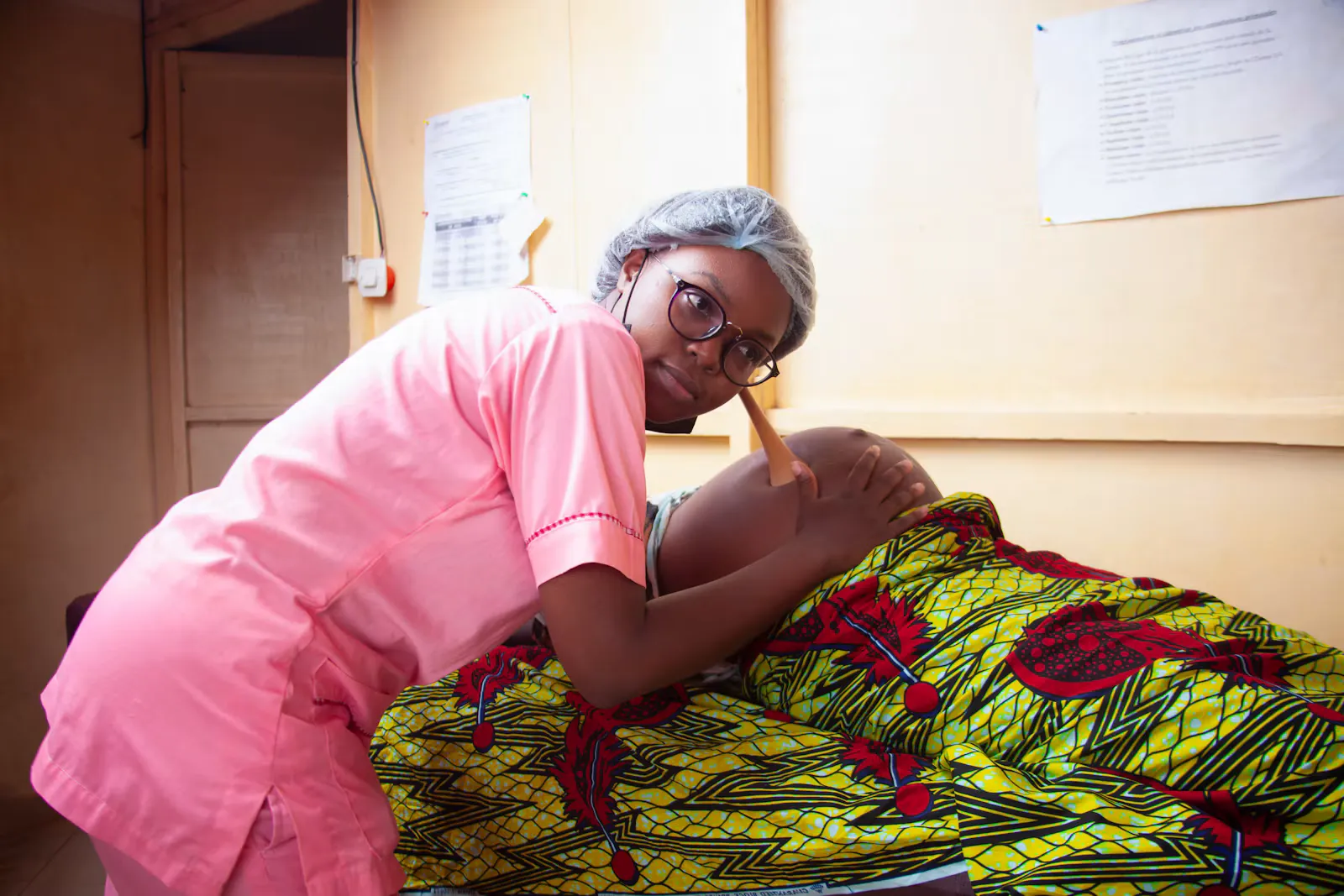
On a midwifery elective abroad you can usually observe, learn and help with tasks your supervisor allows, but you should not give direct care that your training and insurance do not cover. York warns that students gaining experience outside the UK "must not provide direct care as you are not insured to do so". The host hospital's workload never widens your scope.
That can feel frustrating on a busy labour ward. Staff may be short, and someone might hand you gloves and say "go ahead". Say no politely and stay at your level. A birth always has two patients, and a mistake by an unsupervised student abroad can harm a mother and a baby who had no say in your elective. Our guide to an ethical medical elective abroad explains how to decline a task without losing the team's goodwill, and the same rules apply to midwifery students.
What you can do is still a lot:
Observe the whole pathway. Antenatal clinic, admission, labour, birth, the first hours after birth and postnatal checks.
Learn the low-tech skills. Watch how midwives assess progress and monitor the fetal heart with a Pinard stethoscope or a handheld Doppler when machines are scarce.
Study the system. Who refers whom, how emergencies are transferred and how many women one midwife looks after on a shift.
Keep a learning log. Write up cases without names or photos, ready for your reflection at home.
Respect consent and privacy above everything. Ask whether the woman agrees to a student being present, through the midwife and an interpreter if needed. Our guide to language barriers on a clinical internship abroad has phrases and tips for that conversation.
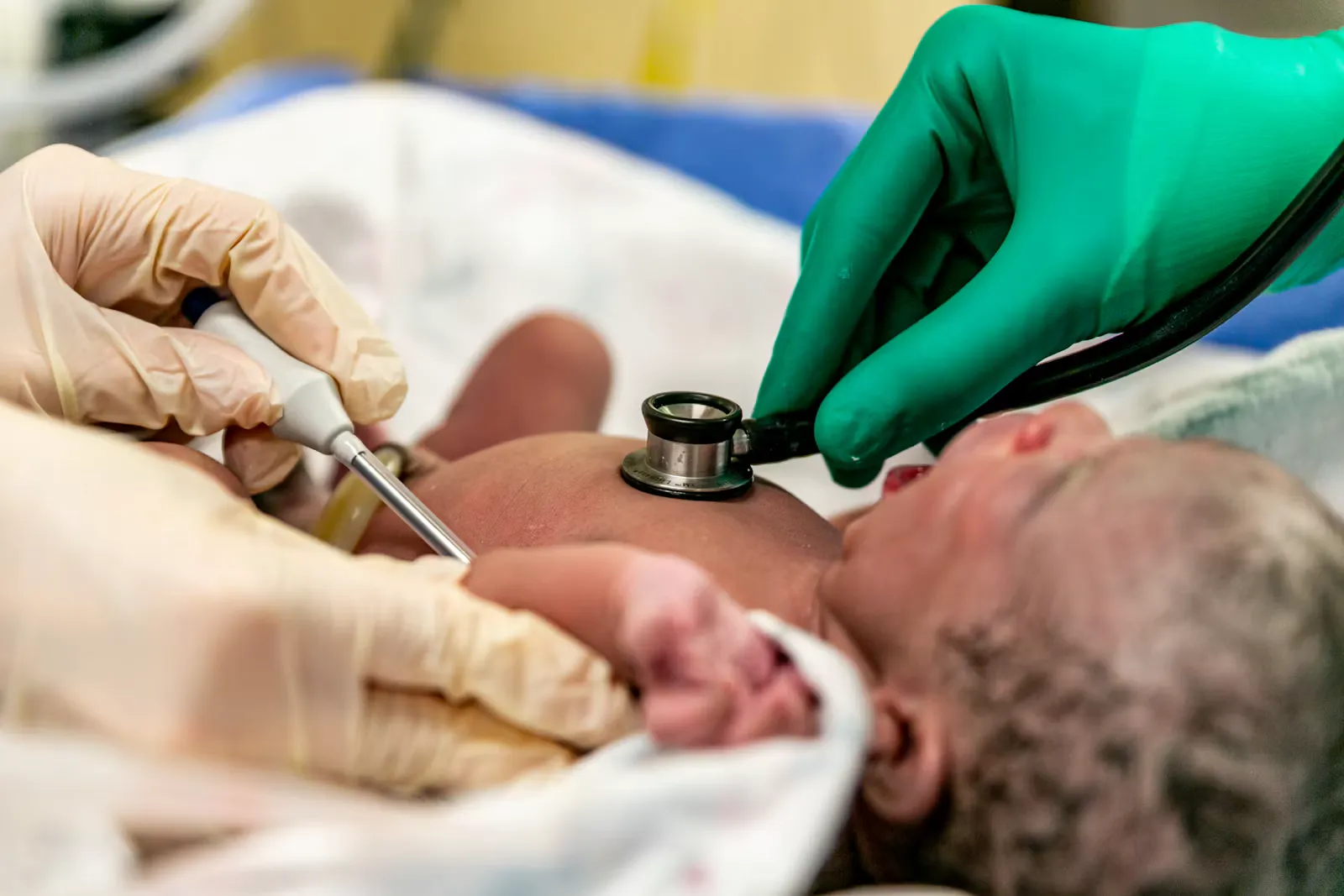
The first newborn check is a classic learning moment on a midwifery elective: watch closely, ask afterwards, and touch only when your supervisor invites you.
Why do student midwives choose an elective abroad?
Student midwives choose an elective abroad mainly to see maternity care where resources are tight and skilled birth attendance cannot be taken for granted. The WHO reports that about 99% of births in most high and upper-middle income countries benefit from a trained midwife, doctor or nurse, against 73% in low-income countries.
The stakes are real. According to the WHO, about 260,000 women died during and after pregnancy and childbirth in 2023, a global maternal mortality ratio of 197 per 100,000 live births, and just over 90% of those deaths occurred in low and lower-middle income countries. Most were preventable. The UNFPA's State of the World's Midwifery 2021 report estimates a global shortage of 900,000 midwives.
The four countries where we place students sit at very different points on that scale:
Maternal mortality ratio per 100,000 live births in 2023. Source: World Bank World Development Indicators, SH.STA.MMRT (modelled estimates from the WHO-led inter-agency group), read 16 November 2026. National averages say nothing about one hospital, but a lot about the setting.
Sri Lanka, with 18 deaths per 100,000 live births, shows what a strong public maternity system can achieve on a modest budget. Tanzania, at 276, shows the opposite pressure. Both are worth seeing, for different reasons. If infections are on your mind for the trip, read our guides to HIV care on an elective and the hepatitis B vaccine before an elective, since you'll be near blood and body fluids every day.
Secure Information Material
Request all the important info for free, no obligation.
travel4med does not run a separate midwifery programme. Our placements are built for nursing, medical and physician assistant students, and every one of our four destinations lists gynaecology or obstetrics among its departments. If you're a midwifery student, tell us in a free consultation; we'll check with the host hospital whether a maternity-focused placement fits your programme and dates before you book.
Here is what our destination pages say about maternity care at each site:
Destination
Hospital and maternity focus (from our destination pages)
Galle, Sri Lanka
Mahamodara Maternity Hospital, a teaching hospital and reference centre for obstetrics and gynaecology in the Southern Province, with about 12,000 births a year
Zanzibar, Tanzania
Lumumba Regional Hospital; the hospital tour includes the maternity ward, and weekly teaching covers obstetric emergencies
Pokhara, Nepal
Gynaecology is one of the departments you can request
Bali, Indonesia
Gynaecology is one of the departments you can request at RSU Bangli Hospital
Plan a midwifery elective abroad by starting with your university's rules, then choosing the setting, and leaving entry permits, vaccines and insurance for the final months. Most of the risk sits in the paperwork, not the flight. A written yes from your placement office comes before any payment.
Ask your placement office four questions. Can my midwifery elective be abroad? How long must it be? Do the hours count? Which forms must the host sign? Get the answers by email.
Write two or three learning outcomes. Agree them with your supervisor, as York asks. Our guide to elective learning objectives shows how to phrase them.
Choose the setting on purpose. A high-volume public maternity unit and a small rural clinic teach very different things.
Confirm the unit and your scope in writing. Ask who supervises you and what students may do there.
Get approval before you pay. Send the host's confirmation to your university. Our guide to medical elective approval lists what elective offices usually want.
Sort insurance and health. York notes that extra cover may be needed, for example through a professional union or a broker. Read our medical elective insurance guide, see a travel clinic early and pack a plan for needlestick injuries.
Budget for it. Electives are usually self-funded; our elective bursaries guide lists places to look for grants.
Reflect and report. Keep notes as you go, then use our medical elective report guide for the write-up your school expects.
Nursing and Midwifery Council (NMC). "Standards for pre-registration midwifery programmes" (updated standards approved by Council on 25 January 2023; standard 2.8: 50 per cent theory and 50 per cent practice learning; standard 2.9.1: three academic years and at least 4,600 hours; standard 3.5: 100 antenatal examinations, 40 women in labour, 100 postnatal women and 100 healthy newborns, 40 women with additional care needs): nmc.org.uk (accessed 16 November 2026).
University of York, MMid Midwifery. "Practice experience: general" (four-week elective at the end of Stage 2, UK or abroad, self-arranged and self-funded; electives outside the UK cannot contribute to the 2300 NMC practice hours, observation and learning only; no direct care because students are not insured; further cover may be required): sites.google.com/york.ac.uk (accessed 16 November 2026).
World Health Organization. "Maternal mortality" fact sheet, 7 April 2025 (about 260,000 maternal deaths in 2023; global MMR 197 per 100,000 live births; just over 90% in low and lower-middle income countries; 99% versus 73% of births with a trained midwife, doctor or nurse): who.int (accessed 16 November 2026).
World Bank. World Development Indicators, "Maternal mortality ratio (modeled estimate, per 100,000 live births)" SH.STA.MMRT, 2023 values: United Kingdom 8, Sri Lanka 18, Indonesia 140, Nepal 142, Tanzania 276: data.worldbank.org (accessed 16 November 2026).
UNFPA. "The State of the World's Midwifery 2021" (global shortage of 900,000 midwives): unfpa.org (accessed 16 November 2026).
travel4med. Sri Lanka and Zanzibar destination pages (Mahamodara Maternity Hospital, about 12,000 births a year; Lumumba Regional Hospital maternity ward and obstetric emergency teaching): Sri Lanka, Zanzibar (accessed 16 November 2026).