Stroke Care in a Low Resource Hospital: A Student Guide
Celina KöhslMedical student, member of the travel4med team
28. September 2026
18 minutes
Stroke Care in a Low Resource Hospital: A Student Guide
Stroke care is the chain that runs from somebody noticing a drooping face to a patient getting scanned, treated and rehabilitated, and in most of the world that chain snaps early. WHO counted 11.9 million new strokes in 2021 and 93.8 million people alive with one. Only 41% of countries offer clot busting treatment in their public hospitals at all. Your placement will very likely sit on the thin side of that number, and knowing why turns a frustrating ward round into the most useful month of your degree.
Key Takeaways
Stroke care is a global problem, not a tropical one. Stroke is the third leading cause of death and disability worldwide, roughly 10% of all deaths in 2021, with 11.9 million new strokes that year and 93.8 million people living with the consequences.
The burden has moved. WHO estimates about 70% of strokes now happen in low and middle income countries, which carry 87% of stroke deaths and lost healthy years.
Treatment has not followed the burden. Acute stroke care depends on a drug most systems cannot reach: a WHO survey found thrombolysis available in the public hospitals of only 41% of countries, and in fewer than 5% of low income countries.
Organised stroke units are the real dividing line. Across 318 hospitals in 84 countries, 91% of high income hospitals had an organised stroke centre against 18% of low income ones.
It is not an old person's disease. About 53% of strokes happen before the age of 70, and roughly 15% between 15 and 49.
Most of it is preventable. 84% of the 2021 stroke burden was attributable to 23 modifiable risk factors, with high blood pressure at the top of the list.
Your job in stroke care is recognition, not heroics. Students do not decide about thrombolysis. Spotting a face droop at the right moment and documenting the time of onset is a real contribution.
What is stroke care?
Stroke care is the whole time critical sequence a health system runs when brain tissue loses its blood supply: recognising the symptoms, moving the patient, imaging the brain to separate a clot from a bleed, treating the cause, and rehabilitating whatever function survived. Miss one link and the rest stops mattering.
WHO's stroke fact sheet, updated on 19 December 2025, sets out the acute end plainly. Imaging with CT or MRI comes first, thrombolysis follows for an ischaemic stroke, and admission to a specialist stroke unit with rehabilitation services "enhances outcomes and decreases mortality and morbidity". Read that as a checklist and you can audit any hospital you walk into.
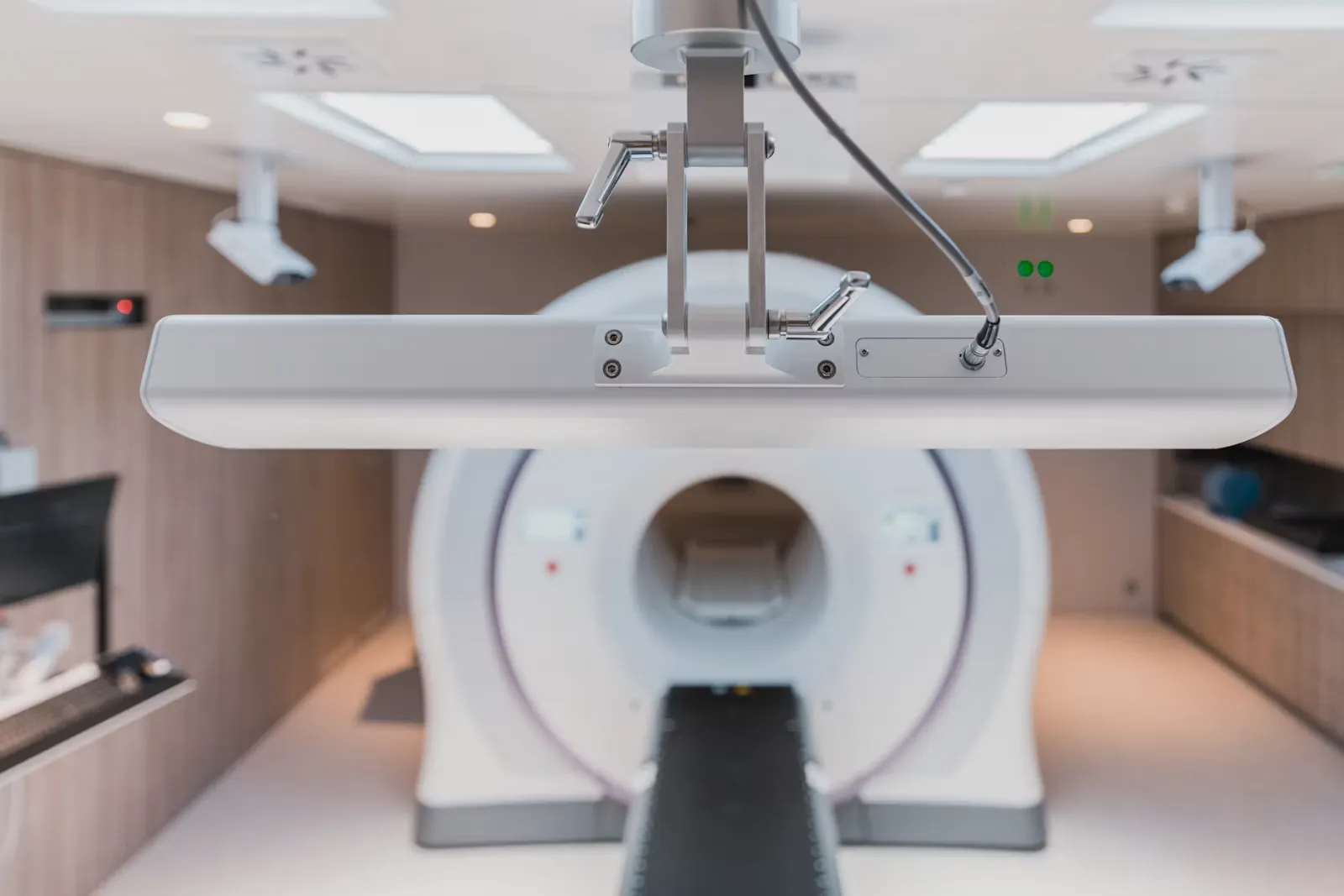
The distinction that matters at the bedside is between an ischaemic stroke, where a clot blocks an artery, and a haemorrhagic stroke, where a vessel bursts. You cannot tell them apart clinically with any reliability. That is why the scanner sits at the centre of the pathway, and why a hospital without one treats stroke very differently from the version in your textbook.
The scan is the decision point. Everything upstream of it is a race, and everything downstream depends on it.
Ready for your adventure abroad?
Secure your spot for your internship abroad now.
Why does stroke matter on a medical elective?
Because stroke care is the work you will meet in week one, whichever ward you are assigned to. WHO's top 10 causes of death fact sheet, updated on 7 August 2024, ranks stroke third globally for 2021 at around 10% of all deaths. Medicine, emergency, neurology and even the rehabilitation gym: stroke walks through all of them.
There is a date attached to it too. World Stroke Day falls on 29 October 2026, and the World Stroke Organization is running the 2026 campaign under the line "Every M1nute Counts" with the call to action #ActFAST, opening on the fact that one in four of us is at risk of a stroke in our lifetime. If your placement overlaps with late October, expect awareness stalls in the outpatient department.
Where does the world's stroke burden actually sit?
Not where the equipment is. The World Stroke Organization's Global Stroke Fact Sheet 2025 counts 11,946,000 incident strokes, 7,253,000 deaths, 93,816,000 people living with stroke and 160,457,000 healthy years lost, all for 2021. Of those deaths, 87.2% and of those lost years 89.4% fall in low income and lower middle income countries.
WHO's Regional Director for South-East Asia put it differently in a World Stroke Day statement on 28 October 2021: an estimated 70% of strokes occur in low and middle income countries, which also account for 87% of stroke related deaths and lost healthy years. A larger share of the dying than of the stroking. That difference is the stroke care gap, and it is measurable.
Sources: WHO Regional Office for South-East Asia, World Stroke Day statement, 28 October 2021 (the 70% and 87% figures, for low and middle income countries); World Stroke Organization, Global Stroke Fact Sheet 2025, 2021 data (87.2% of deaths and 89.4% of healthy years lost, for low income and lower middle income countries).
How big is the stroke care gap between hospitals?
Large enough that the same diagnosis produces two different diseases. A 2024 policy review, HEADS UP 2024, collects the comparisons. A WHO survey from 2021 found that only 41% of countries have thrombolysis for stroke available in their public health hospitals, and that fewer than 5% provide access in low income countries, particularly in the WHO African Region.
The World Stroke Organization and Lancet Neurology Commission assessment of 318 hospitals across 84 countries is the number that will match what you see: organised stroke centres were present in 91% of hospitals in high income countries against only 18% in low income countries, while acute stroke treatments were available in 60% of high income hospitals against 26% of low income ones. For mechanical thrombectomy the distance is wider, with low income countries performing 88% fewer procedures.
Source: World Stroke Organization and Lancet Neurology Commission hospital assessment, 318 hospitals across 84 countries, as reported in HEADS UP 2024. Figures describe the surveyed hospitals, not every hospital in either group.
Stroke care as you will actually see it on the ward
A patient who arrived the next morning, because the family waited to see whether the weakness would pass. A CT report from a scanner two towns over, or no CT at all. A registrar who is superb at the clinical examination precisely because the imaging is not guaranteed. Relatives doing the feeding and the turning.
You will also see confidence you did not expect. Stroke care without a scanner is still stroke care. Where thrombolysis is not an option, teams get very good at the parts that are: blood pressure control, swallow assessment before anything goes by mouth, glucose, positioning, early mobilisation, pressure area care. None of that needs a machine, all of it changes outcomes, and all of it is stroke care. If your bedside examination is rusty, our guide to the clinical skills you will use on a medical elective covers the groundwork, and the OSCE preparation guide refreshes the neurological examination itself.
The language problem is sharper here than anywhere else in the hospital. A stroke history is a timing history, and "when did you last see him normal" is hard to ask through a relative who is translating. Read our piece on language barriers on a clinical internship abroad before you try.
Step in the pathway
What it needs
What is often missing abroad
Recognition at home
Public awareness of face, arm, speech, time
Symptoms attributed to tiredness or heat, so hours are lost
Transport
An ambulance that knows where to go
Private car, motorbike or bus to the nearest facility
Imaging
A working CT or MRI scanner and a reporter
Scanner offsite, out of order, or payable in advance
Thrombolysis
The drug, a protocol, and a monitored bed
Available in the public hospitals of only 41% of countries
Thrombectomy
Angiography suite plus trained operators
Low income countries perform 88% fewer procedures
Stroke unit
Grouped beds, trained nurses, a routine
Present in 18% of low income country hospitals surveyed
Rehabilitation
Therapists, time, and follow up
Often a family member and a written exercise sheet
Secure Information Material
Request all the important info for free, no obligation.
Fast enough that the delay is usually before arrival, not after it. The World Stroke Organization's own framing for World Stroke Day 2026 is that time lost is brain lost, and that seeking emergency care as soon as symptoms appear is what makes treatment possible at all.
That is why the awareness half of stroke care carries so much weight in places where the treatment half is thin. Community recognition is the cheapest stroke care there is. A community that recognises a face droop and moves within the hour gives the hospital a chance. A community that waits until morning hands it a rehabilitation problem instead. When you are asked to help with an outreach session, that is the actual intervention, not a consolation prize.
What can a visiting student do during a stroke call?
Less than you want and more than you think. Student stroke care has firm limits: you are a guest with no local licence, so decisions belong to the treating team. Everything that supports those decisions is fair game, and most of it is unglamorous.
Pin down the time of onset. Ask who saw the patient last in a normal state, and when. Write the clock time, not "this morning". This single fact drives every treatment decision that follows.
Do the examination you were taught. Face, arm, leg, speech, visual fields, gaze. Present it in a clean 30 seconds to whoever is leading.
Check the glucose. Hypoglycaemia mimics stroke, and a strip test costs nothing.
Ask about the swallow before anyone offers water. Then tell the nurse and the family what you found, in that order.
Write it down, dated and signed. Your logbook needs it and so does the next shift.
Ask your supervisor on day one where the line sits between observing and doing. It moves between countries and departments, and getting it wrong in either direction is a problem. Our guide to an ethical medical elective abroad walks through that conversation.
Which risk factors carry most of the burden?
Almost all of them, which is the hopeful part. The World Stroke Organization attributes 84% of the 2021 stroke burden to 23 modifiable risk factors. WHO's fact sheet names the ten that matter most: high blood pressure, air pollution, smoking, high LDL cholesterol, a diet high in sodium, high fasting blood glucose, kidney dysfunction, excess body weight, physical inactivity and harmful use of alcohol.
High blood pressure sits at the top, and in a hospital without a stroke unit the outpatient clinic is where the most effective stroke care happens. If your cardiovascular physiology has gone hazy since second year, the German study site slaymed.de has a short refresher on cardiovascular basics and the mnemonics that stick, written in German for medical students.
One more number worth carrying: roughly 53% of strokes happen before the age of 70 and about 15% between the ages of 15 and 49. You will meet patients your own age. It lands differently than the textbook suggests.
After the acute phase, rehabilitation is the bigger gap
Stroke care does not end when the patient survives the first week. Stroke is not mainly a mortality problem, it is a disability problem, and the arithmetic says so: 93.8 million people were living with stroke in 2021 against 7.25 million dying from it that year, and 160 million healthy years were lost.
Rehabilitation is where most of the recoverable function actually comes back, and it is the part most often left to the family.
Where formal therapy services are thin, the discharge conversation does the work: who will do the exercises, how often, with what equipment, and who checks. Sit in on a few. They are more instructive than the acute admissions, and they are the part of stroke care that travels best into your own future practice.
Honestly, the published evidence on stroke care is uneven, and you should know that before you quote anything in an elective report. Here is what the sources used in this article actually cover for each destination.
Destination
WHO region
What the published evidence here covers
Sri Lanka
South-East Asia Region
WHO's country office reports about 60,000 stroke admissions to state hospitals a year and around 4,000 in hospital deaths, and states plainly that there are no national level data on stroke incidence
Nepal
South-East Asia Region
No country figure is quoted here. The regional and income group figures above are the closest evidence
Bali, Indonesia
South-East Asia Region
No country figure is quoted here. Same regional caveat as Nepal
Zanzibar, Tanzania
African Region
No country figure is quoted here. WHO reports thrombolysis access below 5% in low income countries, particularly in this region
The Sri Lankan figures come from a WHO Country Office World Stroke Day page dated 29 October 2022, which also records that stroke fell from the third to the seventh leading cause of hospital death there between 2014 and 2019. Heading to Sri Lanka? Read it alongside our medical elective in Sri Lanka guide. For the other three, start with Nepal, Bali and Zanzibar.
What these numbers do not say
They are not your hospital's numbers. The 91% and 18% figures describe 318 surveyed hospitals grouped by their country's income classification, and a well funded teaching hospital in a low income country can look nothing like that average. The 87.2% and 89.4% shares are global figures for an income group, not a statement about Sri Lanka, Nepal, Indonesia or Tanzania. The 70% and 87% figures come from a WHO regional statement and use a slightly wider income grouping.
Nothing here tells you how any single ward performs its stroke care. Ask when you arrive: is there a CT on site, who reports it, is thrombolysis on the formulary, are stroke patients grouped in one bay, and is there a physiotherapist. Five questions, five minutes, and you will know the place better than any statistic can tell you.
Recognition of your placement is a separate question, and not ours to answer. Your own medical school's elective office and your national medical council decide whether this counts towards your training, so get their requirements in writing before you book. Our complete guide to medical electives abroad walks through the paperwork, and nursing students should start with the nursing internship abroad planning guide.
How do you prepare before you fly?
Four weeks of unhurried preparation beats four days of panic. None of this is stroke care theory, it is logistics. Work through this in order.
Confirm what your faculty wants evidenced. Learning outcomes, supervisor sign off, logbook format, minimum hours. In writing, from the office that signs it.
Revise the neurological examination until it is boring. It is the one stroke care skill you will use daily. You want it automatic, because you will be doing it in a second language and in a corridor.
Read one national stroke guideline from your destination if you can find one. Failing that, read the WHO fact sheet and note which steps it assumes.
Agree the observing and doing line with your supervisor in week one. Then write down what you agreed.
Thinking about where to do it? travel4med places medical, nursing and physician assistant students in Sri Lanka, Nepal, Bali and Zanzibar, and all four are open for the full range of placements, including the final year clinical placement. Compare them on our destinations page or book a free consultation and we will talk it through. travel4med is operated by travelformed GmbH in Frankfurt, part of the futuredoctor group.
Medically reviewed by MUDr. Amandeep Grewal, a doctor on the travel4med team whose review scope covers vaccinations, tropical medicine, insurance and clinical content. This article is general information for students, not personal medical advice.
World Health Organization, "Stroke" fact sheet, 19 December 2025. Source for the 11.9 million new strokes and 93.8 million cases in 2021, the third place ranking, the lifetime risk rising 50% in 20 years, lost healthy years rising from 137 million in 2000 to 160 million in 2021, the ten modifiable risk factors, and the imaging, thrombolysis and stroke unit sequence. who.int
World Health Organization, "The top 10 causes of death" fact sheet, updated 7 August 2024. Stroke as the third leading cause of death globally in 2021, at around 10% of total deaths. who.int
Feigin and colleagues, "World Stroke Organization: Global Stroke Fact Sheet 2025", International Journal of Stroke, data year 2021. Source for 11,946,000 incident strokes, 7,253,000 deaths, 93,816,000 prevalent cases, 160,457,000 disability adjusted life years, the 87.2% of deaths and 89.4% of lost years in low income and lower middle income countries, the 53% before age 70 and 15% between 15 and 49, and the 84% attributable to 23 modifiable risk factors. pmc.ncbi.nlm.nih.gov
"HEADS UP 2024: Policy Efforts to Improve Equitable Access to Acute Stroke Care Globally", 2024. Source for the WHO 2021 survey figures on thrombolysis (41% of countries, under 5% of low income countries), the 318 hospital assessment across 84 countries (91% against 18% for organised stroke centres, 60% against 26% for acute treatments), and the 88% fewer thrombectomies. pmc.ncbi.nlm.nih.gov
World Health Organization Regional Office for South-East Asia, World Stroke Day statement by Dr Poonam Khetrapal Singh, 28 October 2021. The estimate that about 70% of strokes occur in low and middle income countries, which account for 87% of stroke related deaths and lost healthy years. who.int/southeastasia
World Health Organization Country Office for Sri Lanka, "World Stroke Day 2022", 29 October 2022. The roughly 60,000 stroke admissions to state hospitals a year and around 4,000 hospital deaths, the absence of national level incidence data, and the fall from third to seventh leading cause of hospital death between 2014 and 2019. who.int/srilanka
World Stroke Organization, "World Stroke Day 2026" campaign page. The 29 October date, the campaign line "Every M1nute Counts" with #ActFAST, the 1 in 4 lifetime risk, and the framing that time lost is brain lost. world-stroke.org