Hepatitis B Vaccine for a Medical Elective: Your Plan
The hepatitis B vaccine is a course of injections that protects you against the hepatitis B virus, a bloodborne infection you can catch from a needlestick injury on the ward. For a medical elective it is not optional: our destination pages list hepatitis B vaccination as required for taking part in Sri Lanka, Nepal, Bali and Zanzibar. The catch is time, because a full course and the blood test that proves it worked can take months.
Researched and editorially reviewed by Nils-Andre Stritt, travel4med. The medical content was reviewed by MUDr. Amandeep Grewal, a doctor on the travel4med team.
Key Takeaways
Required, not just recommended. Our pages for Sri Lanka, Nepal, Bali and Zanzibar list hepatitis B among the vaccinations required for taking part.
Several schedules exist. UK guidance lists a standard schedule (0, 1 and 6 months), an accelerated one (0, 1, 2 and 12 months) and a very rapid one (days 0, 7 and 21, plus 12 months).
Proof usually means a titre. For healthcare workers, UK guidance checks anti-HBs one to two months after the primary course; 10 mIU/mL or more is generally accepted as protective.
A low result is not the end. Below 10 mIU/mL after a full course counts as non-response, which leads to tests for infection and a repeat course, not a cancelled elective by default.
Start as soon as you know your dates. Your own medical school's occupational health team decides what counts for your placement.
What is the hepatitis B vaccine?
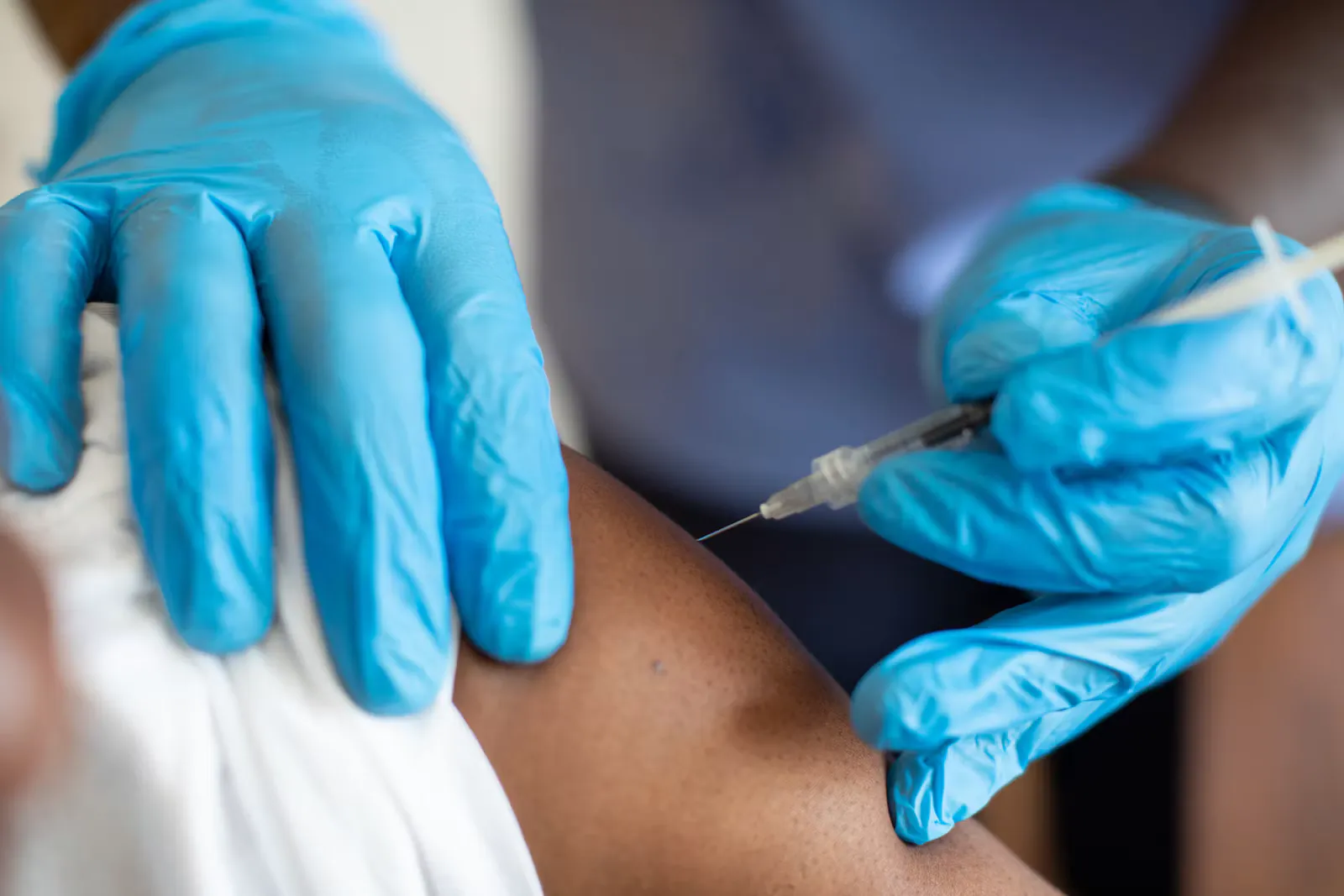
The hepatitis B vaccine is an inactivated vaccine: it contains no live virus and cannot give you the infection, according to the UK Green Book. It teaches your immune system to make antibodies against hepatitis B, called anti-HBs. The WHO says it offers nearly 100% protection against the virus. You need several doses, and the number depends on the product and the schedule.
Why does that matter so much for a medical student? Hepatitis B spreads through blood and body fluids. The WHO lists needlestick injury among the ways it spreads, and it advises people working in a health care setting to get a hepatitis B vaccine. On an elective you will take blood, place cannulas, assist in theatre and dispose of sharps, often in a hospital where the routine is new to you.
The burden is large. The WHO estimates that 240 million people were living with chronic hepatitis B infection in 2024, with 0.9 million new infections each year and an estimated 1.1 million deaths in 2024. So treat every blood contact on the ward as a possible exposure.
Ready for your adventure abroad?
Secure your spot for your internship abroad now.
Do you need a hepatitis B vaccine for your elective?
Yes, if you are going with us. The destination pages for Sri Lanka, Nepal, Bali and Zanzibar, read on 23 October 2026, all name hepatitis A, hepatitis B, MMR, and tetanus, diphtheria, polio and pertussis as required for taking part. Your own school may ask for proof too before any clinical work.
Travel advice points the same way. The CDC traveller pages say hepatitis B vaccination is recommended for unvaccinated travellers younger than 60 going to Sri Lanka, Nepal and Tanzania, and for unvaccinated travellers of all ages going to Indonesia, where Bali lies. The UK Green Book, chapter 18, recommends the hepatitis B vaccine for healthcare workers "in the UK and overseas (including students and trainees)" who may have direct contact with patients' blood, body fluids or tissues.
Where does the risk sit on a map? The WHO says the burden of chronic hepatitis B is highest in its Western Pacific and African regions. Zanzibar belongs to the African Region; Sri Lanka, Nepal and Indonesia belong to the South-East Asia Region.
People living with chronic hepatitis B in three WHO regions, from the WHO hepatitis B fact sheet (28 July 2026).
Which hepatitis B vaccine schedule fits your departure date?
The right hepatitis B vaccine schedule depends on how much time you have and which vaccine your clinic stocks. The UK Green Book, chapter 18 (version of 5 February 2026), lists these adult options. Other countries license other products and schedules, so treat this as an example, not as your national rule.
Schedule (UK Green Book)
Doses
When it is used
Standard
0, 1 and 6 months
Only where rapid protection is not needed and you will finish the course
Accelerated
0, 1, 2 and 12 months
The most commonly used schedule for adults at risk in the UK
Very rapid
Days 0, 7 and 21, plus a dose at 12 months
Adults over 18 at immediate risk, including travel to areas of high endemicity
Two dose vaccine (HEPLISAV B)
0 and 1 month
Only with this specific product
Two details from the Green Book save students a lot of stress. First, an interrupted course is resumed, not restarted. If you had two doses years ago, you usually continue where you stopped. Second, in the accelerated schedule the 12 month dose is part of the primary course, not a booster.
So what if your elective is in eight weeks and you have never been vaccinated? The very rapid schedule exists for exactly that kind of situation, and it builds protection faster than the others. It still ends with a dose at 12 months, so your hepatitis B vaccine series is not finished when you fly. Tell your school and your host which schedule you are on.
What anti-HBs titre does your host ask for?
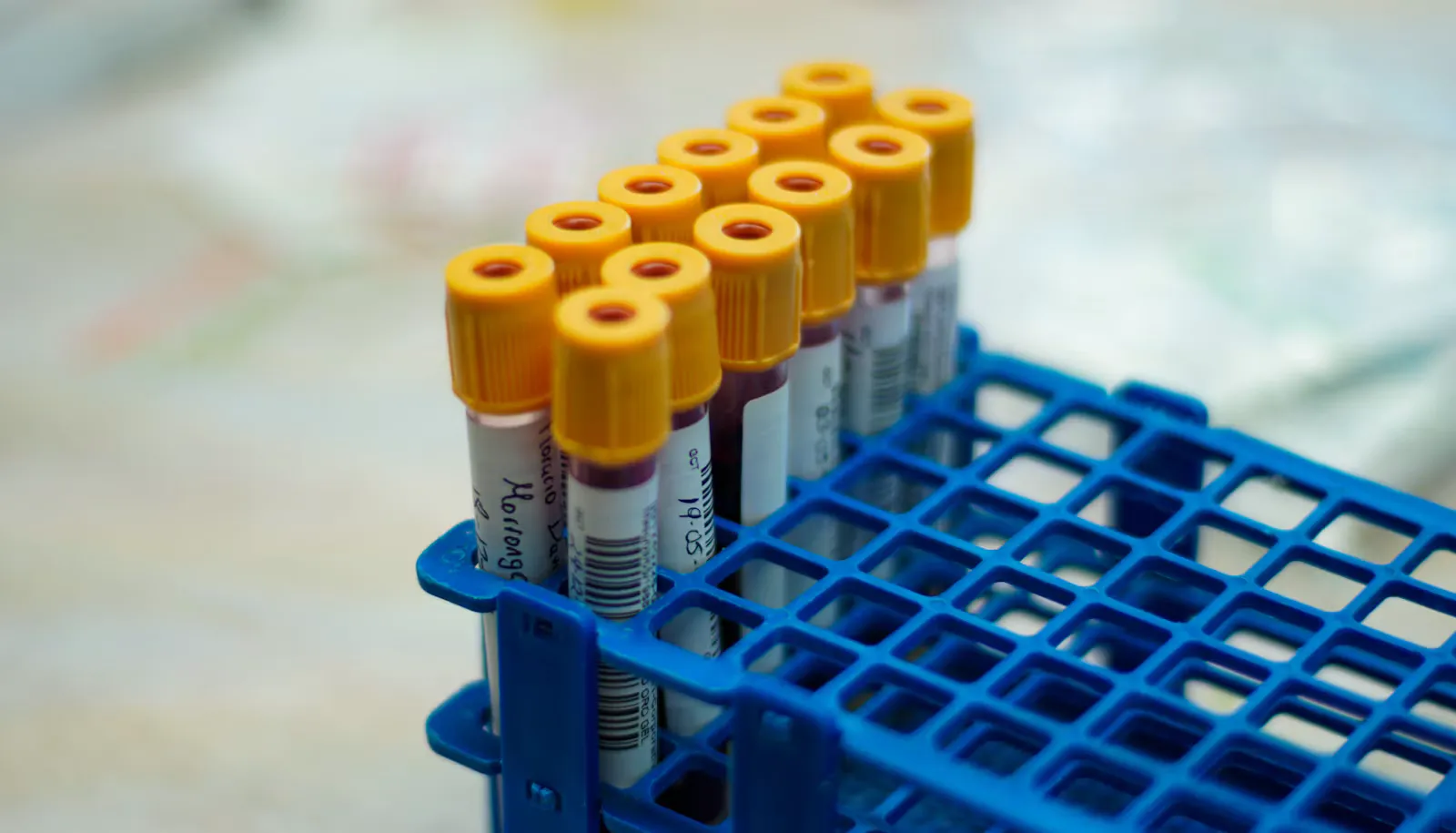
Your host or your school will usually want proof that the hepatitis B vaccine worked, not only that you had it. That proof is a blood test for anti-HBs, the antibody the vaccine produces. The result is given in mIU/mL, and it is what people mean when they ask for a hepatitis B certificate for medical students.
The UK Green Book sets out how this works for healthcare and laboratory workers:
When to test. One to two months after you finish the primary course. In the accelerated schedule, that means after the fourth dose at 12 months.
Do not test too early. A low result before the course is complete says nothing about non-response, and you still need the remaining doses.
What counts as protected. Levels above 100 mIU/mL are preferable, but 10 mIU/mL or more is generally accepted as protective.
The anti-HBs titre is a simple blood test, but the timing matters: one to two months after your last primary dose.
Bring the paperwork, not just a memory of the result. Ask for a dated lab report with the anti-HBs value and the units, and keep it with your vaccination record. Some schools issue an occupational health clearance letter instead. Your vaccinations for a medical elective abroad checklist shows how this proof fits with MMR, tetanus and the travel jabs.
What if your titre is low or you are a non-responder?
Don't panic. A low titre has a defined pathway. The UK Green Book table for healthy adults at occupational risk, tested after a complete course, reads like this:
Above 100 mIU/mL: no further doses and no further testing.
10 to 100 mIU/mL: one more dose straight away, no further testing.
Below 10 mIU/mL, vaccinated as a child: antibody levels fade over time, so a single challenge dose and a test one to two months later shows whether immune memory is still there.
Below 10 mIU/mL, vaccinated as an adult: tests for current or past infection (HBsAg and anti-HBc), then a full repeat course and another test one to two months after it.
If your level is still below 10 mIU/mL after the second course and you have no markers of infection, the Green Book classes you as a non-responder. That does not automatically end your plans. It does mean that after an exposure you would need hepatitis B immunoglobulin (HBIG) for protection, so your occupational health team should know before you travel. Ask them, in writing, what they expect from you on the ward.
The flip side is good news. The Green Book says healthy healthcare workers who responded to a primary course do not need a hepatitis B booster later. One proven response usually covers your whole career.
Secure Information Material
Request all the important info for free, no obligation.
What protects you on the ward besides the vaccine?
Vaccination is your strongest layer, but it works best with safe sharps habits. Never recap a used needle, carry a sharps container to the bedside, wear gloves for every blood contact and know where to report an injury before your first shift.
If a needle does go into your skin, the first minutes matter. Our needlestick injury on a medical elective guide walks you through washing the wound, reporting it and post-exposure prophylaxis. This is where your titre result earns its keep: it tells the doctor treating you whether you need a booster, HBIG or nothing at all. Check that your medical elective insurance covers post-exposure treatment too.
Hepatitis B is only one jab on your list. The typhoid vaccine and rabies guides cover the next most common questions, and the country guides for Sri Lanka, Nepal, Bali and Zanzibar cover the rest of your preparation.
Sorting your hepatitis B vaccine before an elective? We place medical, nursing and physician assistant students in Sri Lanka, Nepal, Bali and Zanzibar for clinical electives, final-year placements, nursing placements, PA placements and observerships. We tell you which vaccinations and documents your hospital needs. Book a free consultation, compare our destinations or read about our medical elective abroad and nursing placement abroad programmes.
Frequently Asked Questions
Sources
World Health Organization. Hepatitis B, fact sheet, 28 July 2026: who.int (accessed 23 October 2026).
UK Health Security Agency. Hepatitis B: the green book, chapter 18 (chapter dated 5 February 2026, page updated 24 February 2026): gov.uk (accessed 23 October 2026).
Centers for Disease Control and Prevention. Traveler pages: Sri Lanka, Nepal, Indonesia, Tanzania (accessed 23 October 2026).
travel4med. Destination pages with vaccination FAQs: Sri Lanka, Nepal, Bali, Zanzibar (accessed 23 October 2026).