Hepatitis A Vaccine for a Medical Elective: Do You Need It?
The hepatitis A vaccine is an inactivated jab that protects you against a liver infection spread through contaminated food, water and hands. One dose protects you for up to 12 months, and a second dose 6 to 12 months later gives protection for at least 25 years. For a medical elective in Sri Lanka, Bali, Nepal or Zanzibar, you need it: it is required for every travel4med placement.
Reviewed by MUDr. Amandeep Grewal, a doctor on the travel4med team whose review scope covers vaccinations and travel medicine. Written by Nils-Andre Stritt, who organises our placements and talks students through their preparation before they fly.
Key Takeaways
Required for our placements. Our destination pages list hepatitis A as a vaccination required for taking part in Sri Lanka, Bali, Nepal and Zanzibar.
Recommended by UK travel health advice too. TravelHealthPro recommends the hepatitis A vaccine for all previously unvaccinated travellers to Indonesia, Nepal and Tanzania, and for higher risk travellers to Sri Lanka.
One dose now, one dose later. A single dose protects for up to 12 months. A second dose 6 to 12 months later gives immunity for at least 25 years, according to the UK Green Book.
Late is still fine. Ideally get it at least 2 weeks before departure, but the Green Book says it can be given up to the day you fly.
Hygiene still matters. Hepatitis A spreads through food, water and hands, so handwashing and food care stay part of every ward day.
What is the hepatitis A vaccine?
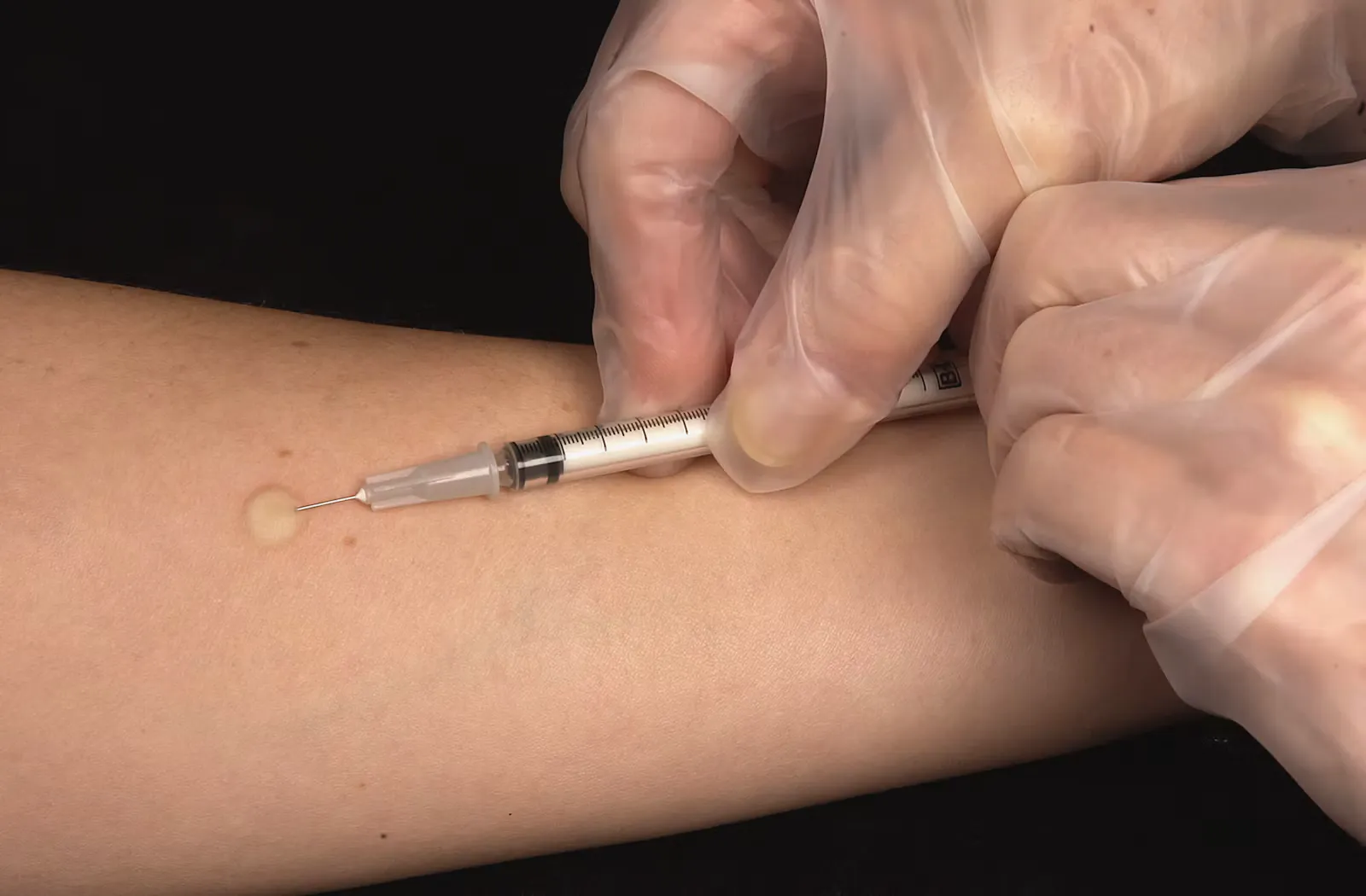
The hepatitis A vaccine is an inactivated vaccine, which means it contains no live virus and cannot cause the disease. The UK Green Book lists three single vaccines (Havrix, Avaxim and Vaqta) that can be used interchangeably, plus combined versions with hepatitis B or typhoid. It is given as an injection into the upper arm.
Why bother with a mild sounding liver infection? Because it isn't always mild in adults. The Green Book says jaundice occurs in 70 to 80% of people infected as adults, and the illness gets more severe with age. The WHO estimates that 35,569 people died from hepatitis A worldwide in 2023, which is 2.6% of all deaths from viral hepatitis.
There's no specific antiviral treatment either. The WHO describes care as supportive: fluids, food and rest, with recovery that can take weeks or months. For a student on a four week elective, that can mean the whole placement lost.
Ready for your adventure abroad?
Secure your spot for your internship abroad now.
Do you need the hepatitis A vaccine for a medical elective?
Yes, for a placement with us. Our destination pages list hepatitis A as required for taking part in all four locations, together with hepatitis B, MMR and tetanus, diphtheria, polio and pertussis. UK travel health advice points the same way: the hepatitis A vaccine is recommended for unvaccinated travellers to areas where the infection is common.
The reason is simple geography. The Green Book names the Indian subcontinent, the Middle East, Africa and South East Asia as the highest risk areas for UK travellers. The WHO adds that in low and middle income countries with poor sanitation, about 90% of children have been infected before the age of 10, mostly without symptoms. Adults from countries with low rates, on the other hand, are often not immune. The Green Book estimated that only 18.9% of people in England and Wales had antibodies in 2001/2.
One point surprises medical students. The Green Book says most healthcare workers are not at increased risk of hepatitis A at work, so your medical school may not have given you this jab. It's the destination, not the ward, that makes the difference. Check your record before you assume you're covered, and see our overview of vaccinations for a medical elective abroad for the full list.
Hepatitis A vaccine advice for our four destinations
TravelHealthPro, the UK National Travel Health Network and Centre, gives country by country advice. For three of our destinations the wording is the same: "As hepatitis A vaccine is well tolerated and affords long-lasting protection, it is recommended for all previously unvaccinated travellers." For Sri Lanka, it lists the travellers at increased risk instead.
Destination
TravelHealthPro advice on the hepatitis A vaccine
Our destination page
Sri Lanka
Recommended for travellers at increased risk, including those staying with or visiting the local population, long-stay travellers and those exposed through their work
Required for taking part
Bali (Indonesia)
Recommended for all previously unvaccinated travellers
Required for taking part
Nepal
Recommended for all previously unvaccinated travellers
Required for taking part
Zanzibar (Tanzania)
Recommended for all previously unvaccinated travellers
Required for taking part
A student on a clinical placement fits the Sri Lanka risk list well: you live in the community for weeks, eat local food and work with patients. That is why our requirement is the same for every destination. If you are vaccinated outside the UK, your own national travel health service may word things differently, so bring this table to your appointment.
Fresh fruit from a roadside stall is part of daily life on placement. Hepatitis A spreads through food and water, so the vaccine and good food hygiene work together.
How many doses do you need, and how long does it last?
Two doses for lifelong planning, one dose for a single trip. The Green Book says one dose of a single hepatitis A vaccine protects for up to 12 months. A second dose 6 to 12 months after the first gives immunity for at least 25 years, and a routine booster after that is generally not needed.
TravelHealthPro lists the adult schedules: Avaxim and Havrix Monodose from age 16, and Vaqta Adult from age 18, each as 2 doses given 6 to 12 months apart. It adds that protection after a complete course can be expected to last at least 25 years and probably for life. A booster at 25 years is only advised for people at ongoing risk.
Source: UK Health Security Agency, Immunisation against infectious disease (the Green Book), hepatitis A chapter, 24 August 2026.
Missed your second dose? Don't start again. The Green Book says boosting works even when the second dose is delayed for several years, so a course does not need to be restarted. Just book it when you can.
How late can you get the hepatitis A vaccine before you fly?
Later than most travel jabs. The Green Book says travellers should preferably have the hepatitis A vaccine at least 2 weeks before departure, but it can be given up to the day of departure. Antibodies may not show on tests for 12 to 15 days, yet the vaccine may give some protection before that.
That makes it one of the easiest vaccines to fit into a tight plan, and a good one to sort out first. If you are booking at short notice, our guide to a last-minute medical elective shows what else needs fast action. If you have more time, the medical elective application timeline shows where a travel clinic visit fits.
The Green Book also says hepatitis A vaccines can be given at the same appointment as hepatitis B, MMR, MenACWY, Td/IPV and other travel vaccines, in a different site. So one clinic visit can cover several jabs on your list.
Secure Information Material
Request all the important info for free, no obligation.
Combined jabs: hepatitis A with typhoid or hepatitis B
Combined vaccines save injections. Twinrix Adult covers hepatitis A and B together and, according to TravelHealthPro, is given as 3 doses at 0, 1 and 6 months. An accelerated schedule of days 0, 7 and 21 exists for adults from 18, with a fourth dose at 12 months for long term protection.
This is worth knowing because medical students usually need hepatitis B anyway, for the wards at home and abroad. Our hepatitis B vaccine guide explains the antibody check that many hosts expect. If you still need both, ask the clinic whether the combined vaccine fits your timeline, because a 3 dose course takes longer than a single hepatitis A dose.
Typhoid is the other common partner. Combined hepatitis A and typhoid vaccines have been used for years, but TravelHealthPro now lists two of them, Hepatyrix and ViATIM, as discontinued. Your clinic will tell you what is available. Our typhoid vaccine guide covers the typhoid side.
Who should not have the hepatitis A vaccine, and what are the side effects?
Very few people. The Green Book says the only reasons not to give it are a confirmed anaphylactic reaction to a previous dose or to a vaccine component. Side effects are usually mild and short: soreness, redness or a small lump where the needle went in, and less often fever, tiredness, headache or nausea.
Two further points from the Green Book help if they apply to you:
Pregnancy and breastfeeding. Hepatitis A vaccines may be given in pregnancy when clinically indicated, and there is no evidence of risk to pregnant or breastfeeding women.
Bleeding disorders or anticoagulants. People on stable anticoagulation can usually have the injection into the muscle with a fine needle and firm pressure afterwards. Mention it to the clinic.
If you have a weakened immune system from illness or treatment, talk to your own doctor. TravelHealthPro says people with altered immune responses should get specific advice, and an earlier booster may be recommended.
Is the hepatitis A vaccine free?
In the UK, often yes. The NHS travel vaccinations page lists hepatitis A among the travel vaccines you can get free at a GP surgery after completing a risk assessment form. The NHS hepatitis A page adds that you may need to pay for a travel vaccine, so check with your GP surgery first.
Not every GP surgery offers travel vaccinations, and private clinics and pharmacies charge for them. Outside the UK, rules on cost and access differ by country and sometimes by university, so ask your medical school, your student health service or your insurer. Keep the receipt and the record either way, since you may need to show proof of vaccination during your preparation with us.
Your hepatitis A vaccine plan in 6 steps
Check your record. Look for any hepatitis A or combined hepatitis A and B dose, with dates. Many students find one dose from an earlier trip.
Book a travel health appointment. Aim for 6 to 8 weeks before departure so all your jabs fit, but don't panic if it's later: the hepatitis A vaccine can be given up to the day you fly.
Ask about combined vaccines. If you still need hepatitis B, ask whether a combined vaccine suits your timeline.
Get the first dose. It protects you for up to 12 months, which covers almost every elective.
Diary the second dose. Book it 6 to 12 months later for at least 25 years of protection.
Send us your proof. We go through your vaccination status with you during preparation, so nothing is missing before you fly.
Food, water and hands. TravelHealthPro says the most common way travellers get hepatitis A is through contaminated food or water, and the NHS advises washing your hands before eating and after the toilet, drinking bottled water, and avoiding shellfish and uncooked fruit and vegetables. The vaccine plus those habits is your best protection.
The same habits protect you against other food and water infections that the vaccine doesn't cover. Our guide to travellers' diarrhoea on a medical elective covers what to pack and when to see a doctor, and medical elective insurance explains the cover you want if you get ill abroad.
Planning a placement in Sri Lanka, Bali, Nepal or Zanzibar? We place medical, nursing and physician assistant students in all four destinations for clinical electives, final-year placements, nursing placements and observerships, and we check your vaccination status with you during preparation. Book a free consultation, compare our destinations or read about our clinical placements abroad and nursing placements abroad.
Frequently Asked Questions
Sources
UK Health Security Agency. Immunisation against infectious disease (the Green Book), hepatitis A chapter, 24 August 2026 (vaccines, schedules, duration, travel timing, co-administration, healthcare workers, contraindications, pregnancy, side effects, epidemiology): assets.publishing.service.gov.uk (PDF); GOV.UK publication page, last updated 22 October 2026: gov.uk (accessed 18 November 2026).
TravelHealthPro (UK National Travel Health Network and Centre). Hepatitis A, last updated 14 July 2026 (vaccine schedules, discontinued vaccines, length of protection, prevention): travelhealthpro.org.uk (accessed 18 November 2026).
World Health Organization. Hepatitis A, fact sheet, 28 July 2026 (deaths in 2023, childhood infection in low and middle income countries, treatment): who.int (accessed 18 November 2026).