Bali Currency 2026: Rupiah Guide for Your Placement
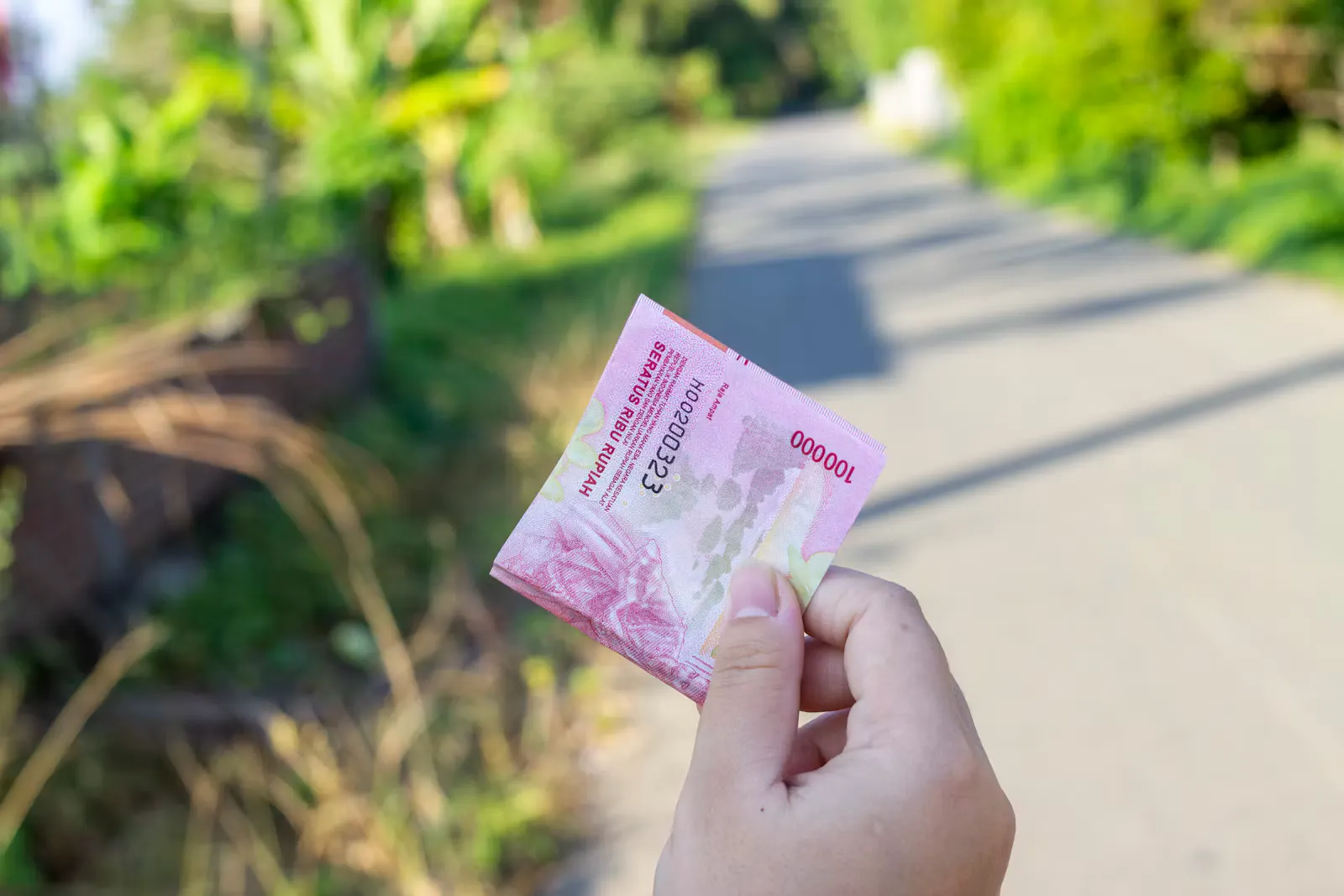
The Bali currency is the Indonesian rupiah (IDR, shown as "Rp" on price tags), because Bali is a province of Indonesia and has no money of its own. On 29 October 2026 the European Central Bank reference rate was IDR 20,193.16 for 1 euro, so the IDR 100,000 note, the biggest one you'll carry, is worth about 4.95 euros. Euros and US dollars are not legal tender for everyday payments.
Editorially reviewed by Nils-Andre Stritt, travel4med (author page). Rates, banknotes and rules checked against the European Central Bank, Bank Indonesia and Indonesian government pages on 30 October 2026.
Key Takeaways
One currency only: The Bali currency is the Indonesian rupiah (IDR), issued by Bank Indonesia. There is no separate Bali money.
About 20,000 rupiah per euro: The ECB reference rate was IDR 20,193.16 on 29 October 2026. Between late July and October 2026 it moved between 19,974.25 and 20,788.62, about 4 percent.
Quick maths: Drop four zeros and halve it. IDR 100,000 is roughly 5 euros (4.95 at the ECB rate).
Pay in rupiah: Indonesia's Law No. 7 of 2011 on currency requires the rupiah for payment transactions inside the country. Always choose IDR at a card terminal or ATM.
Customs limit: Cash worth IDR 100 million or more (about 4,952 euros) must be reported to Indonesian Customs when you enter or leave.
What is the Bali currency?
The Bali currency is the Indonesian rupiah, code IDR, the same money used in Jakarta, Lombok and everywhere else in Indonesia. It is issued by the central bank, Bank Indonesia. Prices are written with "Rp" in front and a dot as the thousands separator, the way Bank Indonesia's own gallery labels its notes (Rp 100.000). So Rp 50.000 means fifty thousand rupiah, not fifty.
That last detail catches people out on day one. A menu that says 45.000 is asking for forty five thousand rupiah, a little over 2 euros, not forty five.
Why does this matter for a hospital placement? Because for four to twelve weeks you pay your own daily life in Bali: lunch near the hospital, a ride home, a SIM card, laundry, a weekend trip. If you understand the Bali currency before you land, you won't be off by a zero at the first till. Searchers ask about it constantly, too: SISTRIX counted 5,700 monthly UK searches for "bali currency" in September 2026.
Ready for your adventure abroad?
Secure your spot for your internship abroad now.
Can you pay with euros or US dollars in Bali?
No, not for everyday payments. Indonesia's Law No. 7 of 2011 on currency makes the rupiah the money for payment transactions in the country. The Directorate General of Treasury at Indonesia's Ministry of Finance summarises Article 21 as the obligation to use rupiah notes and coins for every payment transaction. Exchange your money first or pay by card in IDR.
The same Ministry of Finance page says the law came into force on 28 June 2011, the day it was published in the State Gazette. It also explains the narrow exception in Article 23: parties who agreed in advance may settle in a foreign currency. That covers contracts between businesses, not your coffee in Ubud or your fruit at the market.
So the Bali currency is the only one you need day to day. A small reserve of euros or dollars in your bag is still a sensible backup if a card stops working, but you'd change it into rupiah before spending it. If you are coming from outside Europe, the same applies to your own currency: think in IDR from the moment you land.
How much is 1 euro in Indonesian rupiah?
On 29 October 2026 the ECB reference rate was IDR 20,193.16 for 1 euro, which makes IDR 1,000,000 worth 49.52 euros. Over the previous three months the rate moved between IDR 19,974.25 on 7 October and IDR 20,788.62 on 20 August 2026, a range of about 4 percent. Your bank's rate will be a little worse than this reference.
For quick sums at the till, use the rule from the Key Takeaways: strike four zeros, then halve. IDR 50,000 becomes 5, halved 2.50 euros; the exact value is 2.48 euros. That's close enough for daily life. Paying in another currency than the euro? Check the current IDR rate in your own banking app before you go, since the euro is only our reference here and your costs depend on your currency.
Amount in rupiah
In euros (ECB rate, 29 Oct 2026)
What it is
IDR 10,000
0.50 EUR
a common small banknote
IDR 50,000
2.48 EUR
the second largest banknote
IDR 100,000
4.95 EUR
the largest banknote in circulation
IDR 150,000
7.43 EUR
Bali tourist levy per person (Love Bali)
IDR 1,000,000
49.52 EUR
overstay charge per day (UK travel advice)
IDR 100,000,000
4,952.17 EUR
cash amount you must report to Customs
The euro values are our own calculations from the ECB reference rate. The levy comes from the official Love Bali FAQ, and the overstay figure from the UK government's Indonesia entry requirements page, which says overstaying costs "one million rupiah a day". Whether a student on an internship visa pays the levy at all is explained in our guide to the Bali tourist tax.
Which rupiah banknotes and coins will you use?
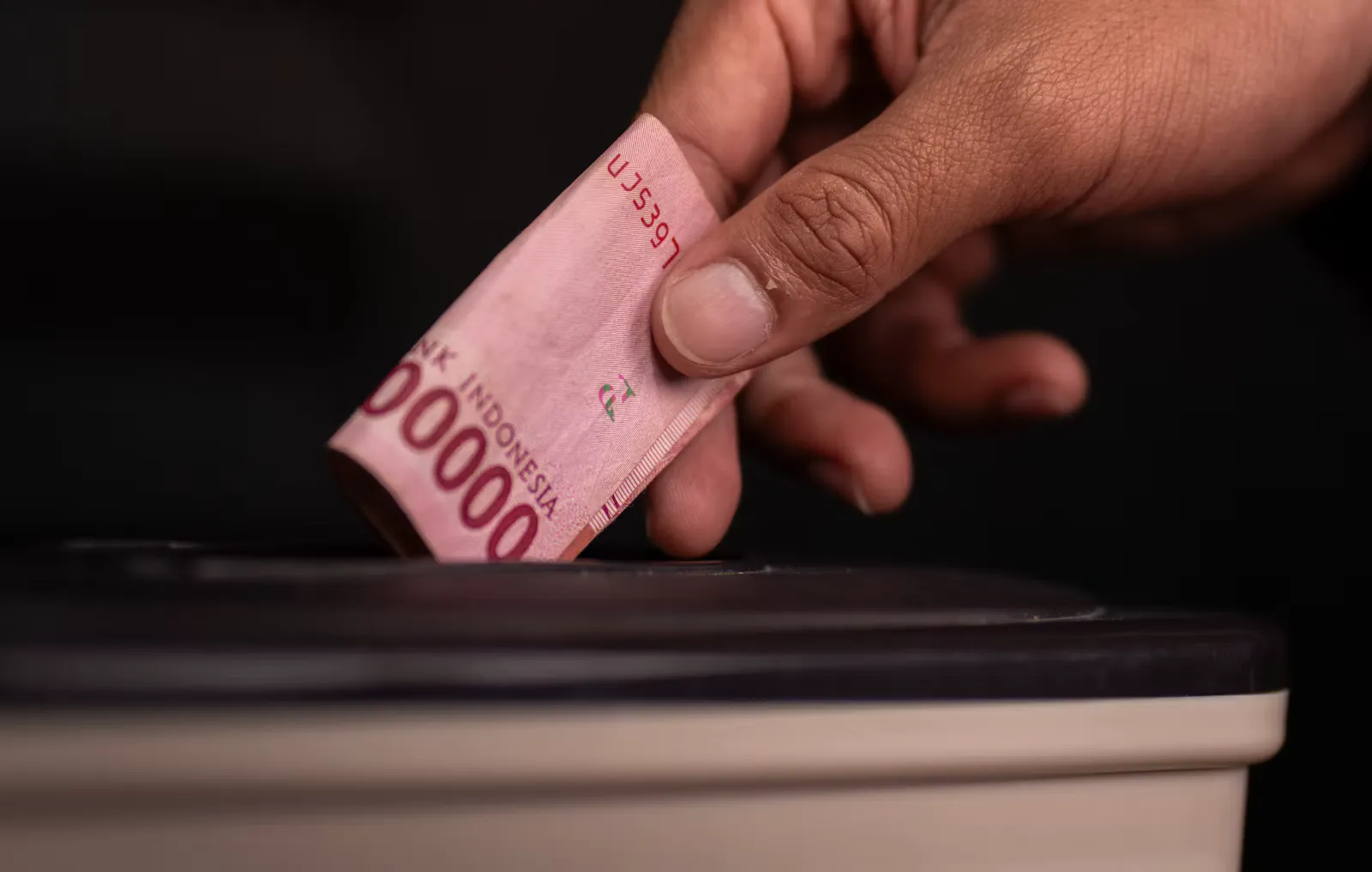
Bank Indonesia's official gallery shows seven banknote values in its 2016 and 2022 issues: IDR 1,000, 2,000, 5,000, 10,000, 20,000, 50,000 and 100,000. The 2016 coin issue has IDR 100, 200, 500 and 1,000. At the ECB rate of 29 October 2026, even the biggest note, IDR 100,000, is worth just 4.95 euros, so expect a thick wallet.
The gallery also lists older issues that you may still be handed now and then, such as IDR 50,000 and 10,000 notes from 2005 and a IDR 100,000 note from 2014. Day to day, you'll mostly see the 2016 and 2022 series. If a note looks very different from the ones in your wallet, compare it with the Bank Indonesia gallery before you accept it as change.
Our own calculation from the ECB euro reference rate of 29 October 2026 (IDR 20,193.16 per euro); banknote values from the Bank Indonesia banknote gallery, read on 30 October 2026.
A tip from everyday life: keep small notes. Paying for a bottle of water with a IDR 100,000 note can leave a small shop without change. Sort your notes by value in your wallet, so you don't hand over the 50,000 when you meant the 5,000.
Should you exchange money before you fly or in Bali?
Do both, in that order: change a small amount of your money into the Bali currency before you fly, enough for a ride and a first meal, then get the rest in Bali from a bank ATM with your card. Whenever an ATM or card terminal offers to charge you in your home currency, say no and pay in rupiah.
That offer is called dynamic currency conversion (DCC). Visa explains that merchants and ATMs "should give you a choice to accept or decline currency conversion and must not choose on your behalf", and that declining "will not affect your ability to make purchases or withdraw cash internationally". Visa recommends declining the conversion offer, especially if the screen does not show the required details or you feel pushed. Pick IDR every time and your own bank does the conversion.
If you change cash, use a bank branch or a proper exchange office, count the notes at the counter before you leave and keep the receipt. With this many zeros, a missing note is easy to miss later. German speaking classmates will find a detailed ATM and card guide on our sister site, the German guide to withdrawing money on a placement abroad, written for students from Germany.
Secure Information Material
Request all the important info for free, no obligation.
Card or cash: what works on a hospital placement in Bali?
Plan for both. The Bali currency in cash covers the small daily costs of a placement, such as street food, local transport and tips, while a card is handy for larger bills and for topping up your cash at a bank ATM. Carry only the cash you need for the day and keep a second card in a safe place at your accommodation.
How much daily cash you need depends on what your placement already covers. Our Bali destination page lists the shared travel4med accommodation with a pool, laundry service, three meals a day, WiFi, yoga and air conditioning, so your hospital weeks mostly need money for transport, snacks, a SIM card and weekends. Check exactly what your own booking includes before you plan your budget.
Two habits help a lot. Withdraw during the day at an ATM inside or next to a bank, not at a lonely machine at night. And tell your bank you'll be in Indonesia, so a payment in rupiah doesn't get your card blocked on the first day. Need mobile data for banking apps and maps? Our guide to an eSIM for a medical elective covers that.
How much cash can you bring into Indonesia?
You can bring cash worth less than IDR 100 million without reporting it. At IDR 100 million or more, in rupiah or the same value in another currency, you must report it to Indonesia's Directorate General of Customs and Excise when you enter or leave. That's about 4,952 euros at the ECB rate of 29 October 2026, far more than a placement needs.
The rule was explained by Indonesia's Cabinet Secretariat on 17 June 2016. It says carriers who don't report face an administrative sanction of 10 percent of the whole amount, up to a maximum of IDR 300 million (about 14,857 euros). The same page adds that taking IDR 100 million or more in rupiah out of Indonesia needs a permit from Bank Indonesia.
For students this is rarely a problem, because you'd never carry that much. The safer plan is a small cash start plus cards, as described above. Customs and immigration rules can change, so check the latest version with Indonesian Customs or the Indonesian embassy in your country before you fly, and keep the decision in rupiah, not in your own currency.
Bali currency costs to know before you arrive
Three amounts in the Bali currency belong in your plan: the Bali tourist levy of IDR 150,000 per person (about 7.43 euros), the overstay charge of one million rupiah a day (about 49.52 euros) and the IDR 100 million customs reporting limit. The euro values come from the ECB rate of 29 October 2026.
The levy is collected by the Bali provincial government through its official Love Bali system, and students on a non-tourist visa can apply for an exemption in advance; our Bali tourist tax guide walks you through it. The overstay charge is the real trap. Plan your return flight with a margin inside your visa period. For a hospital placement, the right entry document is an internship visa, not a tourist entry, as our guide to nursing in Bali explains. Swiss students can read the same visa topic in German on our sister site's guide to the Indonesian visa for a placement in Bali, written for students in Switzerland.
Sorting out the Bali currency takes one evening if you work through it in this order. It fits a four week elective just as well as a twelve week nursing placement.
Note the rate: Look up the current IDR rate for your own currency (the ECB rate if you use euros) and write down the quick rule: drop four zeros, then halve.
Check your cards: Ask your bank what payments and withdrawals outside your currency area cost, and pack two cards from two different banks.
Change a small start amount: Get enough rupiah at home or at the airport for a ride and a first meal.
Sort the levy and visa: Check whether you pay the Bali tourist levy or can be exempted with your internship visa.
Withdraw in Bali: Use bank ATMs during the day and always choose to be charged in IDR, never in your home currency.
Split your money: Carry the cash for the day, keep the rest and your second card locked away at your accommodation.
In Bali, our placements run at RSU Bangli Hospital, an academic teaching hospital affiliated with Udayana University, according to our Bali destination page. Placements start on Mondays and Bali starts from 1,720 EUR, with local costs and your own currency on top. Medical students apply at least three months ahead, doctors and premedical students at least one month ahead.
Planning your placement in Bali? Book a free consultation and we'll go through dates, specialty, visa and budget with you, so the Bali currency is one less thing to worry about. Compare all our destinations too. travel4med is part of the futuredoctor group ecosystem, which supports students from application to graduation.
Frequently Asked Questions
Sources
European Central Bank. Euro foreign exchange reference rates, Indonesian rupiah (IDR): rate of 29 October 2026 and range July to October 2026: ecb.europa.eu (accessed 30 October 2026).
Bank Indonesia. Banknote and coin gallery (Gambar Uang), issues 2016 and 2022 and older series: bi.go.id (accessed 30 October 2026).
Ministry of Finance of the Republic of Indonesia, Directorate General of Treasury. "Rupiah Menjadi Tuan Rumah di Negeri Sendiri" on Law No. 7 of 2011 (Articles 21 and 23, entry into force 28 June 2011), in Indonesian: djpb.kemenkeu.go.id (accessed 30 October 2026).
Cabinet Secretariat of the Republic of Indonesia. Govt Introduces New Regulations on Carrying Cash Into and Outside Indonesia, 17 June 2016: setkab.go.id (accessed 30 October 2026).
Bali Provincial Government, Love Bali. FAQ on the tourist levy: lovebali.baliprov.go.id (accessed 30 October 2026).
UK Government, Foreign, Commonwealth and Development Office. Indonesia travel advice, entry requirements (tourist levy, overstay charge): gov.uk (accessed 30 October 2026).
Visa. Dynamic currency conversion: visa.com (accessed 30 October 2026).
travel4med. Bali destination page (hospital, accommodation features, start days, lead times, starting price): travel4med.com/destinations/bali (accessed 30 October 2026).