Celina KöhslMedical student, member of the travel4med team
10. August 2026
13 minutes
Medical Electives Abroad: A Complete 2026 Guide
A medical elective abroad is a supervised clinical placement you complete at a hospital in another country — shadowing and, where your training level allows, assisting local clinicians across real wards, outpatient clinics and emergency departments. For international medical and nursing students, it is one of the fastest ways to build cross-cultural clinical confidence, see conditions and case-loads you rarely meet at home, and strengthen a residency or job application. This 2026 guide explains the main placement types, the four destinations travel4med organises (Sri Lanka, Nepal, Bali and Zanzibar), how long placements run, what they typically cost, and — crucially — how to check that your time abroad will be recognised back home.
Key Takeaways
A medical elective abroad is a short, supervised clinical placement — most run 2 to 8 weeks and are arranged around your semester break or final clinical year.
travel4med places students in Sri Lanka, Nepal, Bali (Indonesia) and Zanzibar, across five formats: nursing internship, clinical clerkship, practical year, physician assistant practical phase and physician observership. Confirm the recognition and written-approval requirements for the placement with your home institution before booking.
Interest is at a record high: the share of graduating US medical students doing an elective abroad rose from 6% in 1984 to about 29% by 2014, and roughly 40% of UK students spend their elective in a lower-resource country.
Recognition is never automatic. Whether hours count toward your degree or registration is decided by your own home university or medical regulator — confirm it in writing before you travel.
Prepare early: English is the working language on our placements, but you still need travel-health advice, insurance and the correct visa for each country.
Prices in this guide use euros (EUR) as the reference currency with approximate US-dollar equivalents (about US$1 ≈ €0.92 in mid-2026); currencies move, so treat conversions as ballpark planning figures. For the confirmed, current placement list, always check the travel4med locations overview and book a free consultation.
What is a medical elective abroad?
A medical elective abroad is a clinical placement, arranged outside your home country, in which you observe and learn inside a working hospital or clinic under local supervision. Depending on your training stage and the host institution's rules, that can mean anything from structured observation on ward rounds to hands-on nursing or clerkship duties within a defined scope. It is not a substitute for your core curriculum — it is supervised, real-world exposure that complements it.
The term "elective" is used slightly differently around the world. In the UK and much of the Commonwealth it usually means a self-arranged clinical period, often in a lower-resource setting. In continental Europe the same idea maps onto formal placement categories such as a clinical clerkship or a practical year. Whatever your system calls it, the common thread is the same: supervised clinical time abroad that broadens your medical experience.
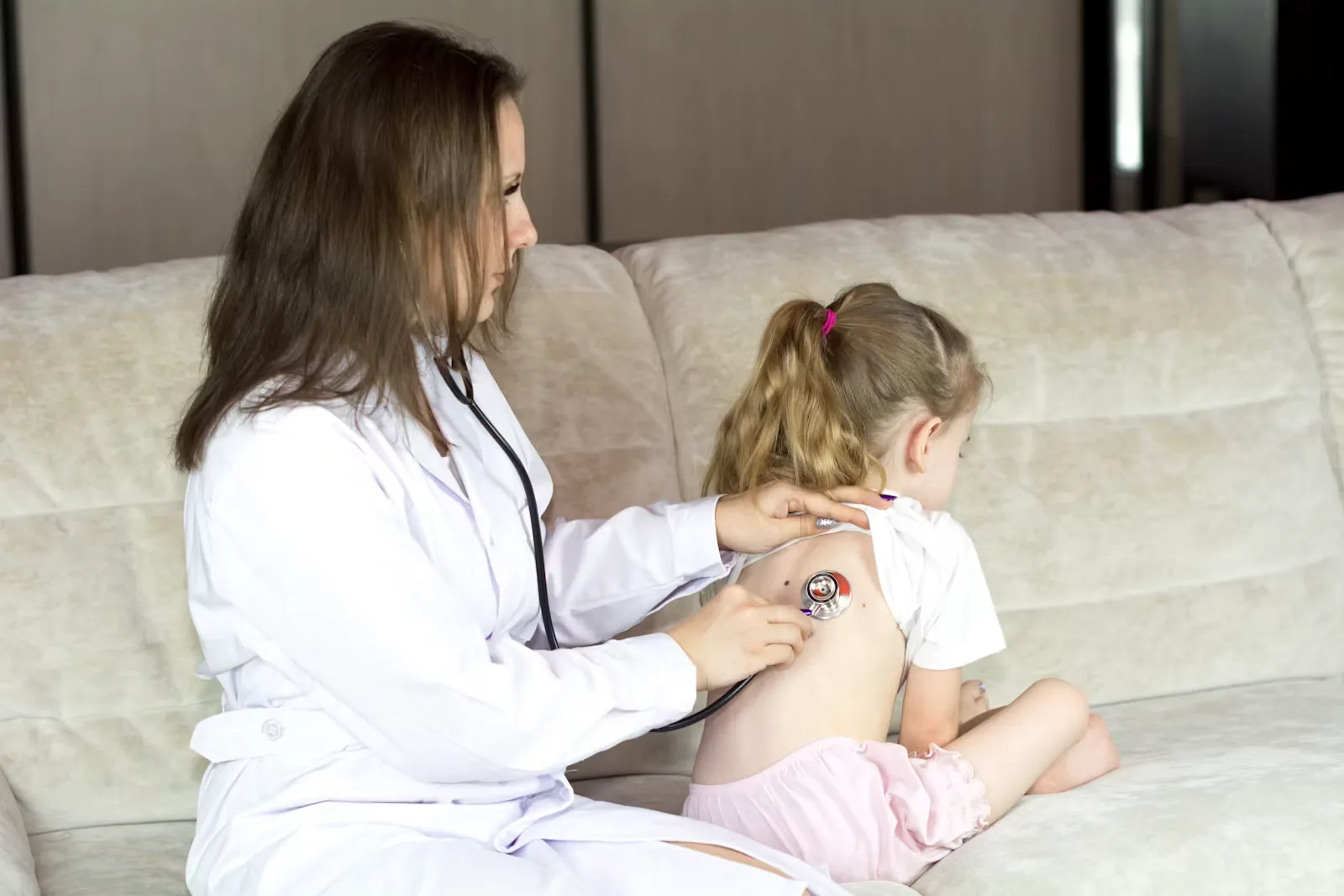
A medical elective abroad puts you inside a working ward — observing, learning and, where your level allows, assisting under local supervision.
Why do so many students choose a medical elective abroad?
Because global clinical experience has moved from a rarity to something close to a norm. In the United States, the proportion of graduating medical students who completed an elective abroad climbed from 6% in 1984 to 26% in 2007 and about 29% by 2014, according to figures compiled in a 2020 review of a long-running US global-health elective programme. The Association of American Medical Colleges has reported that close to a third of graduating students take a global-health elective at some point in training.
Source: "A Global Health Elective for US Medical Students: The 35-Year Experience of SUNY Downstate" (PMC, 2020), reporting AAMC Graduation Questionnaire data.
The pattern is international. In the United Kingdom, roughly 40% of medical students spend their elective period in a developing country, while a longitudinal study at a German university found 33% of surveyed students had done at least one international health elective. Students who gain global experience during training are also measurably more likely to later work in underserved settings.
Sources: SUNY Downstate review (PMC, 2020) for the US ~29%; Georgetown Medical Review, "Obstacles and Avenues for Medical Students Interested in Global Health Work" for the UK ~40%; PMC study on international medical electives at a German university for the ~33% figure.
Ready for your adventure abroad?
Secure your spot for your internship abroad now.
Which medical elective placement type is right for you?
travel4med organises five placement formats, matched to where you are in your training. Your home institution's terminology may differ, but these are the categories we work with:
Nursing internship — a supervised nursing placement, ideal for early-stage students who need pre-clinical care experience or want hands-on ward exposure before their clinical years.
Clinical clerkship (elective) — the classic medical-student clinical rotation: you join a department, follow ward rounds, outpatient clinics and procedures, and learn diagnostic reasoning in a new health system.
Practical year — a longer, final-year clinical placement (equivalent to what many European systems call the practical/clinical year) for students close to graduation who want a substantial rotation abroad.
Physician assistant practical phase — a structured clinical phase for physician-assistant students, arranged within the delegation scope their programme allows.
Physician observership — for qualified doctors and advanced trainees who want to observe a specialty or health system abroad without taking on treatment responsibility.
Where can you do a medical elective abroad with travel4med?
We place students and health professionals at partner hospitals in four destinations, each offering a different mix of tropical medicine, public-health exposure and resource-conscious clinical practice:
Sri Lanka — busy public teaching hospitals with high case-loads and English-speaking clinical teams; a long-established destination for international electives.
Nepal — placements ranging from Kathmandu hospitals to community and regional settings, strong for public health and general medicine.
Bali (Indonesia) — teaching-hospital placements with exposure to tropical and infectious disease alongside a well-supported living environment.
Zanzibar (Tanzania) — island hospitals with a strong community-health and maternal-health focus in a genuinely low-resource setting.
Destinations like Sri Lanka and Zanzibar combine clinical exposure to tropical medicine with an unforgettable setting outside the hospital.
How long does a medical elective abroad take?
Most placements run between two and eight weeks. Two to four weeks is the most common length for a first elective or a break-time placement, while final-year students or those doing a practical year often stay six to eight weeks or longer. Some host institutions set a maximum — public teaching hospitals in Sri Lanka, for example, typically cap an elective appointment at around eight weeks. As a rule, four weeks is the international standard for a single clinical rotation: US medical schools that host visiting international students usually offer four-week electives and allow a student to combine up to three of them in different specialties.
Plan your dates early. Popular summer and semester-break windows fill quickly, and visa, vaccination and insurance arrangements take time to organise properly.
Will my medical elective abroad be recognised back home?
This is the single most important question — and the honest answer is: it depends entirely on your own country's rules, and recognition is never guaranteed in advance by us. Whether an elective abroad counts toward your degree, your mandatory clinical hours, or your professional registration is decided by your home university, examination office or medical regulator, not by the host hospital.
A few universal principles hold, though:
Ask before you go. Get written confirmation from your faculty or regulator that the specific placement, dates and department will be recognised — before you book flights.
Check eligibility rules. Many host and home systems require you to have completed your core clinical clerkships first, and some electives are open only to final-year students.
Keep documentation. A signed logbook, a supervisor's evaluation and an official letter from the host hospital are what recognition bodies usually want to see afterwards.
Confirm language requirements. Where a placement is used for credit, some regulators expect proof of working-language competence.
If you are training within the European system, note that EU mobility funding such as Erasmus+ covers placements inside Europe only — it does not fund non-European destinations like ours. For details on how continental practical placements and recognition work in the German-speaking market, see our sister sites travel4med.de (and the network resource dein-medizinstudium.de). Whatever your system, treat recognition as your responsibility to confirm — we help with the logistics, not the regulatory decision.
Secure Information Material
Request all the important info for free, no obligation.
Costs vary widely by destination, placement length and how much support and accommodation are included, so we deliberately avoid quoting a single headline figure here. In broad terms, your budget has four parts: the placement/programme fee (which typically covers hospital coordination, local support and often accommodation), flights, living costs on the ground, and one-off costs such as visa fees, vaccinations and insurance. Living costs in Sri Lanka, Nepal, Bali and Zanzibar are generally low by Western-European or North-American standards, which helps offset flights.
Because published program pricing changes and depends on your exact placement, the reliable way to get an accurate, current figure is to tell us your destination, dates and placement type and let us quote it. Book a free consultation for a personalised estimate rather than relying on generic online ranges.
How do you prepare for a medical elective abroad?
Preparation falls into clinical, logistical and health categories:
Language: English is the working language on travel4med placements, and local clinical teams communicate with you in English — but learning basic greetings in the local language goes a long way with patients.
Travel health: Get travel-medicine advice 6–8 weeks before departure. All four destinations are in tropical or subtropical zones with region-specific vaccination and malaria/dengue considerations — consult an official travel-health source such as your national health authority or the WHO before you travel.
Insurance: Arrange comprehensive travel and medical insurance that explicitly covers a clinical placement, including needlestick-injury and medical-evacuation cover.
Visa: Each country has its own entry and stay requirements; check the official immigration portal for your destination and nationality well ahead of time.
Documents: Bring your enrolment confirmation, an up-to-date CV, vaccination records and any letter your home faculty requires for recognition.
Ready to plan your placement? Tell us your destination, dates and training level and we'll handle the hospital coordination, on-the-ground support and paperwork. Book a free consultation with travel4med to get started.
Frequently Asked Questions
Sources
Association of American Medical Colleges data as reported in "A Global Health Elective for US Medical Students: The 35 Year Experience of the State University of New York, Downstate Medical Center" — PMC, 2020: pmc.ncbi.nlm.nih.gov/articles/PMC7087751 (US elective-abroad share: 6% in 1984, 26% in 2007, 29% in 2014).
"Obstacles and Avenues for Medical Students Interested in Global Health Work" — Georgetown Medical Review: gmr.scholasticahq.com (UK ~40% figure).
"International medical electives for medical students at a German university: a secondary analysis of longitudinal data" — PMC: ncbi.nlm.nih.gov/pmc/articles/PMC8417089 (Germany ~33% figure).
"Students with global experiences during medical school are more likely to work in settings that focus on the underserved" — BMC Medical Education, 2021: bmcmededuc.biomedcentral.com.
Yale School of Medicine — Visiting International Student Elective Program (four-week electives, up to three in different specialties; core clerkships completed; English proficiency): medicine.yale.edu.
George Washington University — International Clinical Electives Program (ICEP) for international students: imp.smhs.gwu.edu.
University of Colombo, Faculty of Medicine — International Unit Elective Programme (Sri Lanka teaching-hospital electives): med.cmb.ac.lk/iu/elective.