Chikungunya is a viral infection that day-biting Aedes mosquitoes spread to people, and its trademark is sudden fever with severe joint pain. For a medical or nursing student on placement in South Asia, chikungunya is a real travel risk: Sri Lanka was the most common country of travel for imported cases in the UK in 2025. This guide explains the symptoms, how chikungunya differs from dengue, what changed for the vaccines in 2026 and how to avoid it.
Written and medically reviewed by MUDr. Amandeep Grewal, a doctor on the travel4med team whose review scope covers vaccinations, tropical medicine and clinical content.
Key Takeaways
What it is: chikungunya is a mosquito-borne alphavirus infection. It isn't spread from person to person, but by Aedes aegypti and Aedes albopictus mosquitoes, which mostly bite in daylight.
Sri Lanka leads the UK's imported cases. TravelHealthPro reports 160 cases in England, Wales and Northern Ireland in 2025, more than three times the 45 of 2023, and 75 of them after travel to Sri Lanka.
The joint pain can last. Most people recover in one to two weeks, but up to 12% still have joint pain after three years. Deaths are rare, about 1 in 1,000 cases.
The UK vaccine picture changed in 2026. The MHRA revoked the UK licence of the live vaccine IXCHIQ in October 2026. Vimkunya stays licensed in the UK from age 12 as a single dose.
Bite prevention is your main protection, because there's no specific antiviral treatment. Use a DEET repellent by day, cover up and ask a travel clinic whether the vaccine suits your trip.
What is chikungunya?
Chikungunya is a viral disease caused by the chikungunya virus (CHIKV), an RNA virus in the alphavirus genus, according to the World Health Organization (WHO). Infected Aedes mosquitoes pass it to people when they bite. The illness typically brings a sudden fever with severe joint pain, and it's not spread directly from person to person.
The UK Health Security Agency (UKHSA) adds some history you can use on a ward round. The virus was first isolated from patients in Tanzania in 1952, and the name comes from a Makonde word meaning "that which bends up", a reference to the crippling joint pain the disease causes.
Two mosquito species carry it: Aedes aegypti in the tropics and Aedes albopictus, the tiger mosquito, which has also spread it in cooler places such as Italy. UKHSA notes that an infected mosquito can pass the virus on from about 8 to 10 days after feeding, for the rest of its life. These are the same mosquitoes that spread dengue, which matters when you're trying to tell the two apart.
How common is chikungunya in 2026?
Chikungunya is widespread and not going away. WHO says the virus has been identified in more than 110 countries in Asia, Africa, Europe and the Americas. In its October 2025 Disease Outbreak News, WHO counted 445,271 suspected and confirmed cases and 155 deaths from 40 countries between 1 January and 30 September 2025.
The trend continued into 2026. The European Centre for Disease Prevention and Control (ECDC) reports in its monthly multi-country update 281,748 chikungunya cases and 116 deaths since the start of 2026, as of 31 October 2026.
For travellers from the UK, the most useful numbers come from TravelHealthPro, the travel health service of the UK's National Travel Health Network and Centre (NaTHNaC). It reports 160 chikungunya cases in England, Wales and Northern Ireland in 2025, more than three times the 45 cases reported in 2023. The most common countries of travel were:
Sri Lanka: 75 cases
India: 17 cases
Bangladesh: 16 cases
Mauritius: 10 cases
all other countries: 42 cases (160 minus the four named countries)
So almost half of the UK's imported chikungunya in 2025 came from Sri Lanka, one of the four countries where we place students. The figures are for England, Wales and Northern Ireland only, but they show clearly where travellers caught the virus.
Chikungunya cases in England, Wales and Northern Ireland in 2025 by country of travel. Source: TravelHealthPro (NaTHNaC), Chikungunya factsheet, updated 14 October 2026. "All other countries" is 160 minus the four named countries.
Ready for your adventure abroad?
Secure your spot for your internship abroad now.
Is chikungunya a risk in Sri Lanka, Bali, Nepal and Zanzibar?
Yes, in at least three of our four destinations. The US Centers for Disease Control and Prevention (CDC) lists chikungunya on its traveller pages for Sri Lanka, Indonesia and Nepal and tells all travellers to prevent mosquito bites. For Indonesia, which includes Bali, the CDC describes an elevated chikungunya risk.
Destination
What the official sources say (accessed 27 November 2026)
Our placement page
Sri Lanka
CDC: chikungunya listed, "All travelers should take steps to prevent mosquito bites", vaccination generally not recommended (page reviewed 25 August 2026). TravelHealthPro: 75 of the UK's 160 imported cases in 2025. WHO: 151 confirmed cases from sentinel sites in Colombo, Gampaha and Kandy from 1 January to mid-March 2025
CDC: "There is elevated chikungunya risk in Indonesia"; vaccination may be considered for stays of 6 months or more (page reviewed 25 August 2026). WHO: 3,608 confirmed cases in 19 provinces up to 31 July 2025, against 1,399 in the same period of 2024
The CDC's Tanzania page (reviewed 18 November 2026) has no chikungunya entry. The virus was first isolated in Tanzania (UKHSA), and TravelHealthPro notes low-level cases in tropical Africa historically
Risk follows the mosquitoes, and Aedes mosquitoes breed in standing water around homes, so rain and the weeks after it matter. Our guide to the best time for a medical elective abroad lists the wet and dry seasons for each destination. Before you fly, check the current risk on the TravelHealthPro country information pages, as outbreaks come and go.
What are the symptoms of chikungunya?
The main symptoms of chikungunya are a sudden high fever and severe joint and muscle pain, according to TravelHealthPro. Headache, sensitivity to light and a skin rash are common too. WHO adds joint swelling, nausea and fatigue. Infection without any symptoms is possible, but relatively rare.
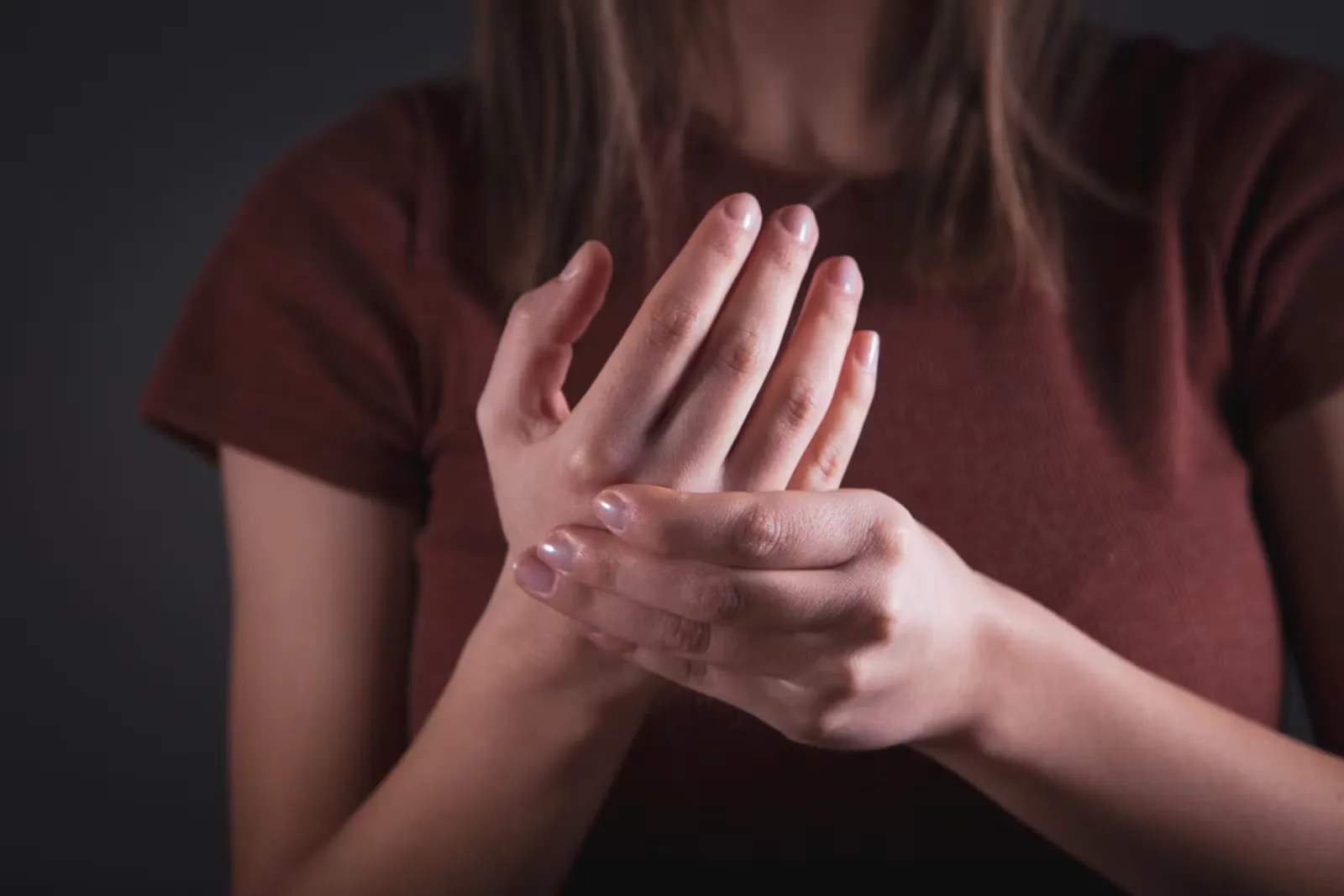
The joint pain is often the most disabling part. TravelHealthPro says it typically hits the ankles, wrists and hands. That's the pain behind the Makonde name, "that which bends up".
Chikungunya on the ward: telling it apart from dengue
For a clinical student, chikungunya is a lesson in differential diagnosis. UKHSA warns that it's often misdiagnosed as dengue fever. Both come from the same Aedes mosquitoes, both cause fever, headache and rash, and both circulate in Sri Lanka and Bali.
The joint pain is your best bedside clue. In chikungunya, severe, often disabling joint pain in the hands, wrists and ankles dominates the picture. Dengue has its own warning signs and complications, which our guide to dengue in Sri Lanka covers in detail.
The distinction matters for treatment. WHO recommends paracetamol for fever and pain until dengue has been ruled out, because non-steroidal anti-inflammatory drugs (NSAIDs) such as ibuprofen can increase the risk of bleeding in dengue.
Confirming the diagnosis depends on timing. WHO explains that RT-PCR can detect the virus in blood during the first week of illness, and antibodies become detectable from about the first week and can persist for about two months. In the UK, UKHSA asks clinicians to send samples with a full clinical and travel history to its Rare and Imported Pathogens Laboratory. Taking that travel history well is a skill to practise on every febrile patient; our guide to clinical skills on a medical elective has more on history taking abroad.
How is chikungunya treated?
There's no specific antiviral treatment for chikungunya. TravelHealthPro and UKHSA describe the same supportive care: rest, plenty of fluids and medicine for pain and fever. Most people recover on their own within one to two weeks, although joint pain can last longer.
Two points matter for you as a patient abroad. First, don't reach for ibuprofen on day one: WHO advises paracetamol until dengue is excluded, and TravelHealthPro notes that NSAIDs may help with symptoms once a doctor has made that call. Second, see a doctor rather than guessing, because fever in the tropics has a long differential that includes dengue and malaria. Check before you travel that your medical elective insurance covers outpatient visits and hospital care abroad.
Secure Information Material
Request all the important info for free, no obligation.
Yes, but the options changed in 2026. In the UK, TravelHealthPro says Vimkunya, a non-replicating virus-like particle vaccine, is licensed for people aged 12 and over as a single 0.8 ml injection into the muscle. The live vaccine IXCHIQ lost its UK licence when the MHRA revoked it in October 2026.
The IXCHIQ story in short, from TravelHealthPro and UKHSA:
IXCHIQ, a live attenuated vaccine, became available in the UK on 18 June 2025.
In February 2026 the MHRA, the UK medicines regulator, restricted its use after 28 serious adverse reactions were reported worldwide.
In October 2026 the MHRA revoked its UK marketing authorisation. TravelHealthPro says this followed a review of earlier safety data and was not linked to a newly identified safety signal. UKHSA removed IXCHIQ from its prevention guidance on 22 October 2026.
For Vimkunya, TravelHealthPro reports no evidence of a safety signal, and the UK's Joint Committee on Vaccination and Immunisation (JCVI) has not considered it necessary to restrict its use. The need for a booster has not been established.
How to avoid chikungunya in 7 steps
These steps come from the prevention advice of TravelHealthPro, UKHSA and the CDC traveller pages. A vaccine, if you get one, doesn't replace them:
Get travel health advice early. See a travel clinic well before you fly and ask about chikungunya, dengue and your other vaccines in one go, as TravelHealthPro advises.
Use a DEET repellent on exposed skin. UKHSA recommends a repellent containing DEET. Put it on after sunscreen, not before.
Protect yourself in daylight. Aedes mosquitoes mostly bite during the day, with peaks in mid-morning and from late afternoon to twilight. Your ward shift and your walk home both count.
Cover up. UKHSA suggests light cover-up clothing, which cuts the skin mosquitoes can reach.
Get rid of standing water. Empty or remove water-filled containers around your accommodation, the breeding sites TravelHealthPro names.
Check for outbreaks before you go. Look up your destination on TravelHealthPro's country pages a few weeks before departure, because the vaccine advice depends on active outbreaks.
Act on fever with joint pain. If you get a fever with joint pain during or within two weeks after your trip, see a doctor, mention your travel and take paracetamol rather than ibuprofen until dengue is ruled out.
Chikungunya shouldn't put you off a placement in South Asia or East Africa. It's a preventable risk, and seeing fever with joint pain worked up on a tropical ward teaches you more than any textbook chapter. We place medical, nursing and physician assistant students in Sri Lanka, Nepal, Bali and Zanzibar for medical electives, final-year and clinical placements, nursing placements, PA placements and observerships for doctors. Whether a placement counts towards your degree is decided by your own faculty and your national medical or nursing council, so check with them before you book. travel4med is part of the futuredoctor group; see the whole futuredoctor ecosystem for the other services on the way to becoming a doctor.
Planning a placement in Sri Lanka, Nepal, Bali or Zanzibar? We'll help you choose the destination and season and prepare for the health side, chikungunya included. Book a free consultation, compare our destinations or join our free webinar.
World Health Organization. Chikungunya, fact sheet, 14 April 2025 (alphavirus, Aedes aegypti and albopictus, more than 110 countries, incubation 4 to 8 days with a range of 2 to 12, symptoms, paracetamol until dengue is ruled out, RT-PCR and antibody testing): who.int (accessed 27 November 2026).
World Health Organization. Disease Outbreak News: Chikungunya virus disease, global situation, 3 October 2025 (445,271 cases and 155 deaths from 40 countries, 1 January to 30 September 2025; Sri Lanka 151 confirmed cases from sentinel sites; Indonesia 3,608 confirmed cases in 19 provinces to 31 July 2025 against 1,399 in 2024): who.int (accessed 27 November 2026).
TravelHealthPro (NaTHNaC). Chikungunya factsheet, updated 14 October 2026 (transmission, day-biting mosquitoes, incubation, symptoms, up to 12% persistent joint pain at three years, about 1 in 1,000 deaths, treatment, Vimkunya and IXCHIQ, who may consider vaccination, 160 cases in England, Wales and Northern Ireland in 2025 against 45 in 2023, countries of travel): travelhealthpro.org.uk (accessed 27 November 2026).
TravelHealthPro (NaTHNaC). Chikungunya disease page and outbreak list (IXCHIQ withdrawn by the MHRA, news item updated 6 November 2026): travelhealthpro.org.uk (accessed 27 November 2026).
UK Health Security Agency. Chikungunya: guidance, last updated 22 October 2026 (first isolated in Tanzania in 1952, Makonde name, transmission, not spread person to person, often misdiagnosed as dengue, testing at RIPL, DEET after sunscreen, IXCHIQ removed after the MHRA decision): gov.uk (accessed 27 November 2026).
European Centre for Disease Prevention and Control. Chikungunya virus disease, multi-country (world), monthly update of 26 November 2026 (281,748 cases and 116 deaths since the start of 2026, as of 31 October 2026): ecdc.europa.eu (accessed 27 November 2026).
US Centers for Disease Control and Prevention. Sri Lanka, Traveler View, page last reviewed 25 August 2026: cdc.gov (accessed 27 November 2026).
US Centers for Disease Control and Prevention. Indonesia, Traveler View, page last reviewed 25 August 2026 (elevated chikungunya risk): cdc.gov (accessed 27 November 2026).
US Centers for Disease Control and Prevention. Nepal, Traveler View, page last reviewed 25 August 2026: cdc.gov (accessed 27 November 2026).
US Centers for Disease Control and Prevention. Tanzania, Traveler View, page last reviewed 18 November 2026: cdc.gov (accessed 27 November 2026).