Bali Culture: Etiquette Guide for Your Placement (2026)
Bali culture is a Hindu island culture inside the world's largest Muslim-majority country, built around temples, ceremonies, dance and a strong sense of community. For a medical or nursing student on placement in Bangli, it comes down to a few daily habits: dress modestly, respect sacred places, keep the official tourist rules and stay indoors on Nyepi.
Researched and editorially reviewed by Nils-Andre Stritt, travel4med. Nils-Andre organises our destinations and placements and talks students through their plans before they book.
Key Takeaways
Bali is the Hindu exception. Hindus make up 1.66% of Indonesia's population nationally, but they are the largest religious community in Bali, according to a US government commission citing Indonesia's Ministry of Home Affairs.
Official rules apply to you. Bali's Governor Circular No. 7 of 2025 tells foreign visitors to respect sacred sites, dress appropriately and behave respectfully, and bans entry to the inner temple areas unless you are praying in traditional dress.
Nyepi is a full stop. On 8 March 2027 the whole island stays silent and indoors, and the airport closes for the day. Hospitals keep working.
Disrespect can be a crime. In 2026 a Denpasar court gave a Swiss tourist one year in prison for an Instagram post during Nyepi.
Dance is world heritage. UNESCO added three genres of traditional Balinese dance to its intangible heritage list in 2015.
On the ward, follow local staff. Watch how nurses and doctors greet, examine and talk to patients, ask before you examine and never photograph patients.
What is Bali culture like?
Bali culture is religious, ceremonial and community-based. Indonesia has about 287 million people and 87% follow Sunni Islam, but Hindus are the largest religious community in Bali, the US Commission on International Religious Freedom (USCIRF) reported in October 2026. That makes Bali's temples, offerings, processions and festivals the backdrop of daily life on the island.
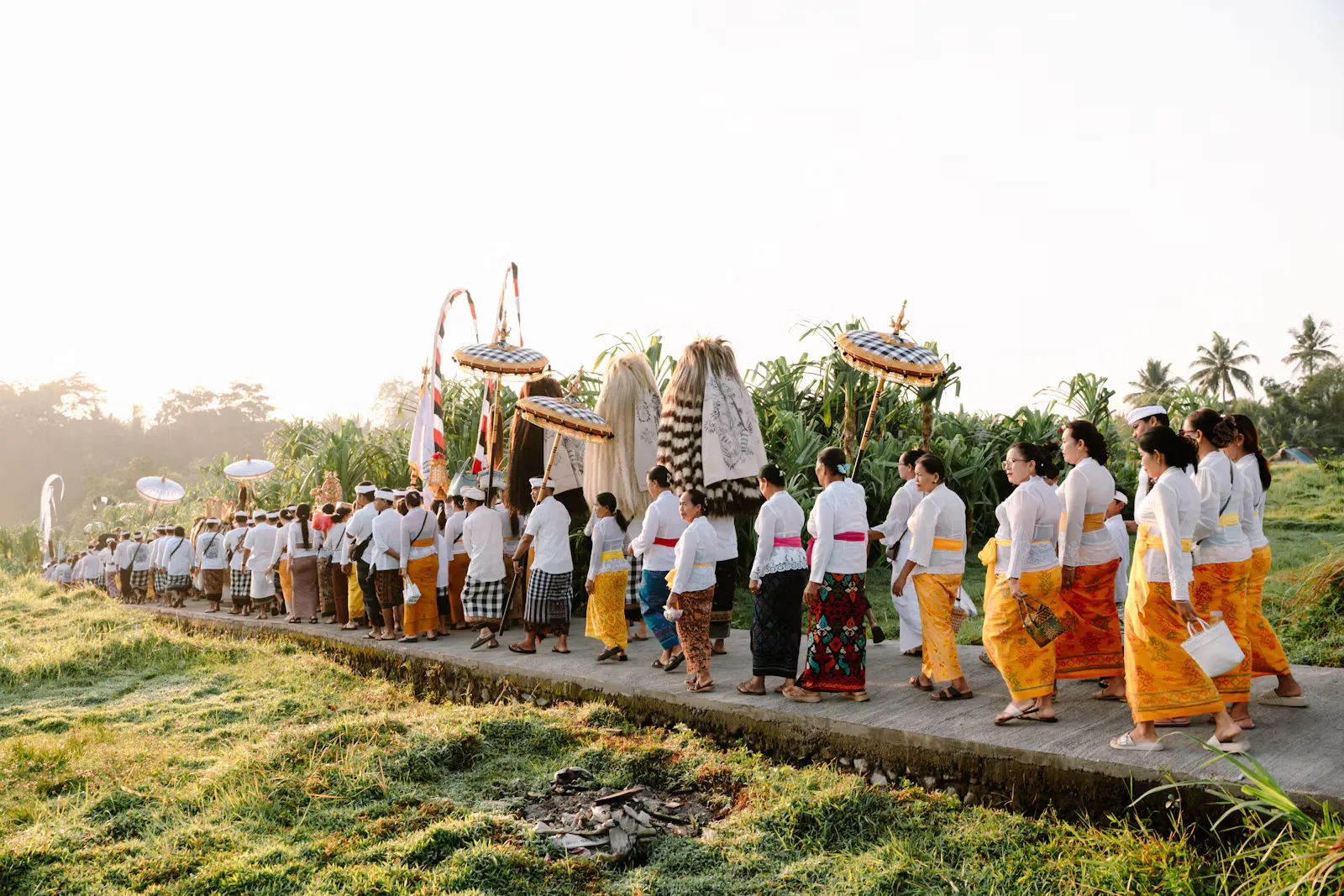
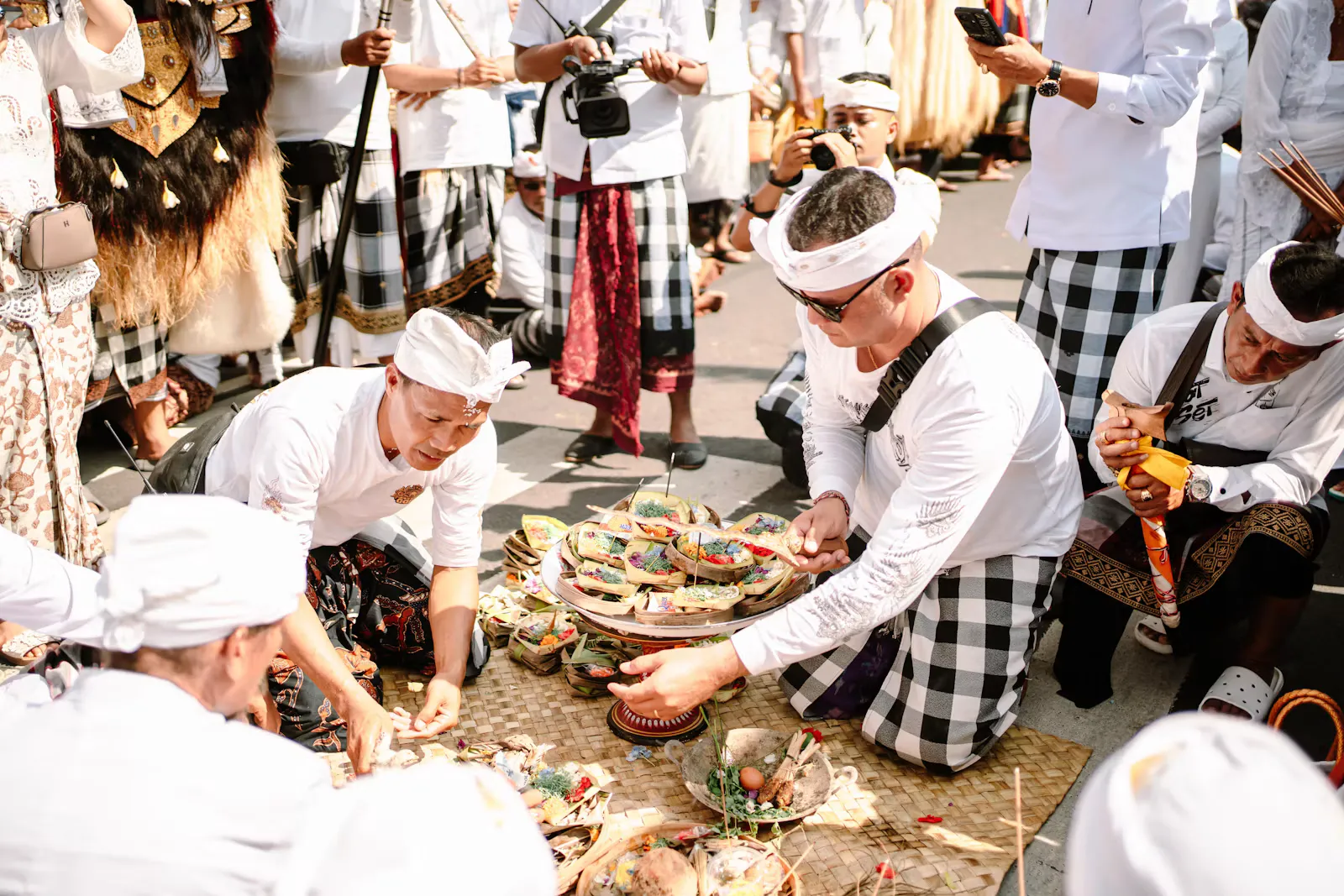
What does that mean for you? It means Bali culture sets the rhythm of the week as much as the hospital rota does. You may meet a procession on the road or find small offerings on a doorstep, like the ones in the photos on this page. If you see an offering on the ground, walk around it.
The numbers show how unusual Bali is. Nationally, Indonesia's Ministry of Home Affairs counts Protestants at 7.37%, Catholics at 3.07%, Hindus at 1.66% and Buddhists at 0.69% of the population, as USCIRF summarises. So Balinese Hindus are a small minority in their own country, and Bali culture is something the island protects actively. The provincial tourist levy you pay on arrival (IDR 150,000, see our Bali tourist tax guide) exists partly for that reason.
Religion in Indonesia by share of the national population. Hindus are 1.66% nationally but the largest religious community in Bali. Source: US Commission on International Religious Freedom, "Country Brief: Indonesia" (October 2026), citing Indonesia's Ministry of Home Affairs.
Ready for your adventure abroad?
Secure your spot for your internship abroad now.
What are Bali's official rules for tourists?
Bali's official rules for tourists are set out in Governor Circular No. 7 of 2025, announced on 24 March 2025. The Bali Government Tourism Office lists nine obligations and seven prohibitions for foreign visitors, from respecting sacred sites and dressing appropriately to a ban on single-use plastics. Bali's civil service police, Satpol PP, monitors compliance, and violators "face legal consequences in accordance with Indonesian law".
This is the part of Bali culture that's written down as official rules. Here is the circular in one table, in the order the tourism office gives it:
You must
You must not
Respect sacred sites and symbols, including temples and religious statues
Enter the sacred temple areas (Utamaning Mandala and Madyaning Mandala) unless you are a worshipper in traditional Balinese attire
Dress appropriately at temples, attractions and in public spaces
Climb sacred trees or monuments, or take inappropriate or nude photos at religious sites
Behave respectfully at religious sites, restaurants, shops and on the road
Litter or pollute lakes, rivers or the ocean
Pay the tourist levy through the official Love Bali portal
Use single-use plastics such as plastic bags, Styrofoam and straws
Use licensed tour guides at cultural and natural sites
Swear, cause disturbances or be rude to locals, officials or other tourists
Exchange money at authorised money changers
Work or run a business without proper permits
Follow traffic laws, with a valid licence and a helmet
Take part in illegal activities, such as trafficking drugs or sacred artefacts
Use licensed transport and stay in licensed accommodation
Two of these rules matter more than they look for a placement student. The permit rule is why the visa matters: a clinical placement needs the right visa, not a tourist entry, as our Bali visa guide explains. And the money rule links to cash: our Bali currency guide shows how to spot an authorised changer.
How should you behave at a Balinese temple?
Behave at a Balinese temple as a guest at someone else's prayer. Under Governor Circular No. 7 of 2025, foreign visitors may not enter the two sacred inner areas, Utamaning Mandala and Madyaning Mandala, unless they are worshippers in traditional Balinese attire. The same circular bans climbing sacred trees or monuments and taking inappropriate photos at religious sites, and it bars menstruating women from those areas.
Temples are where Bali culture has the clearest rules. What that looks like on a weekend temple trip:
Stay in the outer courtyard. Unless you're there to pray, the outer area is where visitors belong. Read the signs at the entrance and follow what the temple staff tell you.
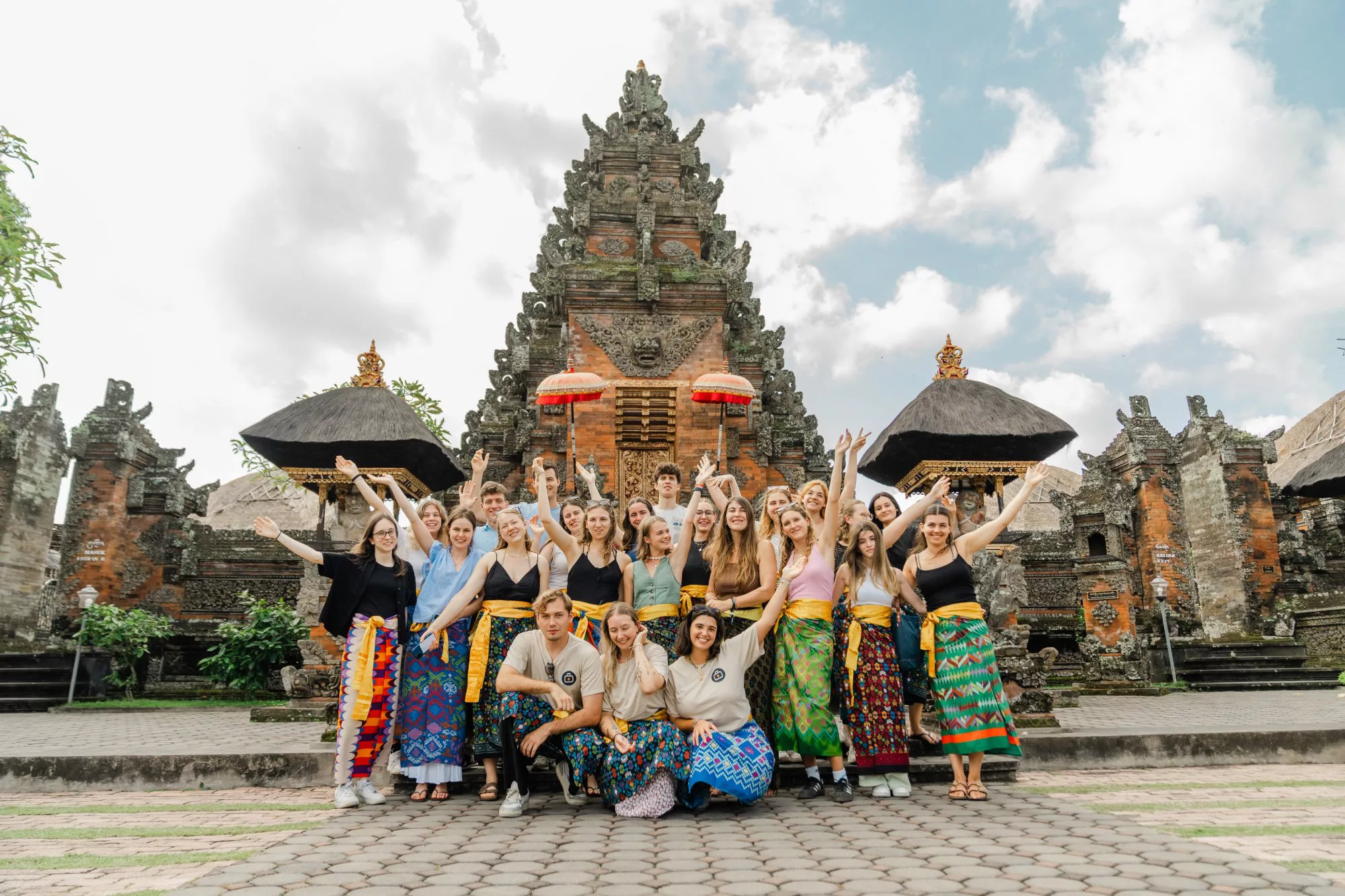
Cover up. Wear clothes that cover your shoulders and knees, and follow any dress instructions at the gate. A sarong of your own is the easiest way to cover your legs.
Don't climb anything. Not the walls, not the shrines, not the old trees wrapped in cloth. The circular names sacred trees specifically.
Think before you photograph. Posed or revealing photos at religious sites are banned. Ask before you photograph people at prayer, and step back from ceremonies.
Use a licensed guide. The circular asks visitors to use licensed guides at cultural sites, and a good guide also explains what you're looking at.
Dance is the side of Bali culture you can watch openly. UNESCO inscribed three genres of traditional dance in Bali on its Representative List of the Intangible Cultural Heritage of Humanity in 2015, describing them as sacred, semi-sacred and meant for the enjoyment of the wider community. A public dance performance is a respectful way to see temple culture without stepping into a ceremony.
What should you wear in Bali?
Wear modest, respectful clothing that covers your shoulders and knees at temples, attractions and in public spaces. "Dress appropriately" is the second obligation in Bali's Governor Circular No. 7 of 2025. Beachwear belongs on the beach; on the street, in shops and in villages around Bangli, modest is right, and at temples you follow the dress instructions at the gate.
Clothing is the easiest part of Bali culture to get right. For the hospital, follow the dress code your host gives you: usually scrubs or smart clothes, a white coat, closed shoes and a name badge. Our packing list for a clinical internship abroad covers what to bring. Pack one light sarong of your own: it covers you at a temple, works as a scarf on a cool evening in the hills and dries overnight.
What happens on Nyepi in Bali?
Nyepi is the Balinese Hindu Day of Silence, and in 2027 it falls on Monday, 8 March, a national holiday under Indonesia's joint ministerial decree on public holidays for 2027. The UK government says everyone in Bali stays indoors, turns off lights and makes no noise, and Ngurah Rai International Airport closes for the entire day. Emergency services and hospitals can still operate.
Nyepi is the day Bali culture is impossible to miss. So what does it mean for your placement? Three things:
Don't plan travel around it. No flights land or leave on Nyepi, so check your arrival and departure dates against 8 March 2027.
Expect a quiet hospital day. Hospitals keep running, but follow your host's instructions on how you get there and back, if at all.
Stay off social media with jokes about it. USCIRF reports that in March 2026 a Swiss tourist posted an expletive on Instagram during Nyepi, was prosecuted for disrespecting Hindu tradition, and was sentenced by the Denpasar District Court to one year in prison in August 2026.
The week around Nyepi 2027 is also busy across Indonesia. The same decree puts Eid al-Fitr on 10 and 11 March 2027, with collective leave days on 9, 12 and 15 March, so expect crowded transport if your placement ends then.
Secure Information Material
Request all the important info for free, no obligation.
Several national laws back up local customs, and foreigners are not exempt. Indonesia's new Criminal Code came into effect in January 2026, and USCIRF notes that Article 301(1) allows up to five years in prison for spreading content that shows hostility to a religion. The UK government adds that the code penalises cohabitation and sex outside marriage when certain close family members file a complaint.
The other rules that back up Bali culture:
Drugs. The UK government says police often raid venues popular with foreigners, especially in Bali, and a positive drug test leads to arrest. Cannabis products are illegal in any form, including vapes.
ID. You must always carry your passport or stay permit.
Wildlife. It is illegal to buy, sell, kill or capture any protected wild animal or trade its parts without a licence.
Sacred objects. Governor Circular No. 7 of 2025 lists trafficking sacred artefacts among the banned illegal activities, so skip any "antique" temple piece offered on the street.
How does Bali culture show up on the hospital ward?
On the ward, Bali culture shows up as respect, modesty, patience and family involvement. Our Bali placements run at RSU Bangli Hospital, an academic teaching hospital affiliated with Udayana University, where you work on the wards and in the operating theatre alongside local teams. The circular's call to behave respectfully applies at work as much as at a temple, so the habits above come with you onto the ward.
Here is how our students translate Bali culture into ward behaviour:
Follow the senior staff. Watch how the nurses and doctors greet patients and families, and copy them. It's the quickest way to learn what's expected in this hospital.
Ask before you examine. Explain what you're about to do, through a colleague if needed, and ask for consent. With patients of the opposite sex, check what local staff do about a chaperone.
Include families. If relatives are at the bedside, greet them politely, and let local staff lead any difficult conversation.
No patient photos. Not for your logbook, not for social media, not even with the face hidden. It's an ethics question at home and a respect question in Bali.
Keep calm and polite. Swearing and rude behaviour are on the circular's list of prohibitions, and a loud complaint on the ward costs you more goodwill than it gains.
We place medical, nursing and physician assistant students, final-year students and doctors at RSU Bangli Hospital, an academic teaching hospital affiliated with Udayana University, with placements starting on Mondays. You live with the other interns in our accommodation with three meals a day, and our team prepares you for the formalities and for Bali culture. Read more on our Bali destination page. Comparing islands? Our Sri Lanka culture guide and Nepal culture guide cover the same ground for our other Asian destinations.
Bali Government Tourism Office (Dinas Pariwisata Provinsi Bali). Governor Circular No. 7 of 2025: obligations and prohibitions for foreign tourists, announced 24 March 2025 (inner temple areas, sacred trees, dress, behaviour, levy, licensed services, plastics, permits, Satpol PP enforcement): disparda.baliprov.go.id (accessed 15 November 2026).
US Commission on International Religious Freedom. Country Brief: Indonesia, October 2026 (287 million people, 87% Sunni Muslim; Protestant 7.37%, Catholic 3.07%, Hindu 1.66%, Buddhist 0.69%, indigenous beliefs and Confucianism 0.05% per the Ministry of Home Affairs; Hindus the largest religious community in Bali; new Criminal Code in effect January 2026, Article 301(1); Nyepi Instagram case, one-year sentence in August): uscirf.gov (accessed 15 November 2026).
UK Foreign, Commonwealth and Development Office. Indonesia travel advice, Safety and security (Nyepi, airport closure, hospitals, drugs and police raids in Bali, Criminal Code on cohabitation, ID, wildlife): gov.uk (accessed 15 November 2026).
Ministry of State Secretariat of the Republic of Indonesia. Joint decree of three ministers on national holidays and collective leave 2027 (Nyepi, Saka New Year 1949, Monday 8 March 2027; Eid al-Fitr 10 and 11 March 2027; collective leave 9, 12 and 15 March 2027), published 15 September 2026: setneg.go.id (accessed 15 November 2026).
UNESCO Intangible Cultural Heritage. Three genres of traditional dance in Bali, inscribed in 2015 on the Representative List: ich.unesco.org (accessed 15 November 2026).
travel4med. Bali destination page (RSU Bangli Hospital, affiliated with Udayana University, Monday starts, shared accommodation with three meals a day): Bali destination (accessed 15 November 2026).