PLAB Exam for International Medical Graduates: 2026 Guide
Celina KöhslMedical student, member of the travel4med team
25. August 2026
12 minutes
PLAB Exam for International Medical Graduates: The 2026 Guide
The PLAB exam is the two-part test the UK General Medical Council (GMC) uses to check that doctors who qualified outside the UK have the knowledge and skills to practise safely in Britain. PLAB stands for Professional and Linguistic Assessments Board. Part 1 is a three-hour written paper of 180 multiple choice questions. Part 2 is a practical clinical exam of 16 scenarios, sat in Manchester. Pass both, and you can apply for full GMC registration with a licence to practise.
Written by the travel4med editorial team, who help medical and nursing students plan clinical placements abroad.
Key Takeaways
The PLAB exam has two parts, and they are very different. PLAB 1 is 180 written questions in three hours; PLAB 2 is 16 clinical stations of eight minutes each, plus at least two rest stations, running to about three hours in total (GMC, "A guide to the PLAB test").
The bar is F2 level. The GMC says the test checks you "know and can do the same as a doctor starting the second year of their Foundation Programme training in the UK" — not consultant level, and not a memory contest.
The 2026 fees are GBP 283 for PLAB 1 and GBP 1,036 for PLAB 2, both effective from 1 April 2026 (GMC fees for doctors).
It got harder to pass in 2025. The PLAB 1 pass rate fell from 70.5% in 2024 to 62.2% in 2025, and PLAB 2 from 65.8% to 59.8% (GMC published pass rates).
Two separate two-year clocks run: you must pass PLAB 2 within two years of passing PLAB 1, and your registration application must be approved within two years of passing PLAB 2.
What is the PLAB exam and who needs to take it?
The PLAB exam is a licensing assessment, not a university exam. It does not give you a qualification or a job. It is the GMC's way of deciding whether your medical training abroad has prepared you for a UK ward. The GMC puts it plainly: if you graduated from a medical school outside the UK, the European Economic Area or Switzerland, you will probably need to take it.
Two things have to be in place before you can book. First, an acceptable overseas primary medical qualification. If you have not graduated yet, the GMC will accept confirmation that you have passed your final examinations and met every other requirement for the degree — which is why final-year students can start the process early. Second, evidence of your English. That means IELTS Academic with at least 7.0 in each area and 7.5 overall, or OET Medicine with a grade B in all four sub-tests. Our guide to the OET exam walks through that side in detail.
One point that confuses a lot of people: PLAB is now built to the requirements of the UK Medical Licensing Assessment (MLA). The GMC states that PLAB 1 meets the MLA Applied Knowledge Test requirements and PLAB 2 meets the Clinical and Professional Skills Assessment requirements, that eligibility has not changed, and that the test keeps the PLAB name for now. So no, the MLA has not replaced anything you need to worry about.
Ready for your adventure abroad?
Secure your spot for your internship abroad now.
What does PLAB 1 test, and where can you sit it?
The first half of the PLAB exam is a written applied knowledge test: 180 multiple choice questions, five options each, answered in three hours. Questions are grouped into ten areas of clinical practice from the MLA content map, covering common, important and acute conditions an F2 doctor meets, plus long-term conditions in primary care.
The GMC runs it four times a year, in February, May, August and November. In the UK you can sit it in Belfast, Birmingham, Cardiff, Edinburgh, London and Manchester. Dublin and Madrid cover the EU. Overseas venues include Colombo, Mumbai, New Delhi, Karachi, Lagos, Nairobi, Dubai, Riyadh, Istanbul, Sydney and Toronto, among others.
Results land six weeks after the paper. For 2026 the GMC has published the pairs: the 6 August sitting is released on 17 September 2026 by 4pm, and the 5 November sitting on 17 December 2026 by 4pm.
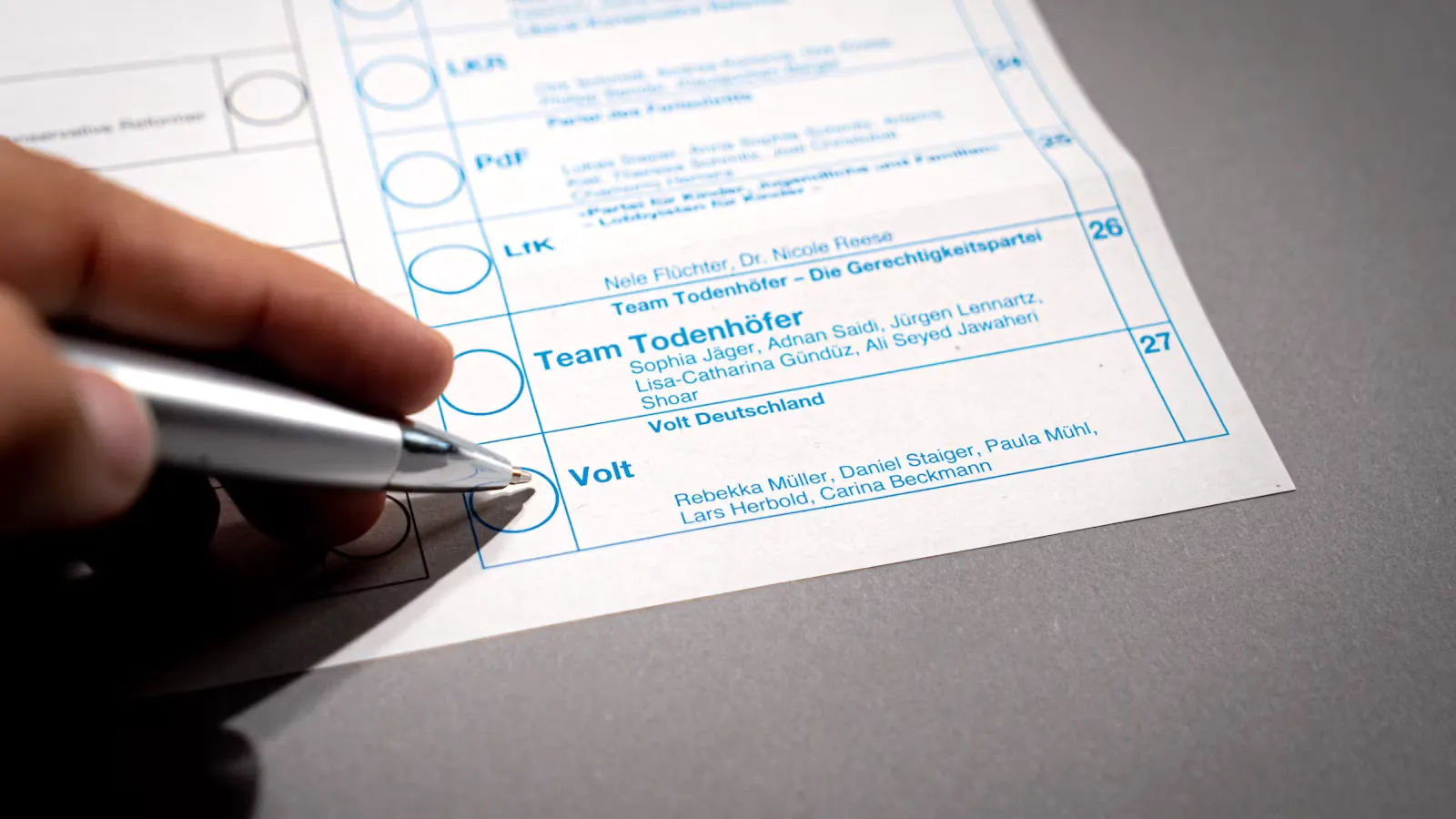
PLAB 2 is judged on how you gather information, manage the case and talk to the person in front of you.
What actually happens on the day of PLAB 2?
The practical half of the PLAB exam gives you 16 scenarios, eight minutes each, designed to feel like a real consultation or an acute ward. There are at least two rest stations, and the whole thing takes roughly three hours. Every station is marked in three domains: data gathering and assessment skills, clinical management skills, and interpersonal skills.
PLAB 2 only runs in one city. The GMC holds it at its two Clinical Assessment Centre sites in Manchester, on dates that appear in your GMC Online account once your PLAB 1 result is in. Drug names follow the most recent British National Formulary. Results are published within a month of your exam date, and passing means clearing both an overall mark and a minimum number of stations — the GMC does not tell you how many.
PLAB exam fees and cancellation charges in 2026
Money is where the PLAB exam surprises people. The PLAB exam fees themselves are only part of it; cancelling late can cost you the whole test fee. Here is what the GMC charges from 1 April 2026, with the previous year for comparison.
GMC fee
From 1 April 2025
From 1 April 2026
PLAB 1
GBP 273
GBP 283
PLAB 2
GBP 998
GBP 1,036
PLAB 1 cancellation, more than 42 days before (10%)
GBP 27.30
GBP 28.30
PLAB 1 cancellation, 42 days or less before (100%)
GBP 273
GBP 283
PLAB 2 cancellation, 42 to 29 days before (50%)
GBP 499
GBP 518
PLAB 2 cancellation, 28 days or less before (100%)
GBP 998
GBP 1,036
Application for full registration with a licence
GBP 463
GBP 481
Source: GMC, "Fees for doctors". Refugee doctors living in the UK get PLAB 1 free for their first two attempts and PLAB 2 at half price for the first two.
How do you book the PLAB exam step by step?
Booking the PLAB exam is entirely self-service and happens inside your own GMC Online account. No agency, tutor or friend can book for you, and sharing your login is a professional problem you do not need. The sequence looks like this:
Get your English evidence first. Your IELTS or OET certificate must still be valid on the day you sit PLAB 1, and both are valid for two years.
Check that your primary medical qualification is on the GMC's acceptable list, or that your final results are confirmed if you are still a student.
Create a GMC Online account and open the PLAB booking service.
Pick a PLAB 1 date and venue. Places are limited where demand is high, so book as early as you can.
Sit PLAB 1 and wait six weeks for the result.
If you pass, apply for PLAB 2 immediately through GMC Online — dates in Manchester only appear once your result is released.
After passing PLAB 2, submit your application for registration with a licence to practise.
Cancelling is done in the same booking service, and the fee is deducted before any refund. The GMC will consider a full refund for exceptional circumstances such as a visa refusal, new travel restrictions, illness or bereavement.
Secure Information Material
Request all the important info for free, no obligation.
Harder than it was. The PLAB exam pass rates dropped on both parts last year. In 2025, 13,691 candidates sat PLAB 1 and 8,513 passed — a 62.2% pass rate, down from 70.5% in 2024. PLAB 2 followed the same direction: 14,689 candidates, 8,787 passes, 59.8%, down from 65.8%. Roughly four in ten candidates now leave each part without a pass.
You get four attempts at each part. After a fourth failure you can apply for one final fifth attempt, but only after at least 12 months of documented additional learning — either clinical practice or a relevant postgraduate qualification. There is nothing beyond the fifth attempt.
What is changing for PLAB 1 in 2027?
This is the newest piece of PLAB exam news, and it matters if you plan to sit overseas. On 20 May 2026 the GMC announced that PLAB 1 bookings had fallen 40% from 2023 to 2025, and that it is cutting overseas capacity from February 2027.
Four centres stop running the exam: Dhaka, Alexandria, Accra and Chennai. Outside the UK and EEA, the schedule drops from four sittings a year to three, and there will be no international sitting in February 2027. UK and EU venues keep their February date. If your English certificate expires between 1 February and 31 May 2027, the GMC asks you to email it by 19 March 2027 to discuss an extension in time for the May sitting.
The two deadlines that quietly catch people out
The PLAB exam runs on two separate two-year windows, and mixing them up is expensive. You must pass PLAB 2 within two years of passing PLAB 1. Separately, your application for registration with a licence to practise must be approved within two years of passing PLAB 2. Both clocks start on the date you sat the exam, not the date the result arrived.
Miss the second one and the GMC will ask for extra evidence of your knowledge and skills. There is also a small bonus in the timing: a PLAB 2 pass from less than three months before you apply can serve as evidence that your English is current at registration.
Where a clinical placement abroad fits into the picture
Let us be honest about the limits. A clinical placement abroad does not count towards PLAB exam eligibility, earns no credit with the GMC, and shortens nothing. travel4med does not run PLAB courses and does not arrange placements in the UK.
What it does do is give you the raw material PLAB 2 is marked on. Taking a history from someone who is anxious, explaining a plan in words a patient understands, examining a real abdomen instead of a plastic one — those are the three PLAB 2 domains, and they are learned on wards, not in question banks. travel4med places medical and nursing students in Bali, Zanzibar, Sri Lanka (Galle) and Nepal (Pokhara) for nursing placements, clinical clerkships, final-year electives, observerships and physician assistant practical phases. Our guide to medical electives abroad explains how those formats differ, and the piece on language barriers on a clinical internship abroad covers the communication side that PLAB 2 examiners score directly.
General Medical Council, "A guide to the PLAB test" — gmc-uk.org (accessed 25 August 2026)
General Medical Council, "When and where can I take PLAB 1" — gmc-uk.org (accessed 25 August 2026)
General Medical Council, "What is the PLAB 2 exam" — gmc-uk.org (accessed 25 August 2026)
General Medical Council, "Fees for doctors" (fees effective 1 April 2025 and 1 April 2026) — gmc-uk.org (accessed 25 August 2026)
General Medical Council, "Recent pass rates for PLAB 1 and PLAB 2" (2021–2025 data) — gmc-uk.org (accessed 25 August 2026)
General Medical Council, "Changes to international PLAB 1 exam locations following declining demand", published 20 May 2026 — gmc-uk.org (accessed 25 August 2026)
General Medical Council, "How the PLAB test relates to the MLA" — gmc-uk.org (accessed 25 August 2026)
External links open on the GMC website and carry rel="nofollow noopener".


 PLAB 2 is judged on how you gather information, manage the case and talk to the person in front of you.