Nursing OSCE: How the NMC Test Works and How to Pass It
The nursing OSCE is a practical exam in which you show, station by station, that you can care for patients safely at the level of a newly registered nurse. For nurses trained outside the UK, it is Part 2 of the Nursing and Midwifery Council (NMC) Test of Competence: 10 stations, about 3 hours, taken in person at a UK test centre. The mistakes the NMC sees most often are safety basics, not rare knowledge.
Researched and editorially reviewed by Celina Köhsl, medical student and member of the travel4med team. The clinical skills sections were reviewed by MUDr. Amandeep Grewal, a doctor on the travel4med team.
Key Takeaways
Ten stations, about three hours. The NMC nursing OSCE has four linked APIE stations (assessment, planning, implementation, evaluation), four skills stations in two pairs, and two silent written stations on professional values and evidence based practice.
It tests entry level care. The NMC sets the exam at the level of a nurse at the point of registration, so no advanced skills are needed.
Most candidates pass in the end. In January to March 2026, 3,009 candidates sat the OSCE and 78% achieved a pass, but first attempts pass far less often than resits.
It costs 794 pounds. A resit costs 397 pounds if you failed seven stations or fewer, and you get three attempts in one application.
Safety errors fail stations. Hand hygiene, patient identity, allergies and consent come up in the NMC's own list of common mistakes.
What is the nursing OSCE?
The nursing OSCE (objective structured clinical examination) is a timed, station based practical exam in which trained assessors watch you care for simulated patients and mark each station pass or fail. In the UK, it is the second part of the NMC Test of Competence that internationally educated nurses must pass before they can join the register.
Part 1 is a computer based test (CBT), which most candidates take in their home country before they travel. Part 2, the nursing OSCE, has to be taken in person at an NMC approved test centre in the UK. You can sit the two parts in either order, but only the NMC can authorise you to book the OSCE, and that happens once your qualification has been checked and you receive the Test of Competence invitation email.
The test is specific to your field of nursing: adult, children's, mental health or learning disabilities nursing. Our NMC registration guide explains the whole route, from the qualification check to the English test and the register fee. This post zooms in on Part 2 alone: what happens in each station and how to prepare.
You might also meet OSCEs during your nursing degree, because many schools use the same exam format for their own assessments. Those are set by your school, not by a regulator. If your OSCE is a university exam, our OSCE preparation guide for medical students explains how station based exams are usually built and marked.
Ready for your adventure abroad?
Secure your spot for your internship abroad now.
How is the NMC nursing OSCE structured?
The NMC nursing OSCE has 10 stations with a total testing time of about 3 hours. Four stations follow one patient through the nursing process, four test practical skills in two linked pairs, and two silent written stations test professional values and evidence based practice. Each station is marked pass or fail on its own.
The table shows what you do in each part and how long you get, based on the NMC's candidate information booklet and its "Preparing for your OSCE" handbook.
Station
What you do
Time and format
Assessment (A)
Build rapport, take and chart observations (for example NEWS), consider activities of daily living and, in most fields, do an A to E assessment
Scenario station with an actor or manikin
Planning (P)
Write two relevant aspects of care, including self-care, on the NMC template
Silent written station, black pen
Implementation (I)
Carry out care, such as giving oral medication, while talking to the patient
Scenario station with an actor or manikin
Evaluation (E)
Write notes and give a verbal handover, for example in SBAR form
Only the verbal handover is marked
Skills, two pairs
Four practical clinical skills from your field's list
Each pair up to 21 minutes, 4 minutes between pairs
Professional values
Professional accountability and communication
Silent station, 10 minutes
Evidence based practice
Critical appraisal of research and decision making
Silent station, 10 minutes
You get a 5 minute warning before the end of an APIE station and a 3 minute warning before the end of a skills station. Anything you do after the time is up is not assessed. Plan to be in the building for up to 4 hours, and you can't go outside once you've registered.
The test centre is a full mock up of a hospital ward, a community setting or a patient's home. Each bay has a camera, and the whole exam is recorded so that an independent assessor can moderate the result. You will not get to see the film, even if you appeal.
What happens in the APIE stations of the nursing OSCE?
The APIE stations are four linked stations built around one patient scenario: you assess the patient, plan care in writing, implement part of it and then evaluate and hand over. Because they are linked, notes from the assessment carry you through the rest, so a slow, careful start makes the later stations much easier.
In the assessment station, the NMC looks at your verbal and non verbal communication and whether you build rapport using the 6 Cs of nursing: care, compassion, competence, communication, courage and commitment. Take every observation you need and record it on the chart before time runs out. The handbook tells you to know charts like the national early warning score (NEWS) and the Glasgow coma score. In every field except learning disabilities and mental health, you also do a holistic A to E assessment (airway, breathing, circulation, disability, exposure). Your own notes from this station are not marked, but you will need them later.
Planning is silent and written. You write two relevant aspects of care for the patient, including self-care, on the NMC template in black pen. Study the template on the NMC website before your exam day, because the format itself costs time if you see it for the first time.
In implementation you deliver care, often a medication round. Talk to the actor or the manikin, not the assessor. The NMC's list of common errors here is short and brutal: not checking the expiry date, not reading the whole medication chart, giving an overdose or underdose, and signing for a drug before you have given it.
Evaluation asks you to write notes about a transfer, discharge or similar step, and then give a verbal handover to the assessor. Only the handover is marked. Avoid abbreviations that are not universally recognised, and never forget the reason for admission or the admission date, which the NMC lists as typical misses.
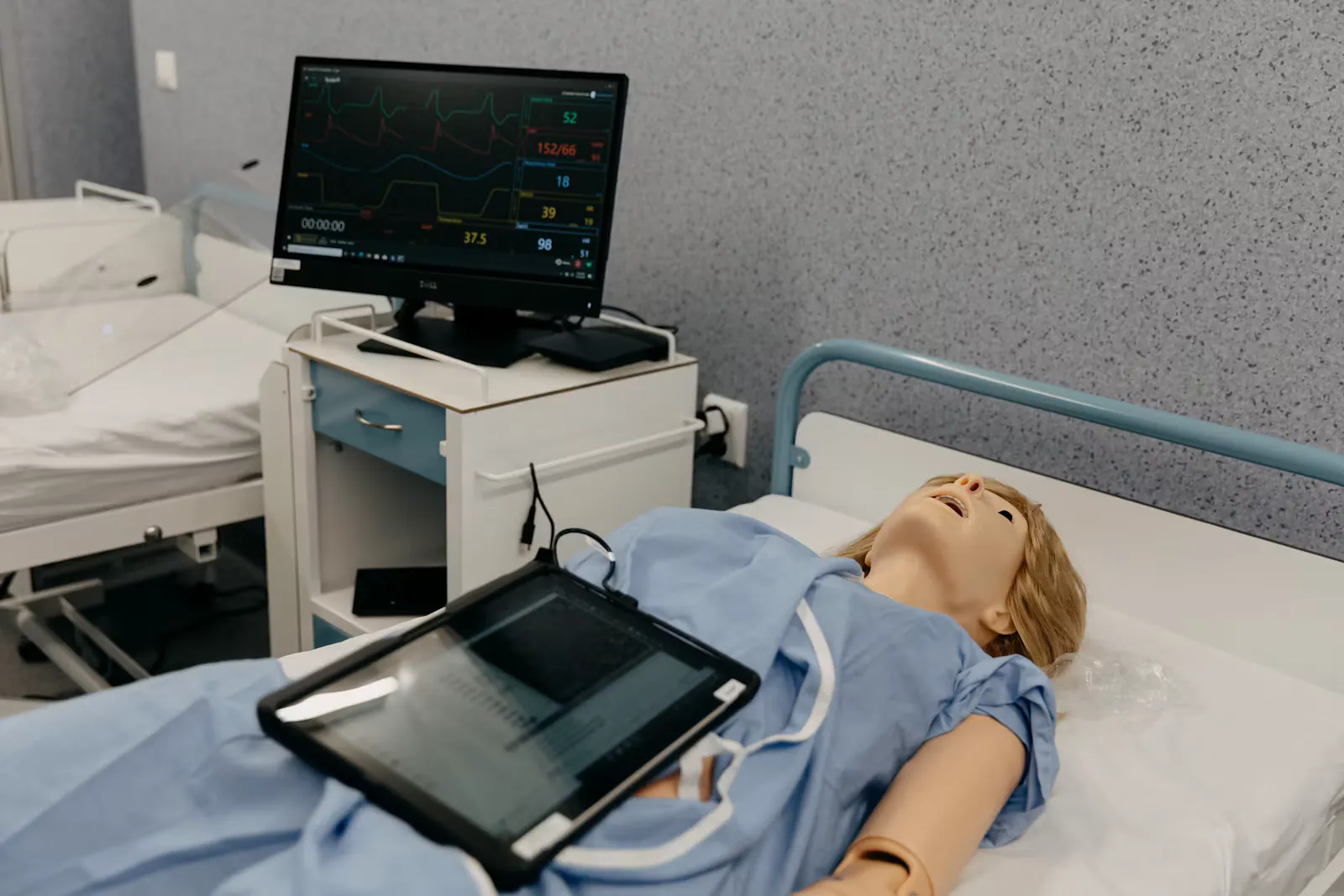
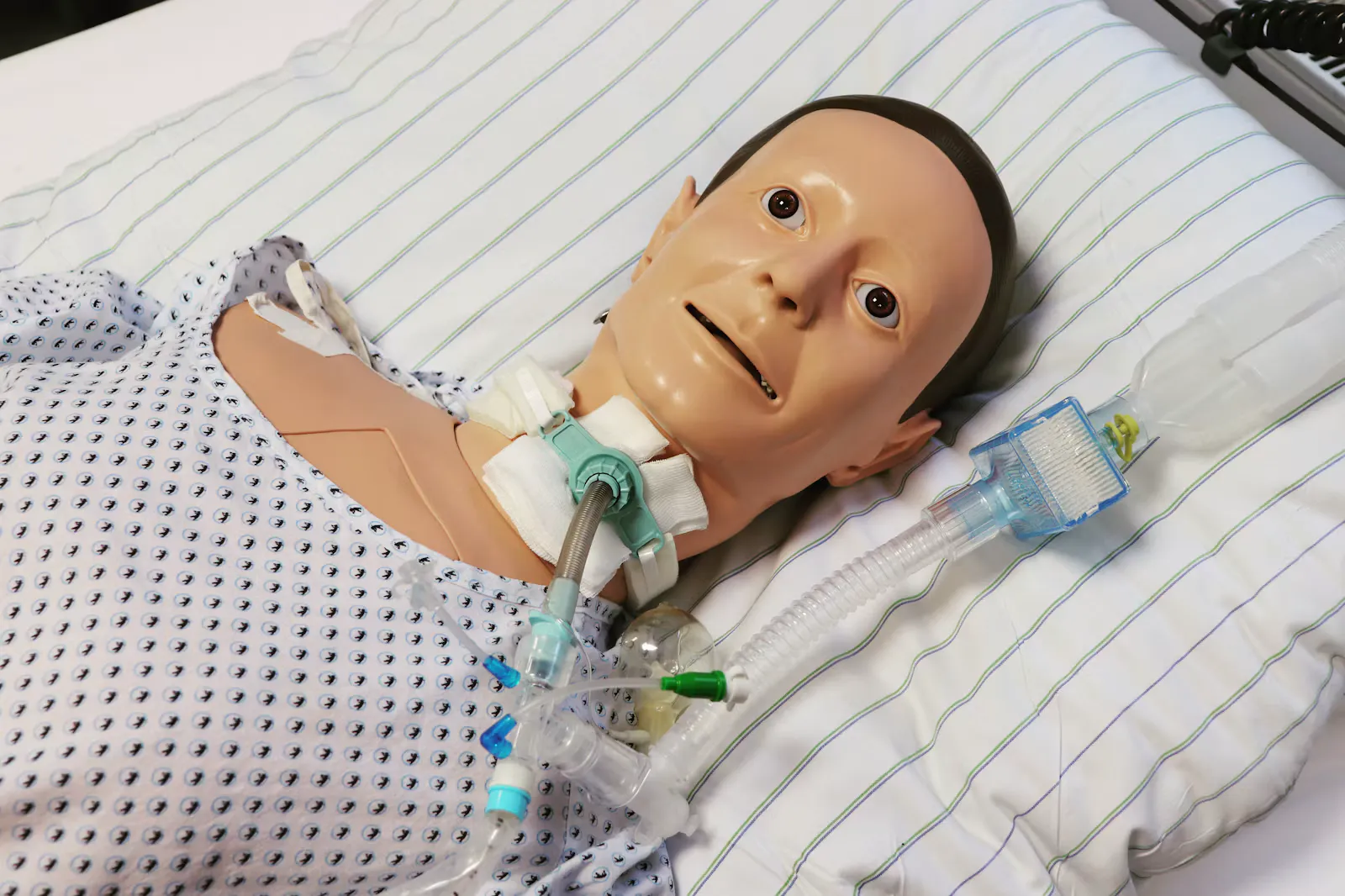
Test centres use both professional actors and manikins. When the patient is a manikin, the assessor speaks for it, but you still talk to the patient.
Which clinical skills can come up in the nursing OSCE?
You are tested on four clinical skills, and the list depends on your field of nursing. The NMC publishes the typical skills per field, and new scenarios and skills are introduced regularly, so a friend's exam is no guide to yours. Everything is set at the level of a newly registered nurse.
For adult nursing, the NMC handbook's typical list includes administration of inhaled medication, aseptic non touch technique (ANTT) with wound assessment, blood glucose monitoring, catheter specimen of urine, fluid balance, in hospital resuscitation, intramuscular and subcutaneous injections, nasogastric tube insertion, oxygen therapy, pain and pressure area assessment, and removal of a urinary catheter. Mental health and learning disabilities nursing add skills such as de-escalation and talking therapies, and the children's field includes paediatric basic life support.
Communication runs through every station. Assessors award marks for explaining care clearly, involving the patient in decisions, getting informed consent, listening actively, calming an anxious patient or relative, and giving clear discharge instructions. A mistake is not automatically the end of a station: if you notice it, tell the assessor within the time and say how you would correct it. That said, talking it through will not overturn a critical fail, and an agreed "red flag" for unsafe practice always means the station is failed.
How hard is the nursing OSCE?
The nursing OSCE is hard on the first attempt and passable in the end. In January to March 2026, 3,009 candidates sat it and 78% achieved a pass, according to the NMC's published figures. Pass rates in all four quarters of 2025 were 80% or 81%, so the overall picture is stable even as candidate numbers fall.
Quarterly figures for all fields of nursing and midwifery combined, as published by the NMC. The pass rate is the NMC's headline figure for each quarter, not a first attempt rate.
The headline rate hides how many people need a second go. At the University of Northampton, the busiest centre, only 41% of 1,545 first attempt sittings passed in January to March 2026, against 78% of 924 second attempt sittings. Other centres showed the same pattern. So if you fail some stations the first time, you are in the majority, and the resit is where most people get through.
Secure Information Material
Request all the important info for free, no obligation.
What does the nursing OSCE cost, and what happens if you fail?
The full nursing OSCE costs 794 pounds. If you fail seven stations or fewer, the resit costs 397 pounds and you only repeat the stations you failed. Fail eight or more and the resit costs the full 794 pounds. You have three attempts within one application, at least 10 days apart.
A few rules catch people out:
Resits stay at your first centre. You choose your centre for the first attempt, but every resit must be at the same one. The only exception is candidates from centres that have closed (Northumbria University on 19 February 2026, Oxford Brookes University on 31 July 2026), who can transfer.
Three strikes closes your application. If you fail any station on your third attempt, your application closes. You then wait at least six months and retake all 10 stations.
Results come by email. The test centre usually sends them within 5 working days, or up to 10 working days when new OSCE content is being introduced. A fail email lists the stations and elements you did not pass, without telling you how to fix them.
Passing is not the last fee. Once you have passed both parts, the NMC asks for the registration fee of 153 pounds and your supporting declarations before it issues your PIN.
Today the NMC approves three test centres: the University of Northampton, Ulster University and Leeds Teaching Hospitals NHS Trust. Fees are in pounds sterling, so the amount in your own currency will vary, and travel to the UK, accommodation and your visa come on top.
A six-step plan to prepare for the nursing OSCE
Start with the NMC's own materials and work outwards. The NMC recommends at least 14 days just to review its support materials, and its handbook notes that many candidates say they needed more. Here is a plan that fits around a full time job:
Download the official pack for your field. On the NMC resources page you will find the mock OSCE, the reading lists, the marking criteria and the "Preparing for your OSCE" handbook for your field of nursing. Read the candidate information booklet in full.
Learn the templates by heart. Print the planning and evaluation templates, the observation charts and the medication chart from the mock OSCE, and fill them in again and again until the layout costs you no time.
Rehearse APIE as one story. Run the four linked stations back to back with a friend playing the patient, using the timings above. Say everything out loud, because you have to verbalise what you are doing.
Drill your field's skills list. Practise each skill in the published list against the marking criteria, and check every step against the evidence base in the reading list, not against how your home hospital does it. The exam follows published UK evidence, not local habits.
Make safety automatic. Before every patient contact: hand hygiene, identity check, allergies, consent. These are on the NMC's list of the most common mistakes for all stations, and they are the easiest marks you can lose.
Do a full timed mock. About a week before your date, sit all 10 stations in one go, keeping to the real timings. Note where you ran out of time and fix only that.
Be careful with paid courses. The NMC's candidate booklet says that preparation sessions offered by third parties are not endorsed by the NMC or the test centres and could prepare you inaccurately, so if you use one, check everything it teaches against the official materials.
Test day: what to wear and what to bring
Dress as you would on a UK ward: a clinical dress, tunic or polo shirt with smart trousers, or scrubs. No jeans or shorts. Shoes must be plain, flat, black and rubber soled, covering the whole foot. Keep fingernails short and unvarnished, with no extensions. If you need to dress differently for cultural or maternity reasons, talk to the test centre before the day.
Bring the valid passport you used in your NMC application, because the centre checks your identity and takes your photo for a badge. If your passport changes, tell the NMC first. Eat beforehand, bring a water bottle and arrive at least 30 minutes early. You will sign a confidentiality declaration at the start, so you can't discuss the stations with anyone afterwards.
Can a nursing placement abroad help you prepare for the nursing OSCE?
Not formally: the NMC gives no credit for any placement, and the nursing OSCE marks only what you show on the day. What ward time does give you is repetition of everyday skills, practice at explaining care to patients, and confidence in structured handovers, which is exactly what the APIE stations reward.
That matters most while you are still training. If you study nursing outside the UK and plan to register there later, a supervised placement in a busy hospital lets you practise observations, documentation and communication with real patients long before you face an assessor. Our nursing placement abroad runs at partner hospitals in Sri Lanka, Nepal, Bali and Zanzibar, and our nursing internship planning guide shows how to organise one. For a feel of the ward, read our nursing placement in Sri Lanka report.
Working with patients who speak another language is a skill in itself, and it carries straight into the assessment station. Our guide to language barriers on a clinical internship abroad has practical habits that help. If you study in Germany, nursing placements work differently there: our sister site explains the Pflegepraktikum for medical students (in German).
Not set on the UK? Australia runs its own OSCE as part of its outcomes based assessment, covered in our AHPRA registration guide, and the United States uses the NCLEX instead, explained in our NCLEX guide for international nurses. Compare the routes before you pay for any exam.
Training as a nurse and planning ahead? We organise nursing placements, medical electives and observerships in Sri Lanka, Nepal, Bali and Zanzibar, with accommodation, meals and local support. Compare our destinations or book a free consultation and we'll tell you honestly whether a placement fits your path to the nursing OSCE. travel4med is part of the futuredoctor group ecosystem, which supports students from application to graduation.
Nursing and Midwifery Council. NMC OSCE: Test of Competence (nurses and midwives), stations, test centres, fees, attempts and results, last updated 2 October 2026: nmc.org.uk (accessed 12 October 2026).
Nursing and Midwifery Council. Test of competence, Nursing (all fields), OSCE candidate information booklet, V2.4 updated October 2026: nmc.org.uk (PDF) (accessed 12 October 2026).
Nursing and Midwifery Council. Test of competence 2021, Nursing, Preparing for your OSCE, V2 updated October 2023: nmc.org.uk (PDF) (accessed 12 October 2026).
Nursing and Midwifery Council. Test of Competence resources and preparation materials: nmc.org.uk (accessed 12 October 2026).
Nursing and Midwifery Council. Pass rates and candidate numbers 2025: nmc.org.uk (accessed 12 October 2026).
Nursing and Midwifery Council. Pass rates and candidate numbers 2026, last updated 12 June 2026: nmc.org.uk (accessed 12 October 2026).