Physician Assistant: A Complete Global Career Guide 2026
A physician assistant (also called a physician associate in some countries) is a health professional trained to perform physician-delegated clinical tasks — taking histories, examining patients, assisting in procedures and helping manage treatment — always under a doctor's supervision or collaboration, never as an independent practitioner. The title, training length and legal status of this role vary significantly from country to country, so this guide walks through what a PA actually does, how the profession differs across the United States, the United Kingdom and Germany, and how PA students can sometimes complete part of their clinical training phase abroad.
Key Takeaways
A physician assistant/physician associate performs physician-delegated clinical work under supervision — it is not an independent, autonomous medical role in any country.
The US model is the oldest, dating to 1965 at Duke University; the profession's certifying body, NCCPA, requires all 50 states, DC and US territories to rely on its PANCE exam for licensure.
The UK equivalent, "Physician Associate," only became a GMC-regulated profession on 13 December 2024 — a genuinely new and, at times, contested change.
Germany's PA profession is comparatively young: the professional association DGPA was founded in 2008, and German PA degrees are typically a 6-semester Bachelor of Science.
PA and PA-equivalent students can sometimes complete a clinical training/practical phase abroad — travel4med organises such placements in Sri Lanka, Nepal, Bali and Zanzibar, always subject to the student's own institution approving it in advance.
What is a physician assistant?
A physician assistant is a formally trained clinician who carries out physician-delegated diagnostic, therapeutic and patient-care tasks as part of a supervised medical team, rather than practising medicine independently. Depending on the country, the same role may be called a "physician associate," and depending on the health system, PAs may work in hospitals, specialist clinics, primary care or emergency departments.
What stays constant across countries is the underlying principle: a PA extends what a physician-led team can do, without replacing the physician's ultimate responsibility for the patient. How much independent judgement a PA exercises in daily practice depends heavily on the country's regulatory framework, the individual employer and the supervising physician — which is exactly why the international picture is so uneven, and why this guide treats no single country's model as "the" global definition.
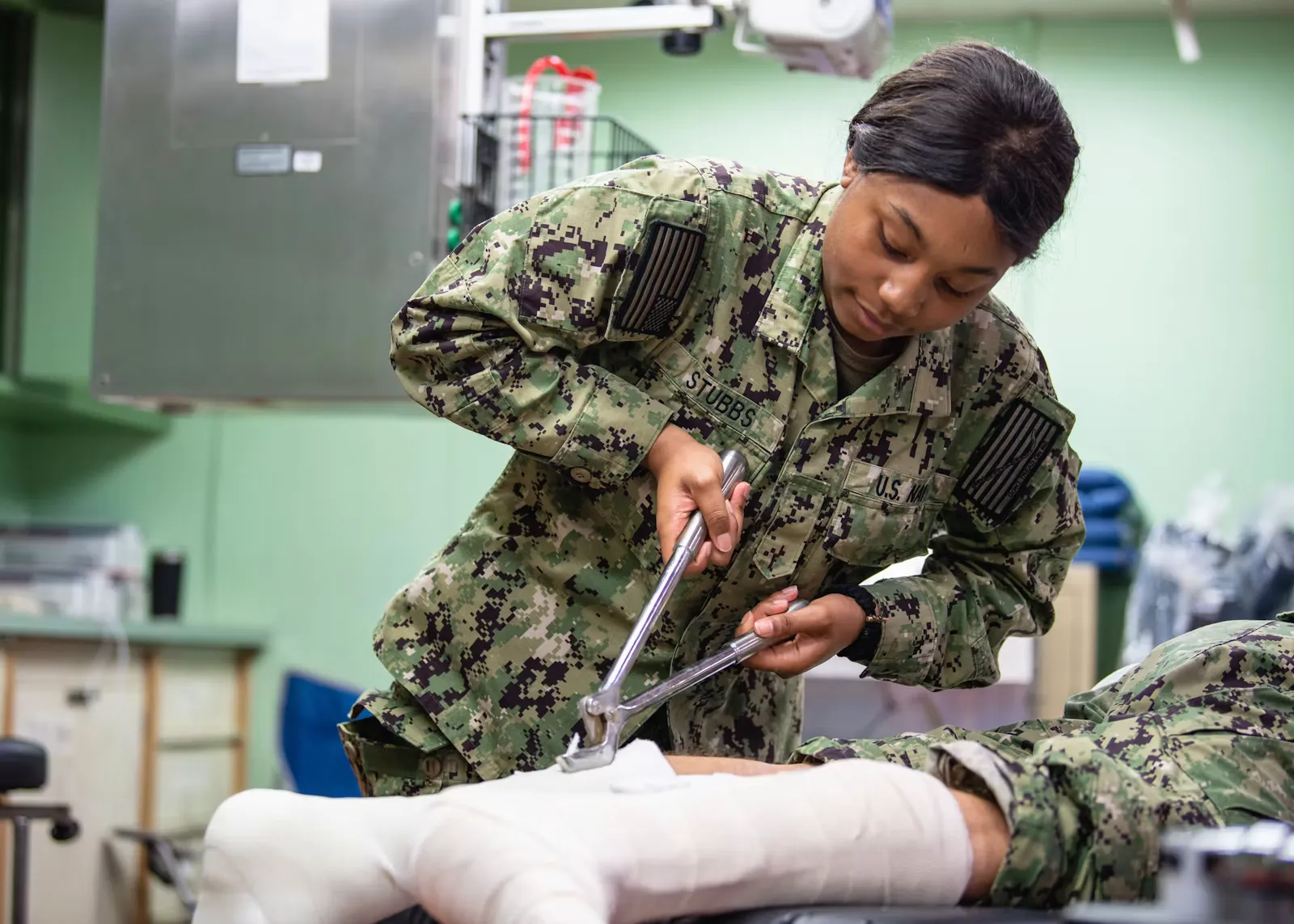
A physician assistant works inside a physician-led team — the scope of what they can do independently differs by country.
The physician assistant profession began in the United States
The PA profession as we know it today originated in the mid-1960s in the United States, not in Europe. In 1965, Eugene A. Stead Jr., MD, of Duke University Medical Center assembled the first class of physician assistants in response to a shortage of primary care physicians, deliberately recruiting former US Navy hospital corpsmen who already had substantial military medical training (AAPA, "History of the PA Profession"). The first class graduated from the Duke PA program on 6 October 1967, and the profession's national body — now the American Academy of Physician Associates (AAPA) — was incorporated the following year, on 20 May 1968.
Today, PAs in the US are certified through the National Commission on Certification of Physician Assistants (NCCPA), which administers the Physician Assistant National Certifying Examination (PANCE). All 50 US states, the District of Columbia and US territories rely on NCCPA certification as a condition of state licensure, giving the American model a mature, uniform national credentialing structure that most other countries do not yet have (NCCPA, "Become Certified").
Ready for your adventure abroad?
Secure your spot for your internship abroad now.
Physician assistant or physician associate — which term is right?
Both terms are in active, overlapping use, and the "correct" one genuinely depends on which country and, in the US, even which state you mean. In May 2021, the AAPA's House of Delegates voted to rename the profession from "physician assistant" to "physician associate" in the US, and the organisation itself now uses "American Academy of Physician Associates." Implementation is happening state by state, though: as of this writing, only a handful of US states (including Alaska, Delaware, Iowa, Kansas, Maine, New Hampshire, Oregon and Wisconsin) have passed legislation formally recognising "physician associate" as equivalent to "physician assistant," and AAPA's own legal guidance cautions PAs against using the new title in clinical settings until their state law permits it. In practice, "physician assistant" remains the predominant legal title across most of the US today.
In the United Kingdom, by contrast, "Physician Associate" is already the single official term used by the regulator — there is no competing "assistant" title in current UK use. That single fact is a good illustration of why this guide avoids treating either the US or the UK usage as globally universal.
How is the profession now regulated in the United Kingdom?
The UK's regulatory picture is genuinely new, and it has been publicly contested — this is not a settled, decades-old system like the US one. The General Medical Council (GMC) began statutory regulation of Physician Associates (and the related Anaesthesia Associate role) on 13 December 2024, when its governing Council formally approved the rules, standards and guidance covering their education, registration, standards and fitness-to-practise processes; registration for individual PAs opened three days later, on 16 December 2024 (GMC, "Regulation of physician associates and anaesthesia associates begins"). There is a two-year transition period: from December 2026 it will become a criminal offence to practise as a Physician Associate or Anaesthesia Associate in the UK without GMC registration. The GMC estimates there are around 5,000 Physician Associates and 200 Anaesthesia Associates currently in the UK.
This regulatory change has not been uncontroversial. The British Medical Association (BMA) has publicly called for a mandatory, nationally consistent scope of practice for PAs, citing a BMJ-published review that it says found limited evidence for the safety and effectiveness of the role as currently deployed, and a survey of more than 18,000 UK doctors in which 87% said the way Medical Associate Professions are used in the NHS "always" or "sometimes" poses a risk to patient safety. Part of the BMA's objection is specifically about naming: it has argued that "physician associate" risks blurring the distinction between PAs and doctors in patients' minds. Readers outside the UK should treat this as a live, evolving debate rather than a fully resolved question, and check the GMC's own register and guidance for the current position before drawing conclusions.
Comparing the PA model across the US, UK and Germany
No single country's rules define "physician assistant" worldwide. The table below lines up three illustrative national examples side by side — the long-established US model, the newly regulated UK model, and Germany's comparatively young, university-based model — precisely to show how differently the same underlying idea has been implemented.
Country
Term used
Professional/regulatory body
Formally regulated since
Typical training
United States
Physician Assistant (transitioning toward "Physician Associate" in some states)
NCCPA (certification, PANCE exam); state licensing boards
State licensure since the 1970s; NCCPA certification required for licensure in all 50 states, DC and US territories
Typically a master's-level program after a bachelor's degree
United Kingdom
Physician Associate
General Medical Council (GMC)
GMC statutory regulation began 13 December 2024
2-year, full-time postgraduate diploma or MSc after an undergraduate science/health degree
Germany
Physician Assistant (PA)
DGPA (Deutsche Gesellschaft für Physician Assistants) — professional association, not a state licensing body
DGPA founded 12 February 2008; no unified national PA licensing law
Bachelor of Science, 6 semesters full-time
Beyond these three examples, regulatory maturity for PA-equivalent roles varies enormously worldwide — some countries have a distinct, named, regulated title; many others have no equivalent role at all, or an informal one under a different name. The International Academy of Physician Associate Educators (IAPAE), a global body of PA and "PA-analogue" educators founded in 2007, has identified education programs for such roles — under at least 35 different local titles, including clinical officer, clinical associate, feldsher, health officer and medical licentiate — in more than 60 countries (IAPAE, "About"). A separate, earlier academic estimate put the global PA workforce at over 100,000 practitioners across more than 50 countries (Rick TJ, Ballweg R, "Physician Assistants and the Expanding Global Health-Care Workforce," The American Journal of Tropical Medicine and Hygiene, 2017). These two figures come from different sources, years and definitions of the role, so treat them as broadly illustrative of a large and growing global footprint, not as a single precise headcount.
What does a physician assistant actually do?
Day to day, a physician assistant's tasks centre on physician-delegated clinical work rather than independent diagnosis and treatment decisions. Typical responsibilities include:
Taking patient histories and performing physical examinations.
Ordering and interpreting diagnostic tests, within the supervising team's protocols.
Assisting in minor procedures and, in some settings and countries, surgical assistance.
Monitoring and adjusting treatment plans under a physician's oversight.
Coordinating care, referrals and documentation with the rest of the clinical team.
The exact boundaries of that list — what a PA is permitted to do without a physician physically present, whether they can prescribe, and how much clinical autonomy they hold — differ by country and, within federal systems like the US, by state. This is precisely the kind of detail the UK's BMA has argued needs a single, nationally consistent definition rather than being left to individual employers.
Secure Information Material
Request all the important info for free, no obligation.
Becoming a physician assistant: the typical pathway
However your country titles and regulates the role, the general route into it follows a similar shape: a formal, health-sciences-adjacent degree program (bachelor's or master's level depending on the country), combining classroom medical science with supervised clinical placements, followed in most regulated systems by a national certifying exam or registration step before you can practise. Entry requirements, program length and the required prior qualifications vary by country and even by individual university or program, so always confirm the specifics directly with the institution and national regulator you're targeting rather than assuming one country's rules apply elsewhere.
Can you complete a PA clinical placement abroad with travel4med?
Yes, in many programs — but only if your own institution approves it in advance; there is no shortcut around that step. Students in a PA or PA-equivalent program can sometimes arrange part of their clinical training or practical phase abroad in coordination with their home university, gaining hands-on exposure in a different health system alongside their required rotations. travel4med organises exactly this kind of clinical placement — including a dedicated physician assistant practical phase — at its verified partner hospitals in Sri Lanka, Nepal, Bali and Zanzibar.
Before you book anything, though:
Check your program's rules on clinical placements taken outside your home country.
Get written, advance confirmation from your program director or clinical placement office that the specific dates, host site and scope of work will count toward your requirements.
Keep documentation (a signed logbook and supervisor evaluation) for your program afterward.
A placement abroad is never a guaranteed credit — recognition is always decided by your own institution, not by travel4med or the host hospital. Real accounts from other health-professional students who trained abroad are available on the experience reports page, and this guide's companion piece, Medical Electives Abroad: A Complete 2026 Guide, covers the other placement formats travel4med organises alongside the PA practical phase.
Considering a PA clinical placement abroad? Tell us your program, dates and destination and we'll handle the hospital coordination and on-the-ground support. Book a free consultation with travel4med to check what's possible.
Frequently Asked Questions
Sources
AAPA, "History of the PA Profession and the American Academy of PAs": aapa.org/about/history (Duke University origin, 1965, Eugene A. Stead Jr., first class of Navy hospital corpsmen, AAPA incorporated 1968).
NCCPA, "Become Certified": nccpa.net/become-certified (PANCE exam; certification required for licensure in all 50 US states, DC and US territories).
AAPA, "Title Change": aapa.org/advocacy-central/title-change (2021 House of Delegates vote to rename the profession "physician associate"; state-by-state implementation).
General Medical Council, "Regulation of physician associates and anaesthesia associates begins": gmc-uk.org (regulation began 13 December 2024; ~5,000 PAs and 200 AAs in the UK).
General Medical Council, "GMC regulation of physician associates and anaesthesia associates to begin": gmc-uk.org (registration opened 16 December 2024; two-year transition to mandatory registration).
Deutsche Gesellschaft für Physician Assistants e.V. (DGPA), "Über uns": pa-deutschland.de/überuns (founded 12 February 2008 by graduates of Germany's first PA degree program).
Rick TJ, Ballweg R, "Physician Assistants and the Expanding Global Health-Care Workforce," The American Journal of Tropical Medicine and Hygiene (2017): pmc.ncbi.nlm.nih.gov/articles/PMC5590609 (over 100,000 PAs across more than 50 countries).
International Academy of Physician Associate Educators (IAPAE), "About": iapae.org/about (founded 2007; PA/PA-analogue education programs identified in 60+ countries under 35+ local titles).