PA Practical Phase Abroad: A Planning Guide for Students
A PA practical phase abroad is a supervised clinical rotation that a physician assistant (or, in some countries, physician associate) student completes at a hospital outside their home country as part of their program's required clinical training. This guide was reviewed by the travel4med Editorial Team and goes deeper into PA-specific logistics than our broader medical electives abroad guide covers — because PA training structures, supervision rules and international-rotation policies vary significantly from one country's program to the next, and assuming one model applies everywhere is the most common planning mistake.
Key Takeaways
PA training structure is not standardized internationally: US ARC-PA-accredited programs require at least 2,000 hours of supervised clinical practice, while other countries run different models entirely.
US programs that use international clinical sites generally restrict them to elective, not core, rotations under current accreditation standards.
The profession is growing fast: US board-certified PAs surpassed 200,000 in 2025, up from about 158,000 in 2021.
The UK's physician associate role became formally regulated by the General Medical Council only in December 2024 — a very different, newer regulatory picture than the long-established US PA model.
Whichever country you train in, your own program's accreditation body decides whether a clinical rotation abroad counts, never the host hospital.
Why does a PA practical phase abroad vary so much by country?
Because "physician assistant" is not one internationally standardized profession — it is a set of related but distinct national models, each with its own accreditation body, supervision rules and international-rotation policy. In the United States, PA programs are accredited against standards set by the Accreditation Review Commission on Education for the Physician Assistant (ARC-PA), which require students to complete a minimum of 2,000 hours of supervised clinical practice experience (SCPE) before graduation (ARC-PA, Accreditation Standards for PA Education, 2024). Crucially, those same standards specify that clinical sites and preceptors located outside the United States may only be used for elective, not required core, rotations — meaning an international rotation supplements, but cannot replace, the core US clinical training. Other countries' equivalent professions run entirely different models, timelines and titles, so never assume your program's rules mirror another country's.
Accreditation rules — not the destination — decide whether an international rotation can count as elective or core credit.
Ready for your adventure abroad?
Secure your spot for your internship abroad now.
How is the UK's physician associate model different?
Significantly, and recently. The UK's physician associate (and anaesthesia associate) roles only came under formal regulation by the General Medical Council on 13 December 2024, with registration opening in stages through early 2025 and full mandatory registration due to apply from December 2026 (GMC, Regulation of physician associates and anaesthesia associates begins, 2024). Unlike the long-established US ARC-PA accreditation system, the GMC has said it will not define a fixed scope of practice for physician associates beyond entry-level competencies, leaving day-to-day task allocation to individual clinical settings and supervising doctors. If your program sits within this UK model, do not assume US-style rotation-hour rules or accreditation language apply to you — check your own university's PA program handbook directly.
Steps to plan a PA practical phase abroad
Check your program's accreditation rules first. Confirm in writing whether an international clinical site can count as core or only elective credit.
Confirm supervision requirements. Every PA/physician associate model works under a delegation or supervision framework — make sure the host site can provide equivalent supervision.
Get written pre-approval from your program director before booking anything non-refundable.
Arrange logistics — accommodation, local support and insurance that explicitly covers a clinical placement.
Submit documentation on return — logbook, hours completed and a supervisor evaluation — through whatever process your program requires.
What does a PA student actually do on rotation, wherever they train?
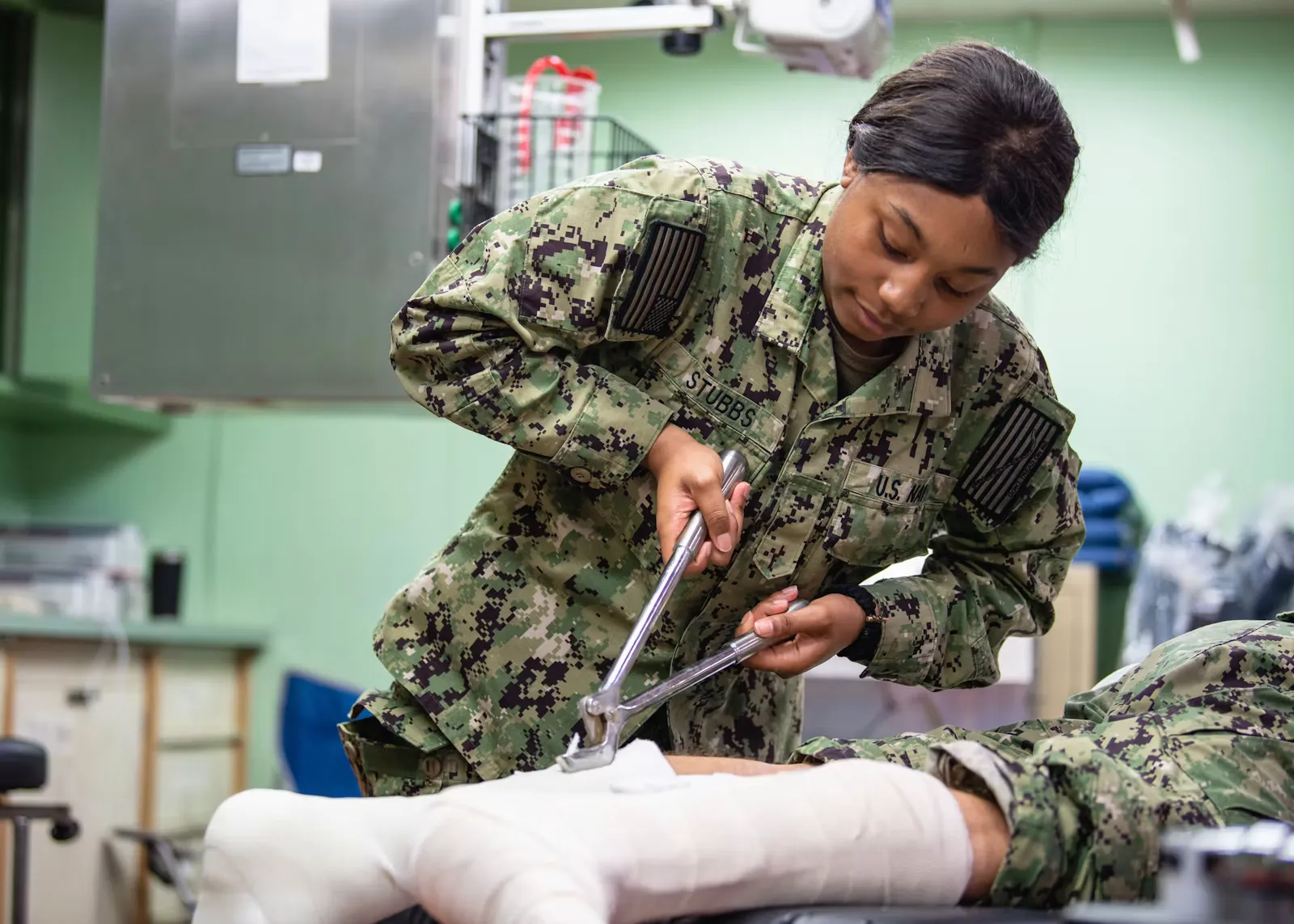
Across every national model, the common thread is delegated clinical work under physician supervision: taking histories, performing examinations, assisting with procedures, and contributing to diagnostic and treatment planning, always within a defined scope and under a supervising physician's responsibility. What changes by country is exactly how that delegation is defined, documented and supervised — a US preceptor-based SCPE model looks different on paper from a UK associate role operating under "Good Medical Practice" standards, even though the clinical work on the ward can look similar day to day.
Bring your program's written pre-approval, supervision agreement and insurance documents — not just your clinical kit.
Is the PA profession itself growing internationally?
Yes, substantially, which is part of why international rotations and cross-border interest in the profession keep increasing. In the United States alone, the number of board-certified physician assistants passed 200,000 in 2025, up from roughly 158,000 in 2021 — a rise of over a quarter in four years (NCCPA, PAs are growing in number, 2025). Research on the profession's global spread, co-authored by Professor Ruth Ballweg of the University of Washington's MEDEX Northwest program, one of the field's longest-serving PA educators, estimated the PA and equivalent associate workforce at well over 100,000 practitioners across more than 50 countries worldwide (Rick TJ, Ballweg R, "Physician Assistants and the Expanding Global Health-Care Workforce," PMC, 2017). That international growth is exactly why understanding your own program's specific rotation-abroad rules, rather than a generic one-size-fits-all script, matters so much.
Planning a PA practical phase abroad? travel4med organizes elective clinical placements at vetted partner hospitals in Sri Lanka, Nepal, Bali and Zanzibar, once your program has confirmed the rotation is eligible. Book a free consultation to talk through the logistics.
Frequently Asked Questions
Secure Information Material
Request all the important info for free, no obligation.
Accreditation Review Commission on Education for the Physician Assistant (ARC-PA), "Accreditation Standards for PA Education, 5th Edition" — arc-pa.org (2024).
General Medical Council (UK), "Regulation of physician associates and anaesthesia associates begins" — gmc-uk.org (2024).
National Commission on Certification of Physician Assistants (NCCPA), "PAs are growing in number" — nccpa.net (2025).
Rick TJ, Ballweg R, "Physician Assistants and the Expanding Global Health-Care Workforce," The American Journal of Tropical Medicine and Hygiene — pmc.ncbi.nlm.nih.gov/articles/PMC5590609 (2017).